
The room you burn incense in changes everything, not just the scent experience, but which holder material performs best, how long the fragrance lingers, and whether the smoke enhances or clutters the air. A meditative sandalwood that dissolves beautifully in a quiet bedroom becomes almost invisible in a well-ventilated living room. A resin holder that handles bathroom humidity without issue would crack and craze placed near a kitchen stove.
I've spent the better part of a decade burning incense daily, moving between apartments and houses, and learning through trial and error which combinations of scent, holder, and space actually work. This guide is the result: a practical, room-by-room breakdown covering which incense type to burn, what holder material to use, where physically to position the holder, and what safety factors matter most in each space. If you're just starting out, our beginner's guide to using incense sticks covers the fundamentals first.
The underlying principle is wabi-sabi, the Japanese aesthetic philosophy of finding beauty in imperfection and natural materials. Applied to incense placement, it means choosing objects that belong to their space, accepting that a trail of ash is part of the ritual, and letting the act of preparing and lighting incense become a small, deliberate pause in your day.
The Living Room: Social Atmosphere and Statement Pieces
The living room is typically the largest, best-ventilated shared space in a home, which is both an advantage and a challenge. Good airflow keeps smoke from stagnating, but it also disperses scent faster. You'll want incense with enough aromatic presence to hold its ground.
Best Scents for the Living Room
Rich, layered scents work well here because they unfold gradually across a larger volume of air. Coffee-toned and amber-woody fragrances create warmth without overpowering conversation. The Dongzhi Oriental Essence carries a warm coffee-latte note that reads as inviting rather than heavy, one of the few coffee-scented incenses that avoids that burnt-sugar quality cheaper versions have.
If you prefer something woodier, a sandalwood with cedar undertones fills the room without becoming saccharine. Stick to medium-to-strong intensity profiles; light florals and delicate greens tend to vanish in open-air living spaces within ten minutes.
Holder Recommendations
This is where the holder earns its keep as a design object, not just a functional piece. Two options stand out depending on your aesthetic:
The Momo's Life Artisan Ceramic works when you want a piece that reads as handmade and quiet, think shelf styling alongside books and ceramics. Its irregular glaze catches afternoon light in a way that mass-produced holders simply can't replicate.
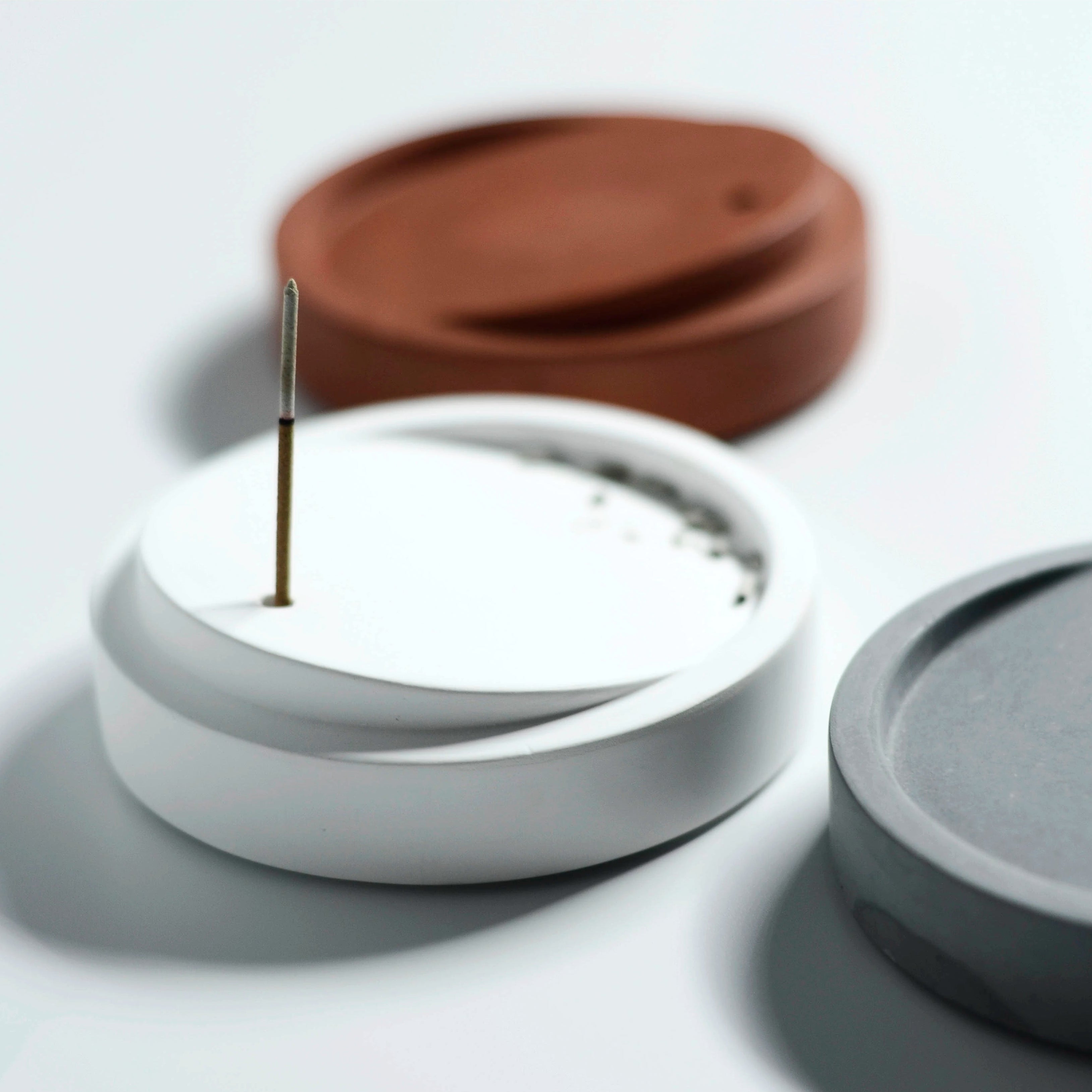
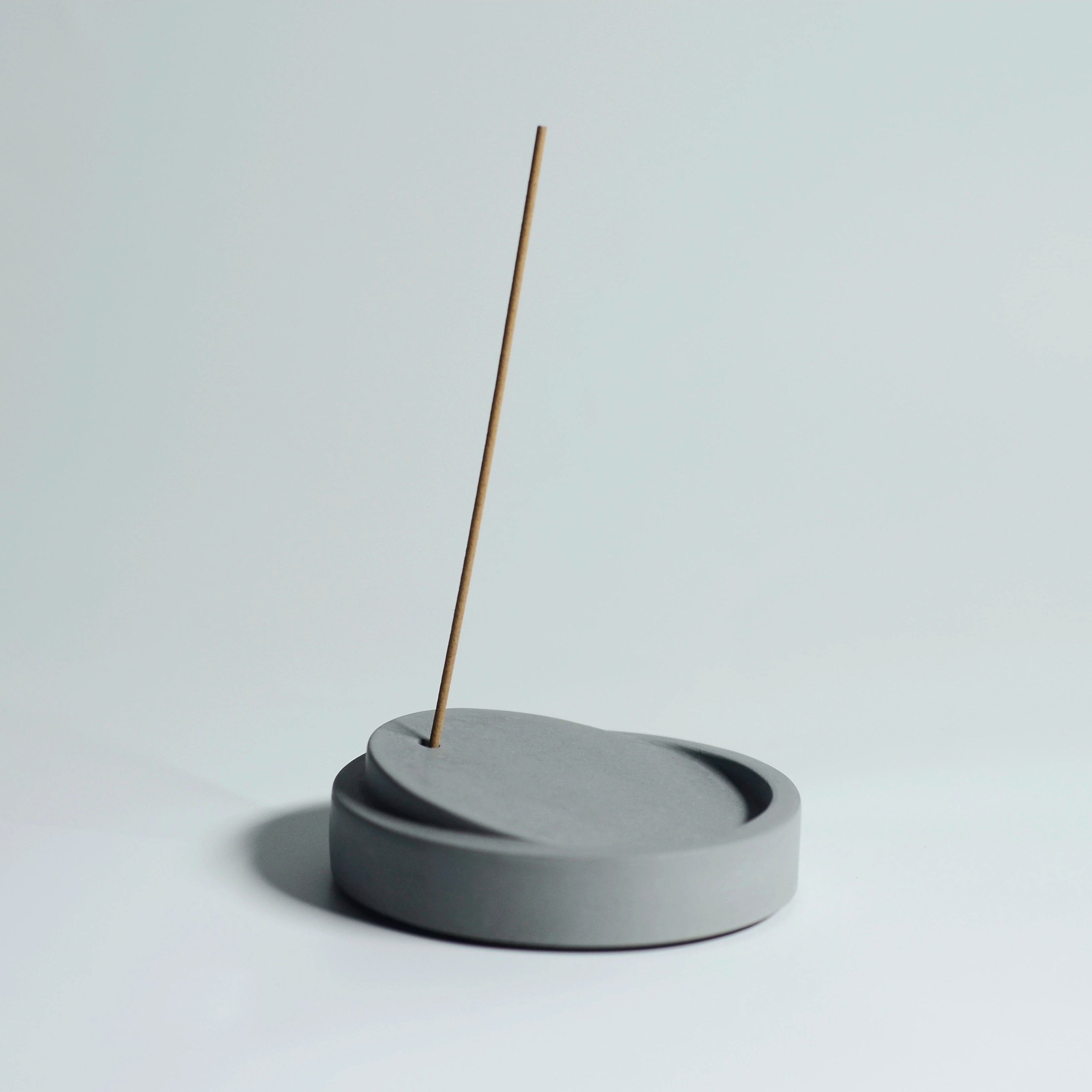
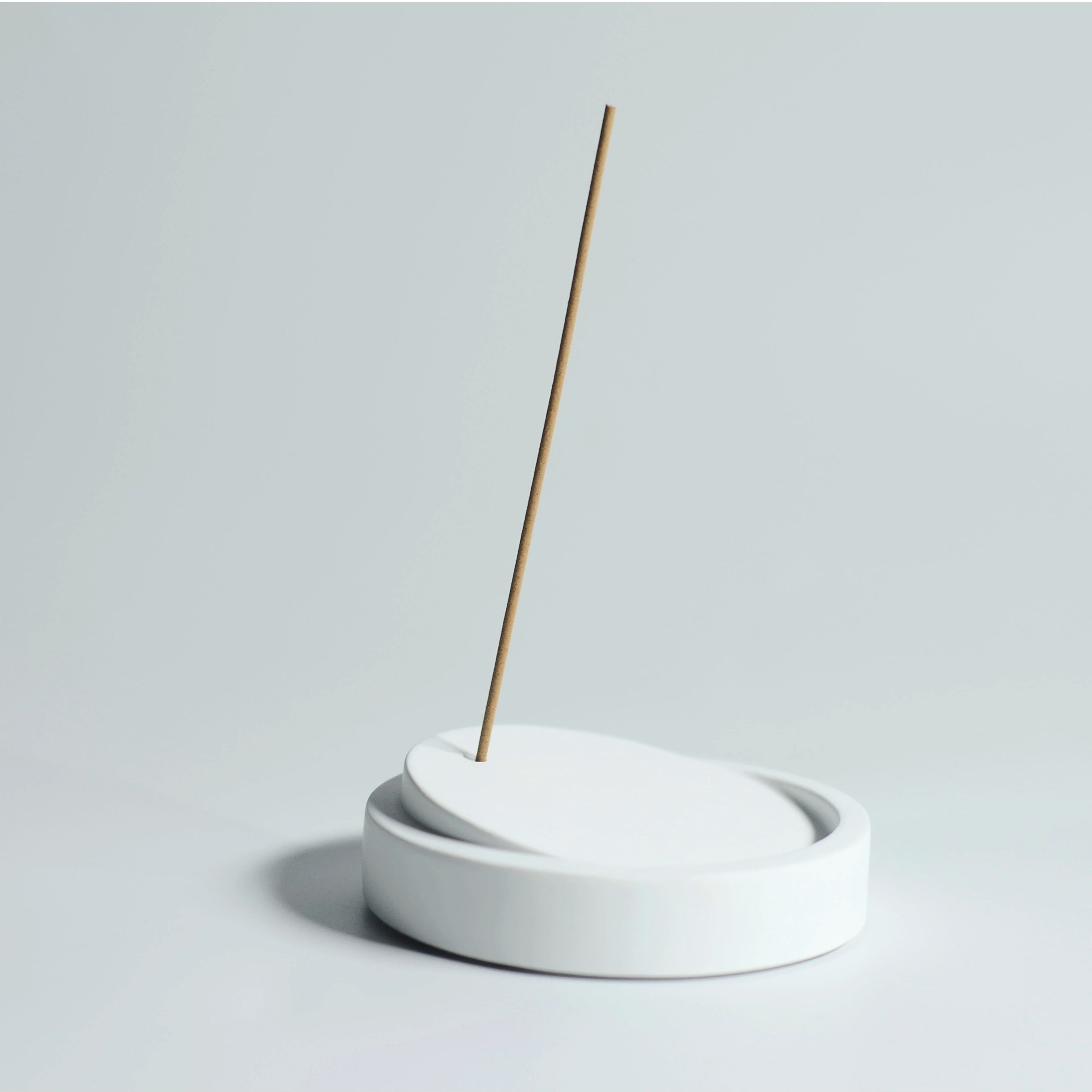
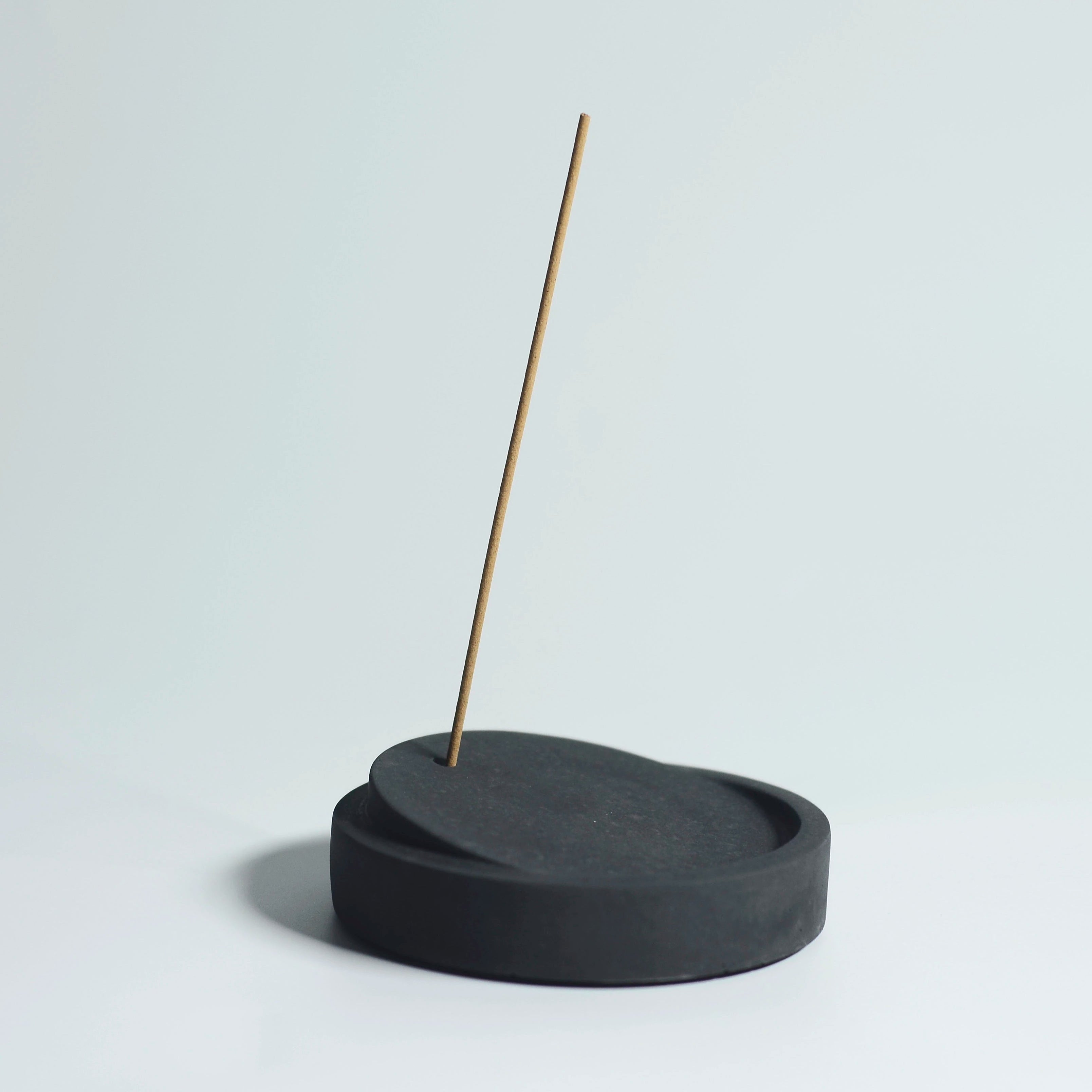
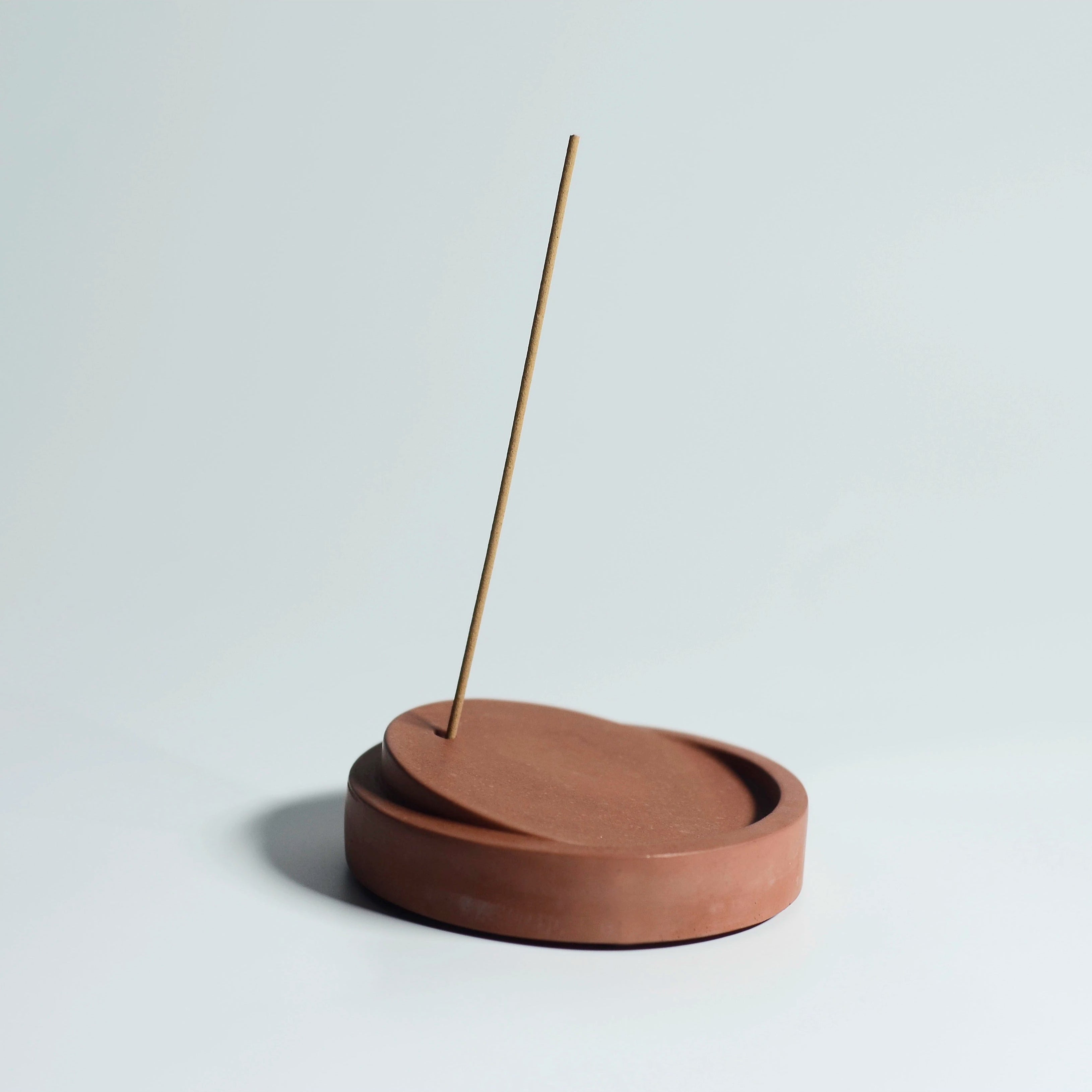
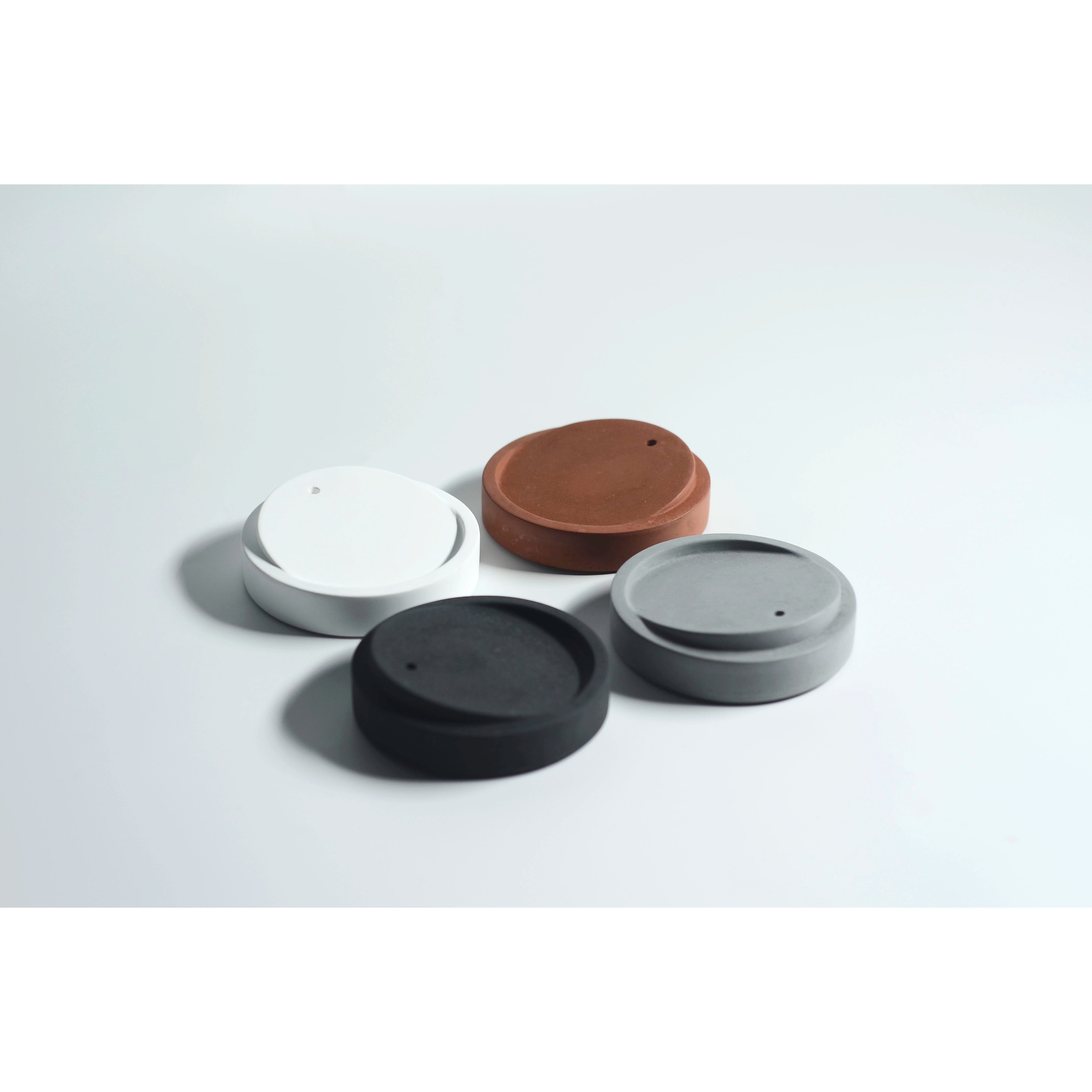
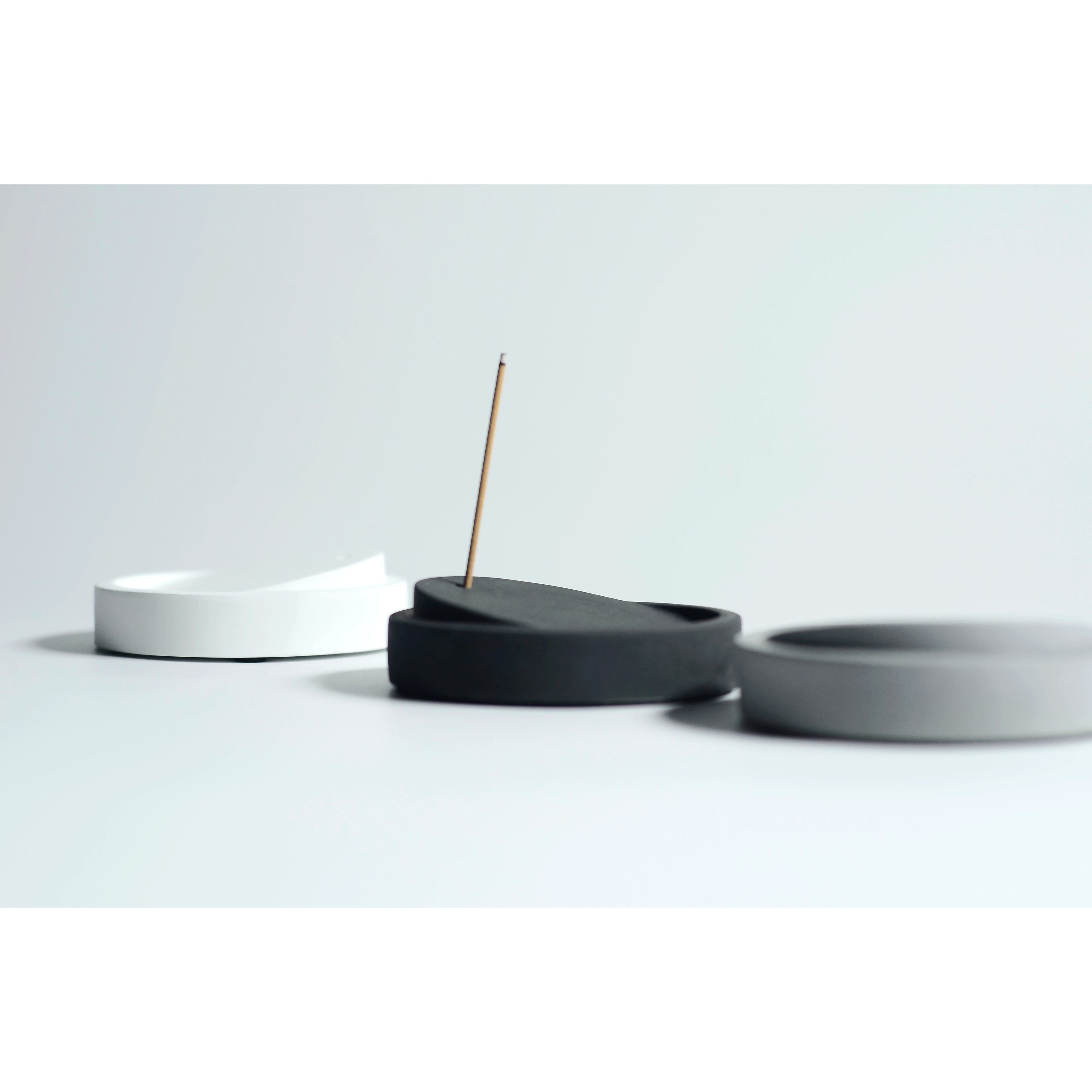
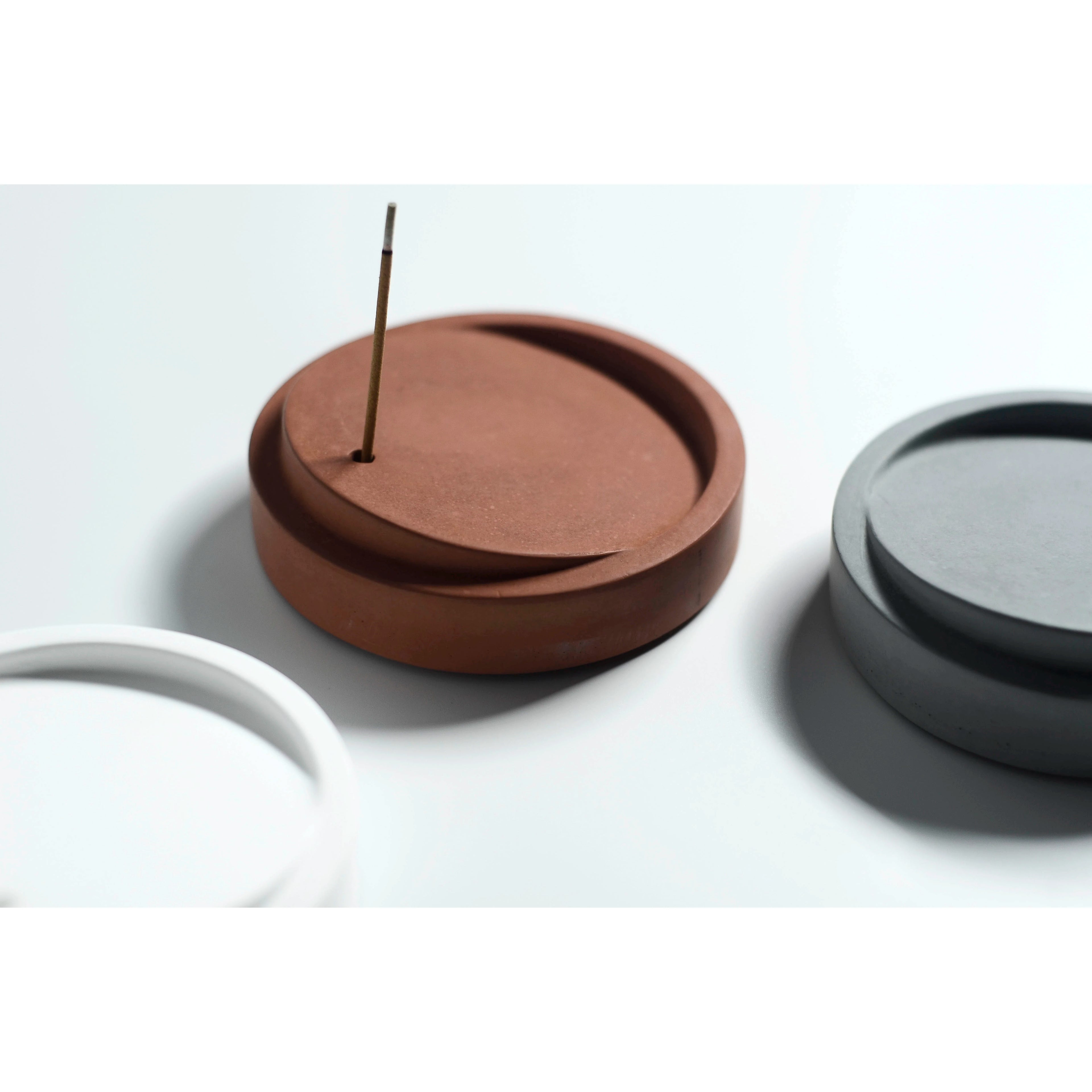
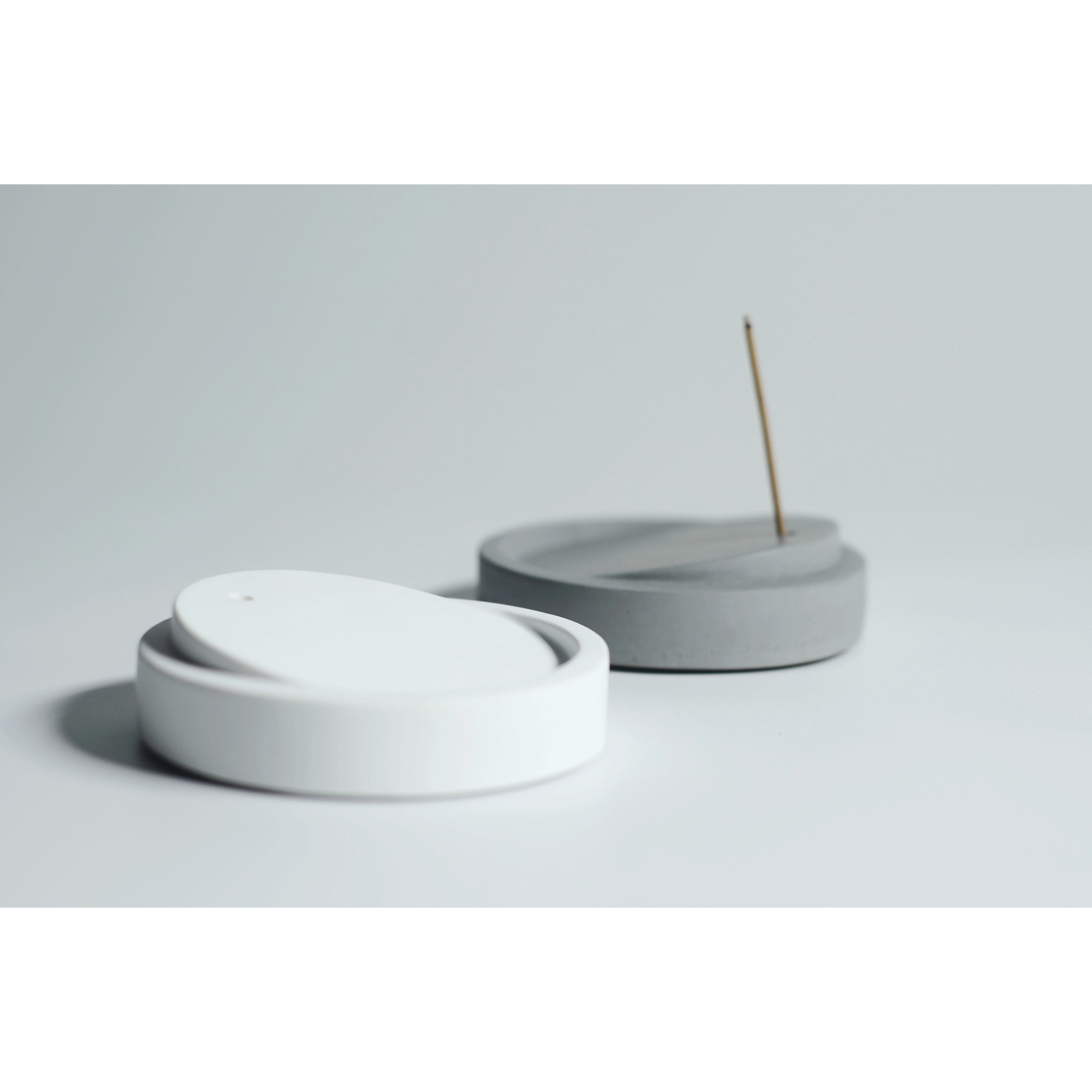
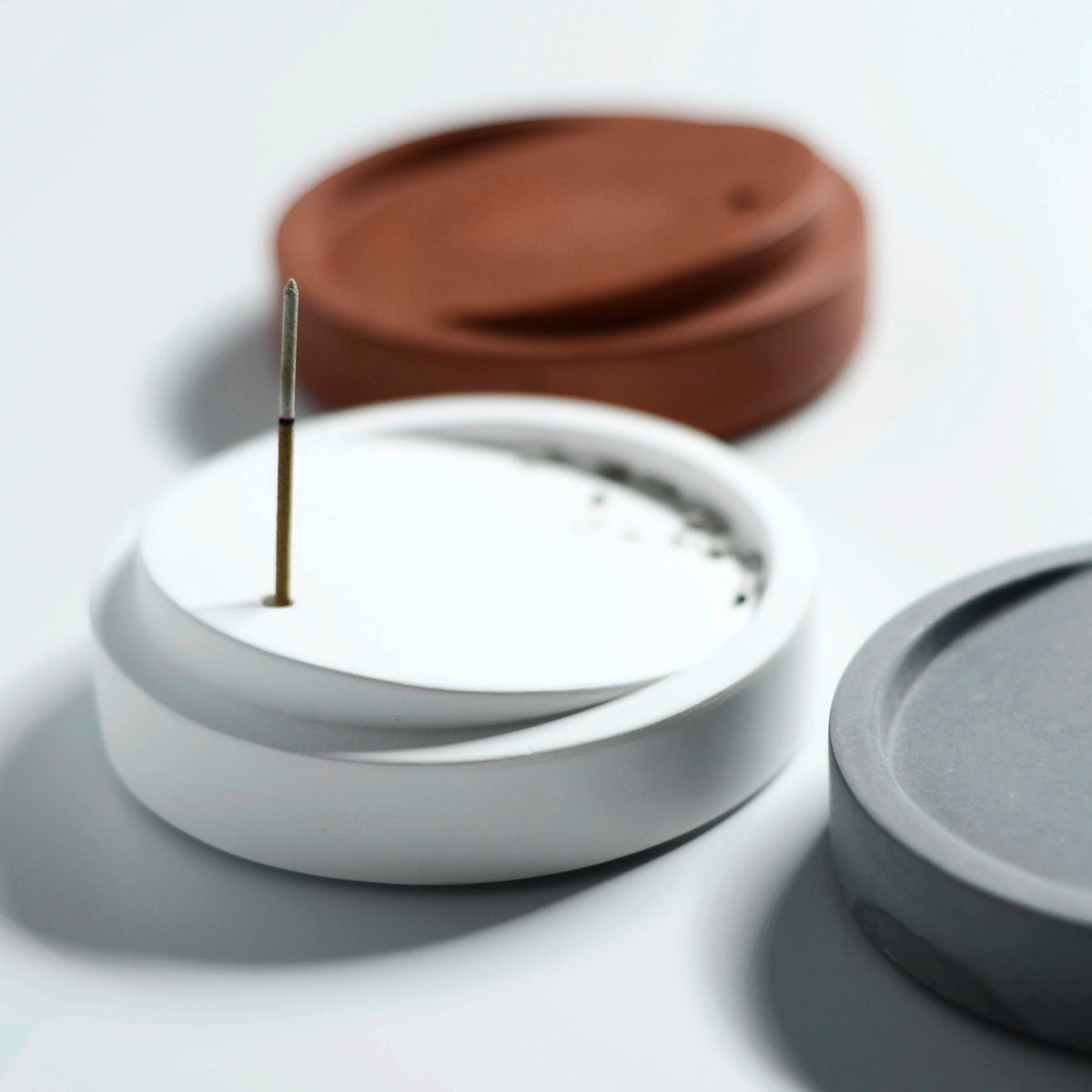
For a more sculptural approach, the ASPDIN ZenSpin Slide functions almost as a tabletop sculpture. Guests notice it before they notice the incense, it's a conversation piece that earns its place on a coffee table or console. Both sit well in our broader incense holder collection if you want to compare silhouettes.
Placement and Safety
Position the holder on a stable, non-flammable surface at least eight inches from curtains, lampshades, and upholstered furniture. A low console table or a sideboard away from drafty windows works well, you want minimal direct airflow so the smoke rises rather than scattering sideways. Keep it out of reach of pets (cats in particular are attracted to trailing smoke and will knock holders off surfaces) and children under six.
Burn Duration and Ventilation
A single 21cm stick burns for roughly 30-40 minutes. In a standard living room (roughly 300-400 sq ft), this is about right, the scent fills the room for the duration of an evening's reading or a dinner conversation. If your space opens into a kitchen or hallway, consider lighting the stick 15 minutes before you want the fragrance to peak. Crack a window slightly if you burn for more than an hour continuously; even natural incense produces particulate matter that accumulates in closed rooms over time. Our complete guide to incense safety covers the air quality science in detail.
The Bedroom: Quiet Wind-Down and Subtle Calm
The bedroom is the most important room for incense placement, and also the most consequential if you get it wrong. Closed doors, low ceilings (in many homes), and proximity to bedding make this a space where less smoke and gentler scent is always better.
Best Scents for the Bedroom
Calming, low-intensity fragrances that signal transition from day to rest. Fuji Mysore Sandalwood is the one I reach for most nights, the alpha-santalol in genuine sandalwood creates a gentle sedative atmosphere that doesn't overwhelm a small enclosed room the way citrus or resinous scents can. For something specifically tuned to bedtime, Fuji Night Rain carries a petrichor-like softness that many practitioners find mirrors the way rain sounds cue relaxation.
Avoid anything with camphor, eucalyptus, or strong spice notes here. These activate the respiratory system (they "open" and tingle), which is the opposite of what you want when winding down. A deeper look at sleep-compatible scents is in our science-backed sleep incense guide.
Holder Recommendations
Ash control matters enormously at the bedside. The Muso LeafBoat Ash Catcher solves a problem that most holders ignore: when a stick burns down, ash drifts well beyond the holder's footprint. On a bedside table, that means ash on your phone, your book, or the sheets. The LeafBoat's elongated, concave form catches nearly all of it, a practical choice that also happens to look like something carved rather than manufactured.
The Momo's Life Artisan Glaze is the softer option. Its muted glaze tones suit the low-light, fabric-heavy environment of a bedroom without competing with the existing décor. Browse more options in our ceramic incense holders collection.
Placement and Safety
Keep the holder on a non-flammable surface, a solid wood bedside table is fine if the holder has a flat base; a ceramic or stone nightstand topper is better. Never place an active incense stick where bedding or clothing could fall against it, and never leave it burning while asleep. The safest routine is to light the stick 20-25 minutes before bed, let it burn fully (most standard sticks are done within 40 minutes), then ventilate the room with the door cracked for five minutes before sleeping.
Burn Duration and Ventilation
A half-stick is often sufficient for a bedroom. Break a standard stick in half, light the coated end, and you get 15-20 minutes of scent, enough to establish atmosphere without fully saturating a 120-150 sq ft room. If the room has no operable window, run a bathroom exhaust fan with the door open for cross-ventilation. Even natural, non-synthetic incense produces fine particulates; in a sealed bedroom over multiple consecutive nights, that accumulation matters.
The Bathroom: Moisture-Resistant Holders and Fresh Scents
An unconventional choice, but a genuinely useful one. A bathroom is a small, enclosed space that traps scent extremely well, which means you need far less incense to fill it. The humidity environment also rules out certain holder materials.
Best Scents for the Bathroom
Clean, fresh, or light woody fragrances that don't fight with the room's existing soapy and humid character. Dongzhi Agarrattan has a fresh, bright profile that complements, rather than masks, the lingering scent of quality bath products. The bathroom is also where lighter, more affordable sticks earn their keep; this is a space where you don't need the depth of a premium agarwood.
Holder Recommendations
Resin over ceramic, every time. Bathrooms are wet environments, condensation, splashes, and the inevitable knock from a towel or robe. The Aura Resin Elegance handles moisture without the cracking or mineral staining that unglazed ceramic develops in sustained humidity. It won't warp from occasional splashes and it cleans with a damp cloth. Browse the full resin incense holders collection for similar moisture-resistant options.
Placement and Safety
Position the holder on a shelf or counter at least 12 inches from the shower, bathtub, or sink, away from any direct water contact. The exhaust fan should be running during and after the burn. A critical detail few guides mention: bathroom electrical outlets and humidistat-controlled fans are not fire-safe zones. Don't burn unattended in an enclosed bathroom, and don't let the holder sit near bath towels. Keep the holder out of reach of children at all times.
Burn Duration and Ventilation
A quarter-stick or a short 10cm stick is often enough. The bathroom's small footprint (typically 40-80 sq ft) means even five minutes of burning fills the space thoroughly. Light the stick while filling the tub, let it burn through the bath, then extinguish it and run the fan. This creates a layered scent experience: incense first, then bath products, then a lingering combination at the end. No need to burn a full stick here, you'll oversaturate the room.
The Home Office: Focus-Enhancing Scents for Deep Work
The home office is where scent becomes functional rather than purely atmospheric. The right incense can create a conditioned cue for concentration, train your brain that this particular fragrance signals deep work, and over time the scent alone reduces the friction of starting.
Best Scents for the Home Office
Grounding, slightly sharp scents that hold attention without agitating. Fuji Divine Cedar has a clean, forested sharpness that reads as alert rather than sleepy. Cedar's aromatic profile contains cedrol, a compound traditionally used in East Asian practices for sustained focus, it's brisk and structural without the menthol bite that eucalyptus carries. Our guide on the best incense scents for focus and concentration maps the full spectrum of work-compatible fragrances.
For something more meditative, agarwood (also called oud or eaglewood) produces a deep, complex scent that many practitioners describe as centering. The Dongzhi Agalloch Eaglewood works if you need longer burn sessions, it lingers subtly even after the stick is extinguished, which is ideal for multi-hour work blocks.
Holder Recommendations
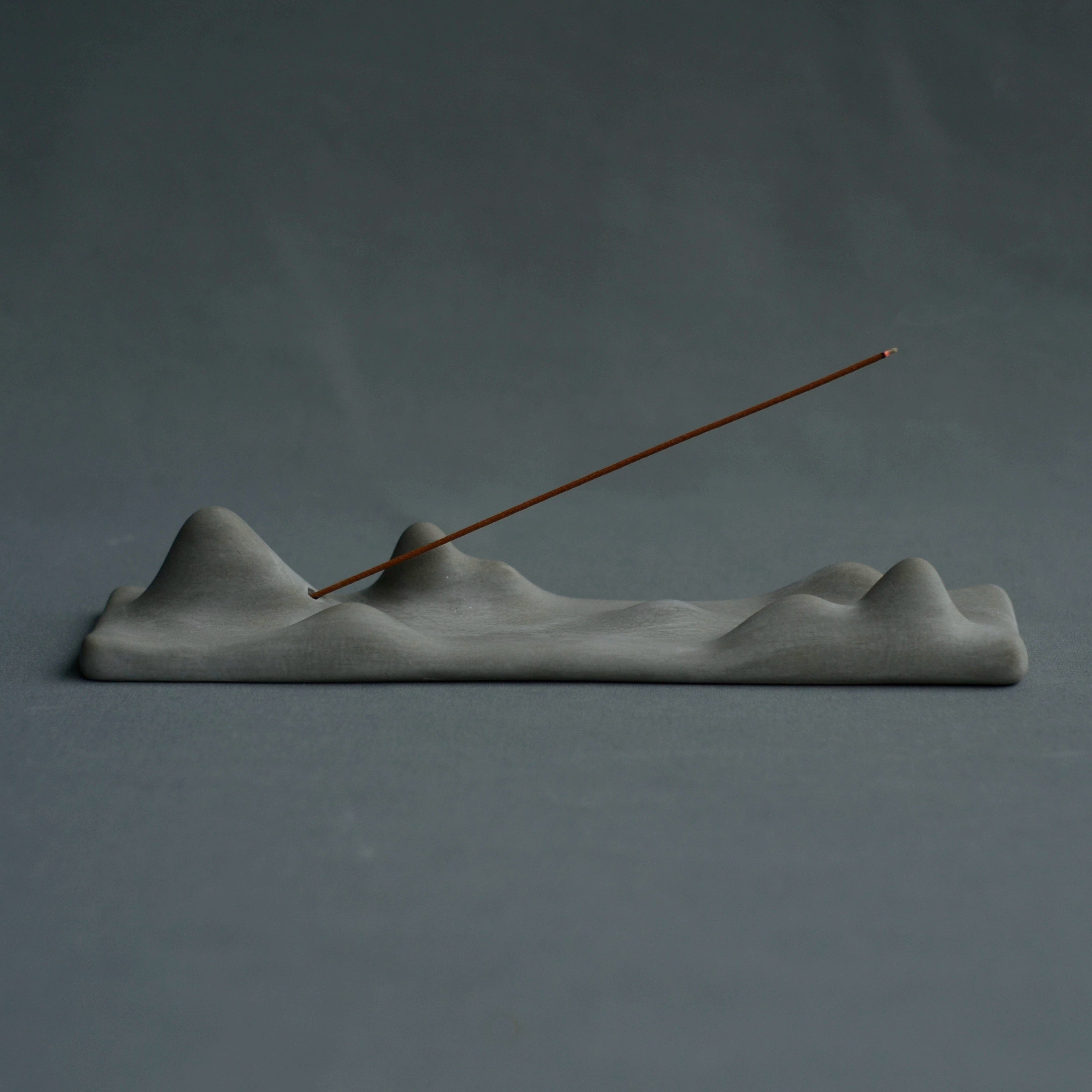
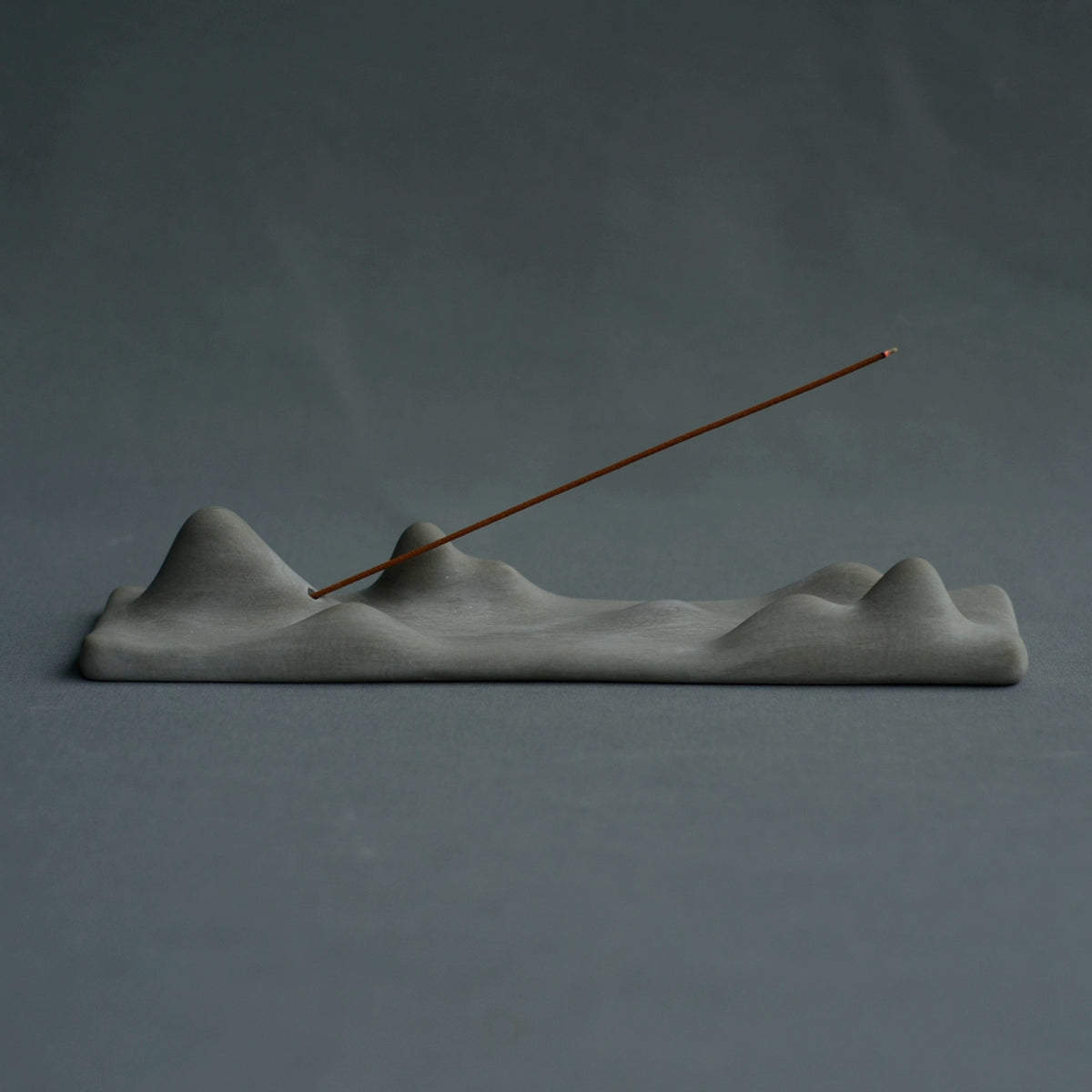
The ASPDIN Zen Mountain Range is designed to evoke a mountain landscape, a useful visual anchor on a desk surrounded by screens and task lighting. It's low-profile enough to sit beside a monitor without dominating the field of vision, and the sculptural quality means it reads as intentional desk décor rather than an afterthought. For more modern aesthetics, the Muso Modern Artistry offers a cleaner, contemporary silhouette.
Placement and Safety
Keep the holder on a stable part of the desk, or better, on a separate shelf or surface behind you where it can't be knocked over during vigorous typing or reaching. Position it away from document stacks, open books, and electronics ventilation ports (incense smoke can leave a thin residue on screens and keyboards over time, which is manageable but worth knowing). Ensure the holder has a wide, flat base, a narrow holder on a busy desk is an accident waiting to happen.
Burn Duration and Ventilation
A full stick (30-40 minutes) pairs well with one focused work block. If you work in Pomodoros or time-blocked sprints, light the stick at the beginning of the session and extinguish it when the block ends, this builds a temporal association between scent and productive effort. Keep a window cracked or run a HEPA filter in the space; sustained incense burning in a small, closed office over a full workday isn't advisable from an air quality perspective.
The Meditation or Yoga Space: Deepening Your Practice
This is where incense transitions from ambient fragrance to active ritual tool. In a dedicated practice space, scent becomes part of the structure of your session, something you engage with deliberately, not just background atmosphere. The meditation incense collection is curated specifically for this context.
Best Scents for Meditation
Traditional, deep, historically resonant fragrances. Dongzhi Agalloch Eaglewood is the one I use for seated meditation, agarwood has been the primary incense used in Zen and Vajrayana Buddhist practice for over a thousand years, and there's a reason. The scent is deep and complex enough that it holds your attention without demanding it, creating exactly the quality of backgrounded awareness that most meditation traditions describe.
If you're practicing yoga rather than seated meditation, lighter sandalwoods work better, they don't compete with breath-focused practice the way heavy, resinous fragrances can. The Dongzhi Tranquil Harmony set is an excellent starting point because it lets you test eight different scents and observe which ones anchor your practice most effectively. Our complete guide to meditation incense covers the scent-to-practice pairing in depth, and our guide on incense for yoga addresses movement-specific considerations.
Holder Recommendations
The Momo's Life Crackled Ceramic is the one that belongs here. The crackled glaze is a direct expression of wabi-sabi, the intentional embrace of surface imperfection that makes each piece distinct. In a meditation space, where the objects around you should reinforce the practice's values, this piece does quiet work. It says: beauty lives in the irregular, the aged, the worn. For a complete overview of what ceramic brings to a practice space, our ultimate guide to ceramic incense holders covers the material's full story.
Placement and Safety
Position the holder on the floor or a low surface roughly three feet in front of where you sit, centered in your field of vision. This gives you a physical focal point for open-eye meditation and ensures the scent envelops rather than overwhelms. Keep fabric props (bolsters, blankets, yoga mats) at least 18 inches from the holder. If your space has wood or bamboo flooring, place the holder on a ceramic tile or stone trivet, even a fully extinguished stick can leave a hot ember that scorches finished wood.
Burn Duration and Ventilation
Time the burn to your practice length. A standard 40-minute stick covers a full meditation session; a half-stick suits a 20-minute yoga flow. Light the stick at the beginning of your practice as a formal opening gesture, this is the ritual element. Extinguish it at the end to close the session. Ventilate the space between practices; even a well-loved meditation room needs fresh air more often than people think. A cracked window between sessions resets the air quality entirely.
The Entryway: First Impressions and Welcoming Fragrance
The entryway is the shortest burn but possibly the highest impact. This is the space where arriving home, yours and your guests', meets fragrance first. It's also the room most people neglect when thinking about incense placement, which means getting it right feels genuinely considered.
Best Scents for the Entryway
Something with immediate aromatic presence and a welcoming rather than contemplative character. Warm, sweet-woody profiles work well, they read as hospitable at the door the way a cold, sharp cedar doesn't. If you burn incense here regularly, the entryway develops a subtle base note over weeks that greets you before you've even lit the current stick. This accumulated scent memory is part of what makes a house feel like home, and it's something only consistent incense use creates.
Holder Recommendations
The entryway holder is a statement piece by definition, visible the moment you or anyone else walks through the door. The Momo's Life Ceramic Artistry is designed to be seen: hand-finished surfaces, substantial weight, a form that reads as sculpture rather than accessory. Place it on a console table near the door where it's the first decorative object encountered.
For a bolder, more sculptural approach, the Muso Lion Head Ceramic makes a strong visual statement, traditional guardian lion symbolism rendered in handcrafted ceramic. It's a piece that asks to be noticed, and the entryway is exactly where that confidence earns its place. Browse the full incense holder collection for more sculptural options.
Placement and Safety
A console table or entryway shelf is ideal, elevated enough to be away from bags, shoes, and foot traffic, but not so high that smoke lingers at head-height for too long. Keep the holder well away from coat hooks, hanging fabric, and any umbrella stands where moisture contacts the ceramic. Drafts from the door are inevitable; position the holder so that an open door's airflow carries the scent inward rather than pulling smoke directly outside, which wastes the fragrance.
Burn Duration and Ventilation
A short burn is all you need. Five to ten minutes before you or guests arrive gives the entryway a full fragrance envelope without requiring a long, unattended burn in a high-traffic zone. If you want continuous scent here, consider timing the burn to coincide with a regular routine, lighting it when you arrive home from work, for instance, and extinguishing it before you move to another room. Never leave an entryway stick burning while you're in another part of the house.
Incense Placement Principles That Apply to Every Room
A few rules hold regardless of which room you're in.
Always use a stable, heat-resistant surface. The holder should sit flat, with no risk of tipping from a bump, a pet, or a draft. Stone, ceramic, and sealed wood are appropriate. Fabric-covered surfaces, paper stacks, and plastic shelving are not.
Eight inches minimum clearance from fabric and flammables. Curtains, lampshades, upholstered furniture, paper, and dried floral arrangements should all sit well beyond the holder's smoke radius. Smoke is visible but heat and stray embers are not, the fire risk from incense is real but low when you maintain clearances.
Match holder material to room humidity. Ceramic and wood holders suit dry, stable environments (bedrooms, living rooms, offices). Resin holders handle moisture without damage (bathrooms, laundry rooms, humid spaces). Metal and copper are versatile but can develop patina over time, which, in the wabi-sabi tradition, is a feature rather than a flaw.
Ventilate between burns. Even the most natural incense produces fine particulate matter (PM2.5). In closed rooms, these particles accumulate across consecutive burns and can irritate respiratory systems over sustained exposure. Opening a window for five minutes between sessions resets the air quality completely. For a detailed breakdown of the air quality science, our incense safety guide covers what the research actually shows.
Consider room volume when choosing how much to burn. A quarter-stick is appropriate for a bathroom or small bedroom. A full stick suits a living room or office. A stick-and-a-half (sequentially, not simultaneously) may be needed for large open-plan spaces. Start with less than you think you need, scent builds cumulatively over the course of a burn.
Quick Reference: Incense Placement at a Glance
| Room | Best Scent Type | Holder Material | Burn Length |
|---|---|---|---|
| Living Room | Warm, layered (coffee, amber, cedar) | Ceramic or sculptural composite | Full stick (30-40 min) |
| Bedroom | Calming, low-intensity (sandalwood, soft rain) | Ceramic with ash catcher | Half to full stick (15-40 min) |
| Bathroom | Fresh, clean, light woody | Moisture-resistant resin | Quarter stick (5-10 min) |
| Home Office | Grounding, sharp (cedar, agarwood) | Low-profile sculptural | Full stick, timed to work block |
| Meditation / Yoga | Traditional, deep (agarwood, sandalwood) | Crackled ceramic or stone | Matched to practice length |
| Entryway | Warm, sweet-woody, welcoming | Statement ceramic piece | Short burn (5-10 min) |
Frequently Asked Questions
Can I burn incense in a room with pets?
It depends on the animal and the scent. Birds are the most sensitive, their respiratory systems process airborne particles far more efficiently than mammals, and incense smoke can distress even well-ventilated rooms with caged birds. For cats and dogs, natural incense burned briefly in a well-ventilated space is generally not problematic, but watch for signs of irritation (coughing, pawing at the nose, restlessness). Avoid camphor, eucalyptus, and strong citrus oils around any pet. Keep the holder physically out of reach regardless of species. For a detailed pet safety guide, see our complete guide to incense safety for pets.
Does incense placement affect how long the scent lasts?
Significantly. Scent duration in a room is governed by three factors: air volume, ventilation rate, and where the holder sits relative to airflow. Placing a holder in a draught path (between an open door and a window, for instance) accelerates how fast the scent disperses, the fragrance travels quickly but doesn't linger. Placing it in a still-air zone (a corner shelf, a recessed alcove) slows dispersion and creates a longer-lasting, more localized scent pool. In large rooms, a centrally positioned holder fills the space more evenly than one pushed to a wall.
Is it safe to burn incense every day?
Daily burning is safe provided you use natural, non-synthetic incense and maintain adequate ventilation. The health concern with incense centers on two issues: particulate matter (PM2.5) accumulation and volatile organic compounds from synthetic fragrance oils. Natural incense, made from plant powders, essential oils, and natural binders like makko, produces far lower VOC levels than synthetic sticks. Burning a single stick daily in a ventilated room is broadly consistent with normal indoor air quality. For the full science, our incense safety guide covers the clinical research on incense and air quality.
Which room is the single best room for incense?
The bedroom, for the specific reason that it's the room where most people notice the largest gap between their current experience and what a well-placed incense routine offers. The closed space, the transition-to-rest timing, and the absence of competing scents (no cooking, no cleaning products mid-use) create conditions where even a half-stick of good sandalwood measurably changes how the room feels. If you're going to burn incense in one room only, start there. The Dongzhi Tranquil Harmony set is the ideal entry point, eight scents across a range of intensities, so you can test what suits the bedroom environment before committing to a full box of any single fragrance.
Every room in your home has a different relationship with scent, smoke, and air. The difference between incense that feels like a deliberate part of your space and incense that feels like a vague presence comes down to choices this specific: which holder material suits the room's humidity, how long to burn relative to the room's volume, and whether the fragrance supports or fights what the room is already doing. Start with the room you spend the most time in. Learn its air patterns. Then expand from there. Our incense holders buyer's guide and our wabi-sabi décor guide go deeper into choosing pieces that genuinely belong to their spaces.