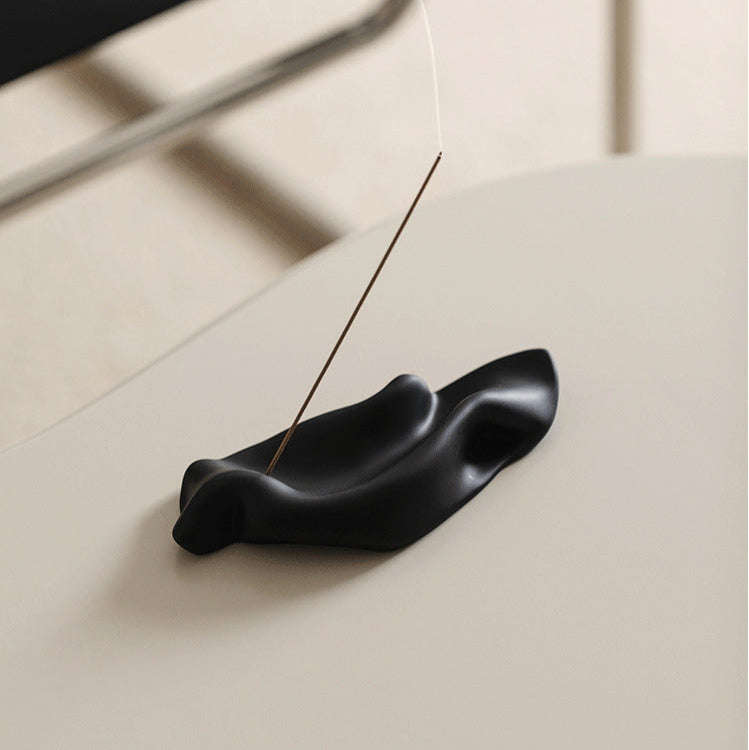

Incense Holder History: From Heian Japan to Contemporary Sculpture
Most writing about incense holders online treats them as an afterthought — a catch tray for ash, a safety precaution, a footnote to the "real" subject of the incense itself. Even specialty retailers, when they do cover the history, tend to produce thin, product-catalogue-style overviews. Asayu Japan's holder history piece, for example, gestures at the tradition but never really commits to the story. And that's a shame, because the incense holder has its own design lineage, one that runs from Heian-era aristocratic ritual through Zen austerity to the sculptural objects sitting on shelves in 2026.
This article traces that arc. No therapeutic language, no wellness claims, no meditation instruction. Just a material history of an object that has, for over a thousand years, been both functional and beautiful — and that, in the hands of contemporary artisans like those stocked at MUSO Collection, continues to evolve.
If you're looking for a contemporary holder informed by this history, our full incense holder collection gathers pieces from multiple studios. For a broader grounding in the materials and types of incense themselves, start with our guide to ceramic incense holders. Otherwise, let's begin where the story begins.
The Arrival of Incense in Japan: A Buddhist Import
Incense didn't originate in Japan. Aromatic woods — sandalwood, agarwood, clove, camphor — had been burned in Chinese temples and Indian ritual spaces for centuries before they crossed the sea. Buddhism was the vehicle. When it reached Japan in the 6th century, it brought with it the practice of shōkō (burning incense) as an offering, a purification act, and a way to mark sacred time.
But the incense holder as a distinct designed object — rather than a simple ceramic dish or bowl — emerges later. That story begins in earnest during the Heian period.
Heian Period (794–1185): Aristocratic Ritual and the First Purpose-Built Holders
The Heian court was, by any measure, obsessed with fragrance. Aristocrats didn't merely burn incense; they perfumed their robes, their rooms, their correspondence. The eleventh-century classic The Tale of Genji includes scenes of characters judged by their scent choices and blending skills — a kind of olfactory connoisseurship that permeated court life.
This obsession produced the first purpose-built incense holders in Japan: the kōro (香炉), a lidded burner typically made of bronze or glazed ceramic, designed to contain a small charcoal fire topped with aromatic woods or kneaded incense balls (nerikō). The lid — often pierced with decorative openings — served both to control airflow and to direct the smoke upward in a controlled column. The kōro wasn't merely functional. Its material, shape, and ornamentation signaled the owner's taste, rank, and cultural sophistication.
Heian-era kōro drew heavily from Tang Chinese prototypes — many were imported directly — but Japanese metalworkers and potters soon developed their own variations. The key innovation was aesthetic: where Chinese incense burners of the period often emphasized elaborate ornamentation, Heian kōro trended toward a refined restraint. The object was meant to recede into the ritual, not compete with it.
Two types of holders defined the period:
- Bronze kōro: Cast in one piece with a tripod base and pierced lid, used primarily in Buddhist temple settings and by the highest-ranking aristocrats. The Sanzai kōro (three-legged burner) design remains a recognizable template today.
- Ceramic kōro: Glazed stoneware produced in kilns like Seto and Tokoname, more accessible to the lower ranks of the nobility. These introduced regional clay bodies and glaze techniques into the incense-holder tradition — a material lineage that connects directly to the artisan ceramic holders on shelves now.
The Heian kōro established a principle that would echo through everything that followed: the holder is not an accessory to the incense. It's part of the act — the visual anchor point of the ritual, the frame around the fragrance.
Kamakura (1185–1333) and Muromachi (1336–1573): Zen Austerity and the Birth of Kōdō
The Kamakura period brought a decisive shift. Power moved from the Heian aristocracy to the warrior class, and with it came a different aesthetic sensibility. The ornate kōro of the Heian court gave way to simpler forms: unglazed stoneware, rough iron, plain wood. Zen Buddhism, which took deep root during this period, brought an ethic of reduction — the idea that stripping away ornament reveals essence.
This was also when Kōdō (香道, the "Way of Incense") was formalized. Kōdō is one of Japan's three classical art forms alongside chadō (tea ceremony) and kadō (flower arranging). In Kōdō, the participant doesn't just smell incense — they practice a disciplined sensory art involving games of discrimination (identifying different aromatic woods by scent alone), prescribed movements, and specific implements. The holder was no longer merely a burner; it became part of a codified ritual toolkit.
The key objects in this toolkit included:
- Kōgō (香合): A small lidded container for storing kneaded incense or aromatic wood chips. Typically ceramic or lacquerware, often small enough to fit in the palm. The kōgō became a collector's item in its own right — a miniature sculpture that revealed itself only when the lid was lifted.
- Kiki-kōro (聞香炉): A specialized listening burner — smaller than a temple kōro, handheld, with a precisely controlled aperture designed for the Kōdō practice of "listening" to incense (the Japanese term is kiku, "to listen," rather than "to smell").
- Tate-kōro (立て香炉): A standing burner designed to hold a single stick of senkō (incense stick) upright, a form that had emerged with the introduction of stick incense from China.
The Muromachi period deepened this aesthetic. The tea master Murata Jukō (1423–1502), credited with developing the wabi-cha style of tea ceremony, integrated incense burning into the tea ritual. The objects used — a simple ceramic incense container, a plain ash bed — embodied the wabi aesthetic: rustic, imperfect, quiet. This is the direct ancestor of the wabi-sabi design philosophy that informs the MUSO Collection's curation. If you look at a Momo's Life Artisan Ceramic Incense Holder today — its irregular glaze, its handmade weight — you're looking at a direct descendant of Muromachi-period ceramic kōgō.
Edo Period (1603–1868): Proliferation and the Rise of Everyday Incense
If the Heian court kept incense exclusive, the Edo period democratized it. The Tokugawa shogunate brought stability and economic growth; a prosperous merchant class emerged in cities like Edo (Tokyo), Kyoto, and Osaka. Incense — once the province of aristocrats, warriors, and priests — became available to townspeople. So did the holders.
This was a period of material and formal explosion. The previous centuries had established the core types — kōro, kōgō, tate-kōro — but Edo-period artisans expanded the palette dramatically:
- Imari and Arita porcelain: Kilns in Kyushu produced vividly decorated porcelain kōro that were exported to Europe through Dutch traders. These pieces, with their elaborate underglaze blue and overglaze enamels, represented a maximalist counter-current to the Zen minimalist tradition.
- Lacquerware kōgō: Maki-e (sprinkled-picture) lacquer techniques, developed to a high art during the Edo period, produced incense containers of extraordinary delicacy — gold and silver powders embedded in layer after layer of lacquer.
- Bizen and Shigaraki stoneware: At the other end of the spectrum, unglazed wood-fired stoneware from these ancient kiln sites offered a rugged, earthy alternative — holders whose surface was created entirely by flame and ash in the kiln, not by applied decoration.
- Iron and cast metal: Namban tetsubin-style ironwork from the north produced heavy, virtually indestructible incense burners that appealed to the practical sensibilities of merchant households.
By the late Edo period, you could walk into a shop in any major city and find incense holders at every price point, in every material, for every taste. The holder had become, for the first time, an object of everyday domestic life rather than a ritual instrument. This shift — from ceremonial tool to household object — is the hinge between the Japanese incense-holder tradition and the contemporary market.
Meiji to Shōwa: Industrialization, Export, and the Studio Crafts Movement
The Meiji Restoration (1868) opened Japan to the West, and the incense-holder tradition absorbed new influences. Western buyers — fascinated by japonisme — created an export market for kōro, kōgō, and incense accessories. Japanese artisans responded: some leaned into traditional techniques for the export trade, while others experimented with Western forms and materials.
The most significant development for the contemporary holder, however, came later: the mingei (folk craft) movement, launched in the 1920s by philosopher Yanagi Sōetsu and potters Hamada Shōji and Kawai Kanjirō. Mingei elevated the anonymous, functional craft object — the kind of thing made by unknown potters in provincial kilns — to the status of art. Its principles align almost perfectly with the wabi-sabi aesthetic: beauty in imperfection, honesty of materials, function before decoration, the warmth of the handmade over the precision of the machine-made.
A mingei ceramic incense holder — thick-walled, asymmetrical, wearing the marks of its making — is the conceptual bridge between a Muromachi kōgō and something you'd place on a shelf today. The Momo's Life Artisan Glaze Ceramic Incense Holder, with its reactive glaze and organic form, is unthinkable without the mingei movement standing behind it.
Contemporary Sculpture: Where the Lineage Lands
So where does the history of the incense holder land in 2026?
It lands in two places simultaneously. On one side, you have the mass-produced holder — injection-molded, shipped in bulk, functional but anonymous. On the other, you have a small but growing cohort of independent artisans and design studios treating the incense holder as a legitimate sculptural medium. This second category is where MUSO Collection operates, and it's where the historical lineage continues.
What distinguishes a contemporary sculptural holder from a merely functional one? The same things that distinguished a Heian kōro from a plain ceramic dish: intentionality of form, honesty of material, and an awareness — whether explicit or intuitive — of the tradition the object belongs to.
Two of the studios MUSO stocks illustrate this overlap between history and present-day design particularly well.
ASPDIN: Minimalist Sculpture and the Kōro Spirit
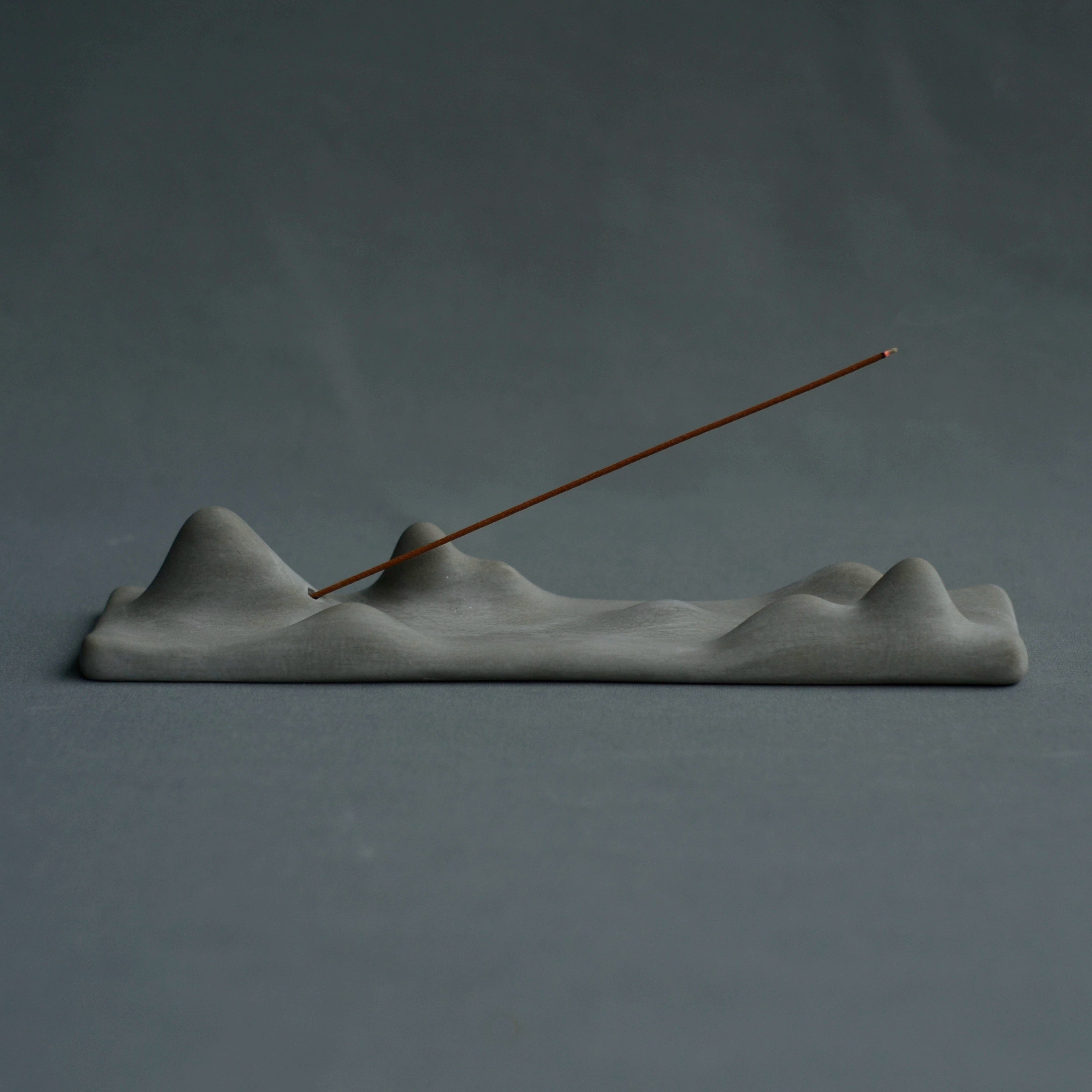
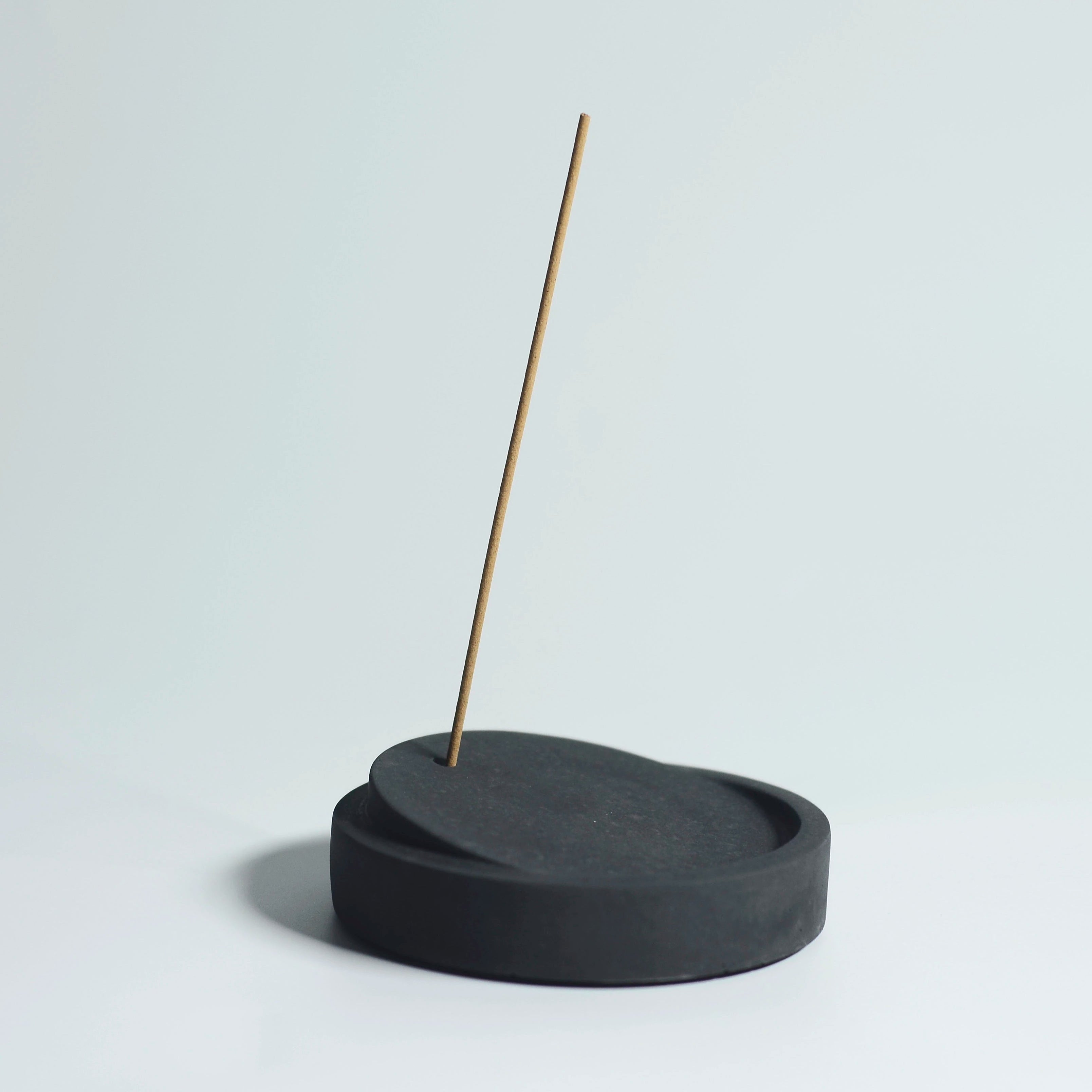
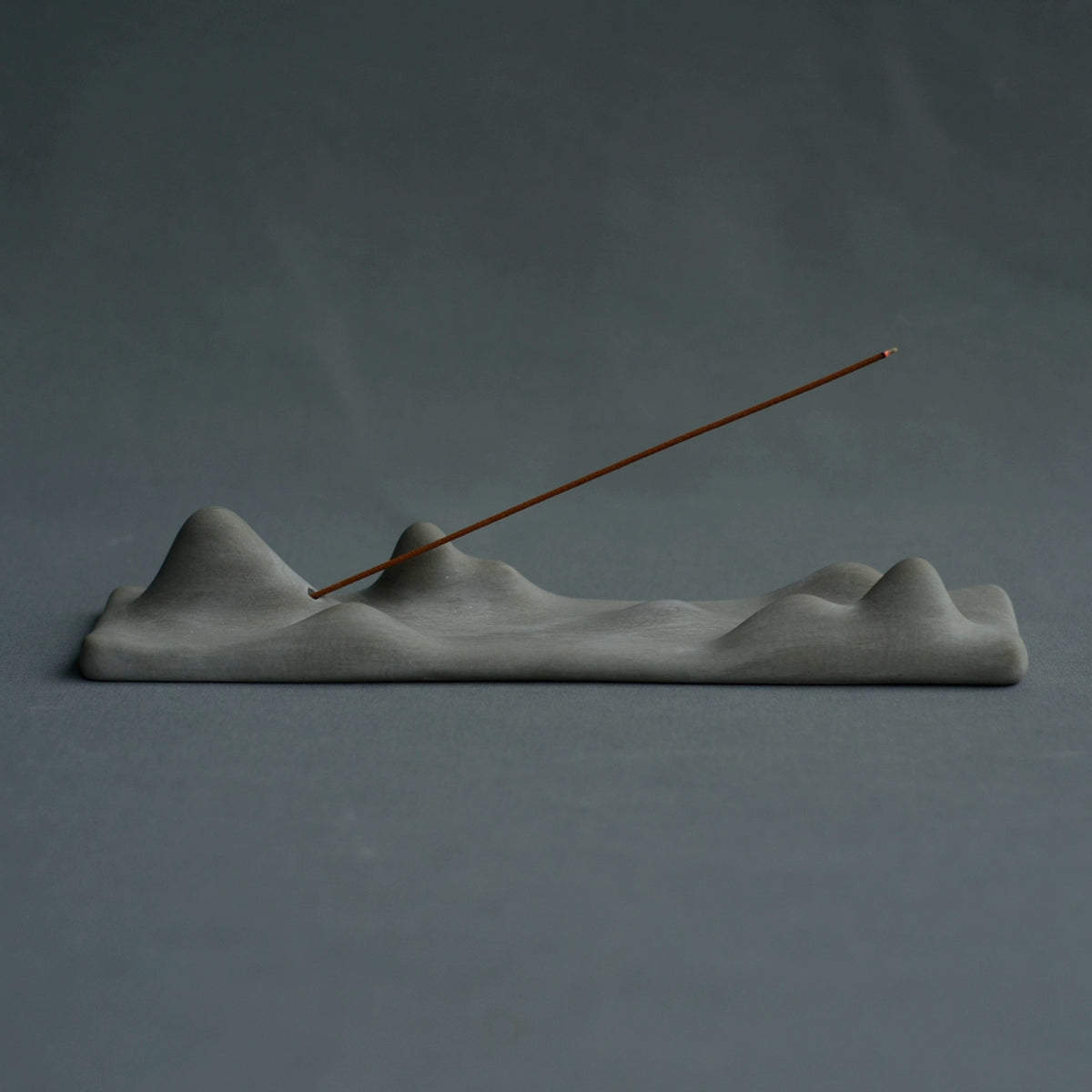
The ASPDIN Zen Mountain Range Incense Holder is unmistakably contemporary — its composite stone-like material, its abstract mountain silhouette — but its design logic is centuries old. It functions as a tate-kōro (upright stick holder) while reading as a tabletop sculpture. The ash catch is integrated into the form rather than tacked on as an afterthought. There's an austerity to it that echoes the Kamakura-period Zen aesthetic: no flourishes, no ornament, just mass and line and proportion doing the work.
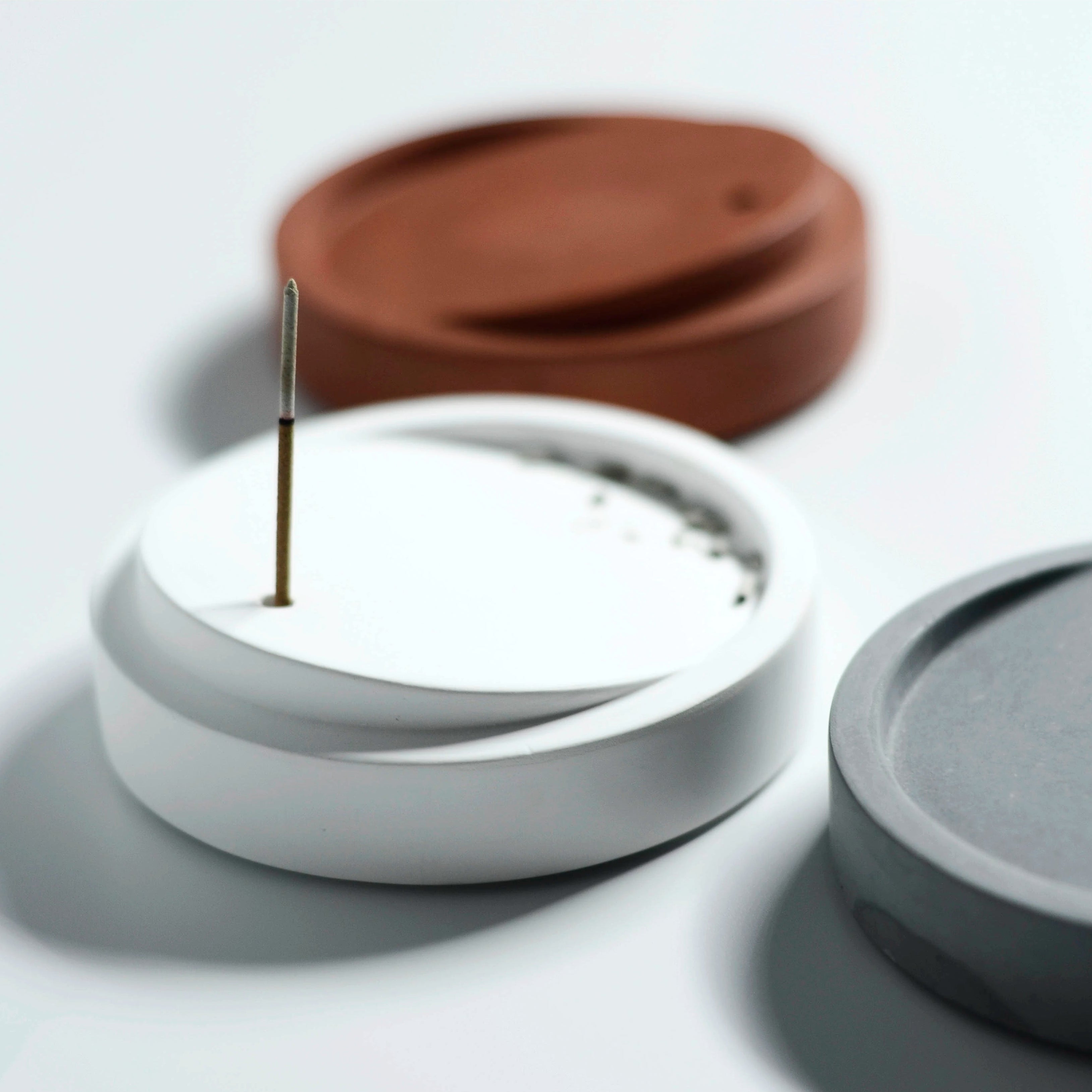
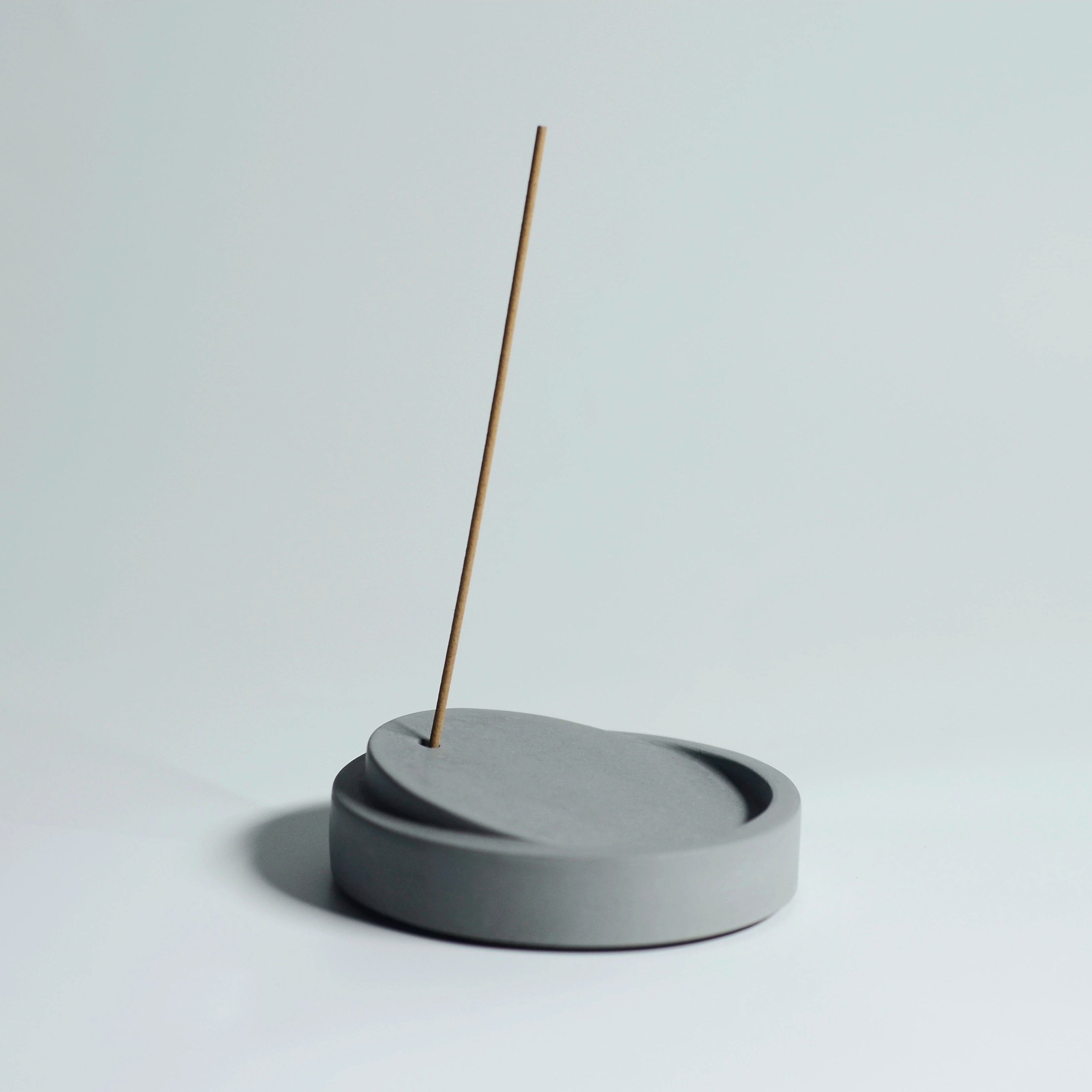
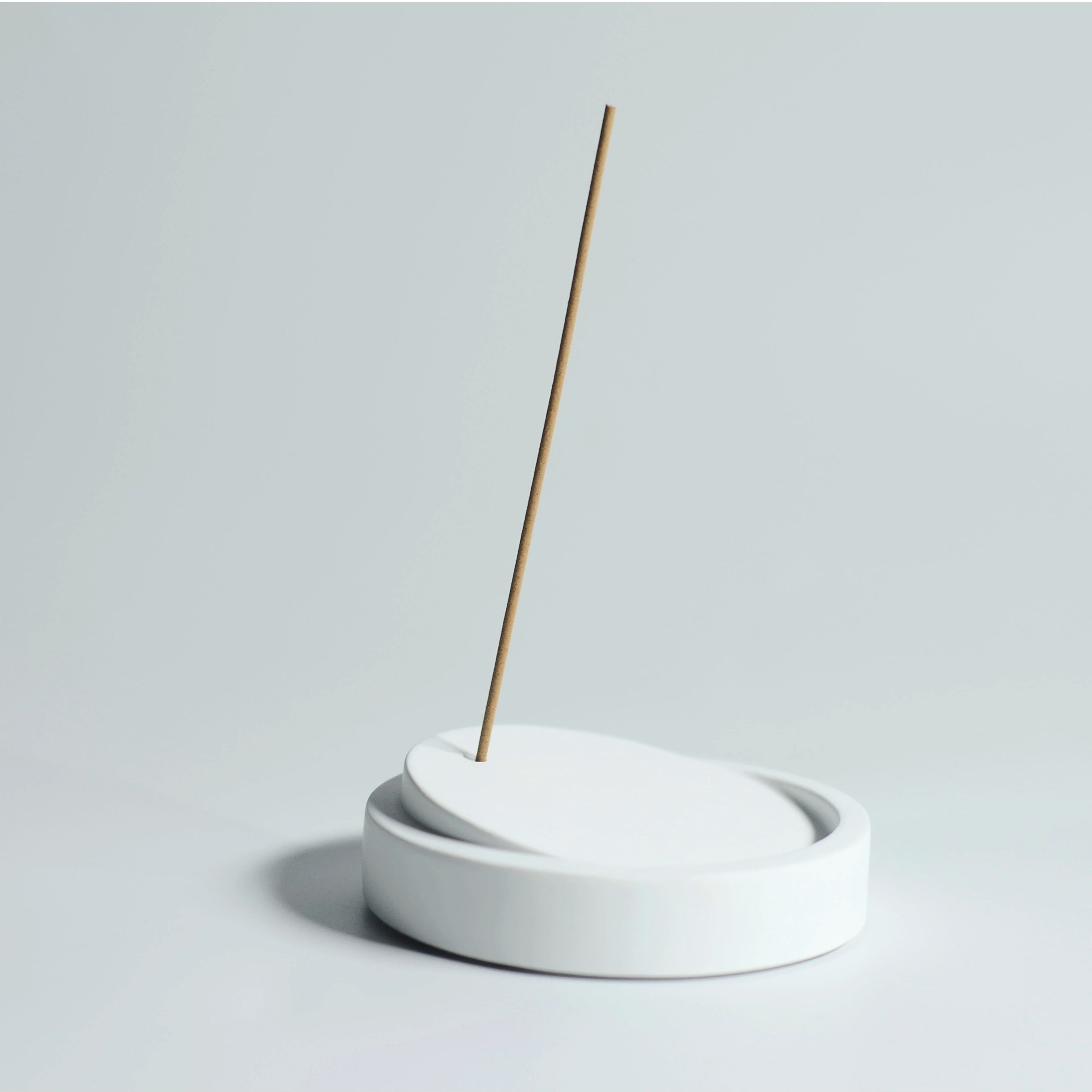
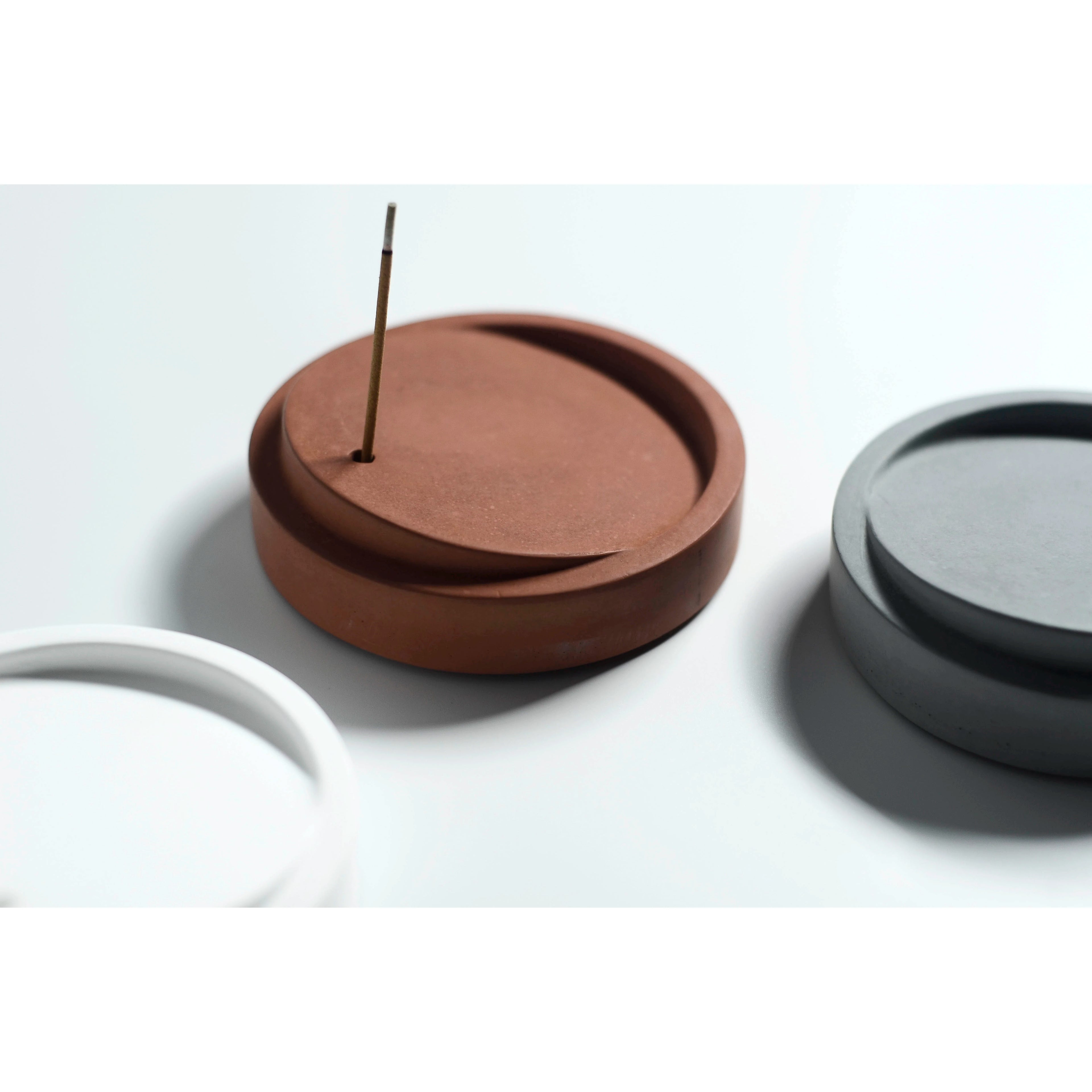
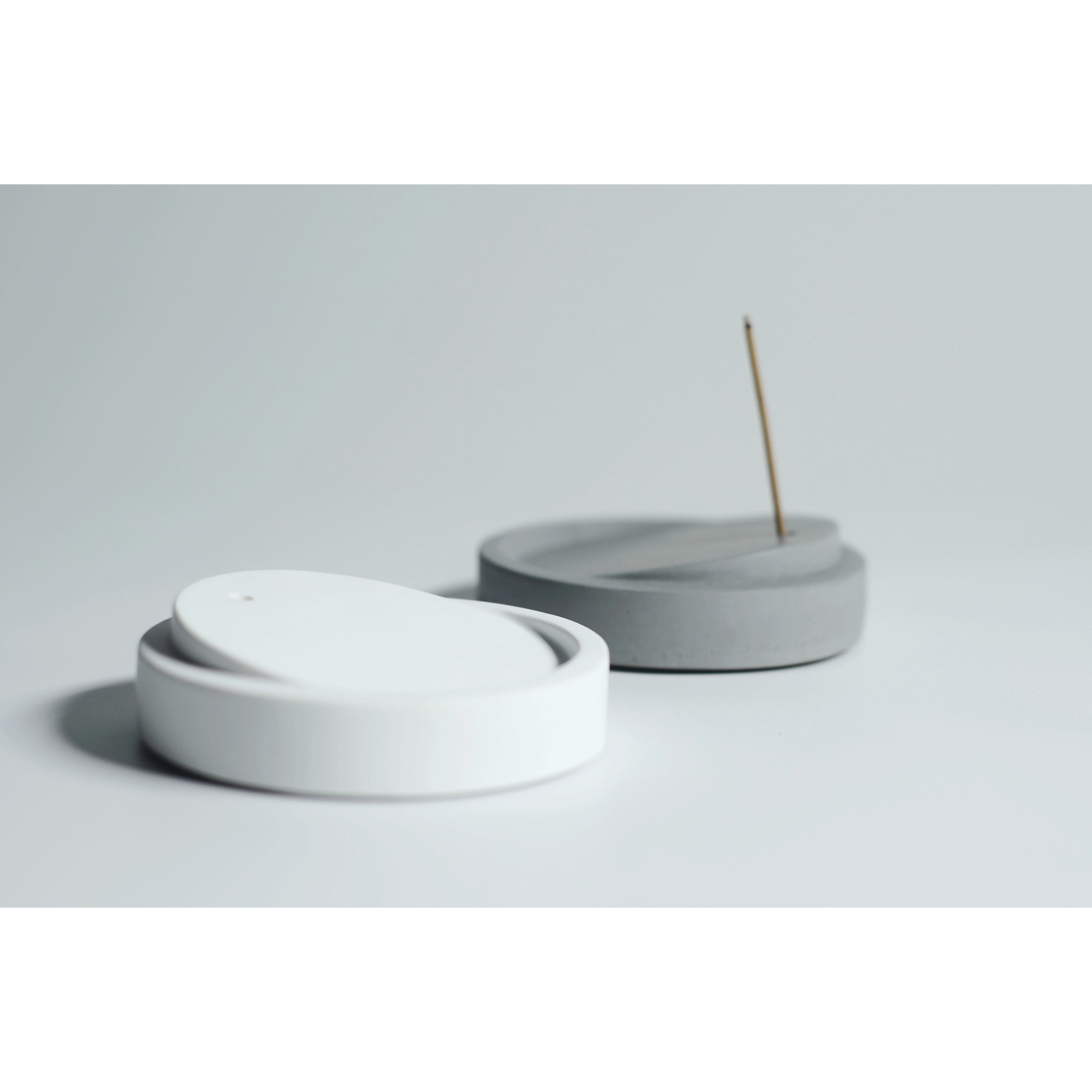
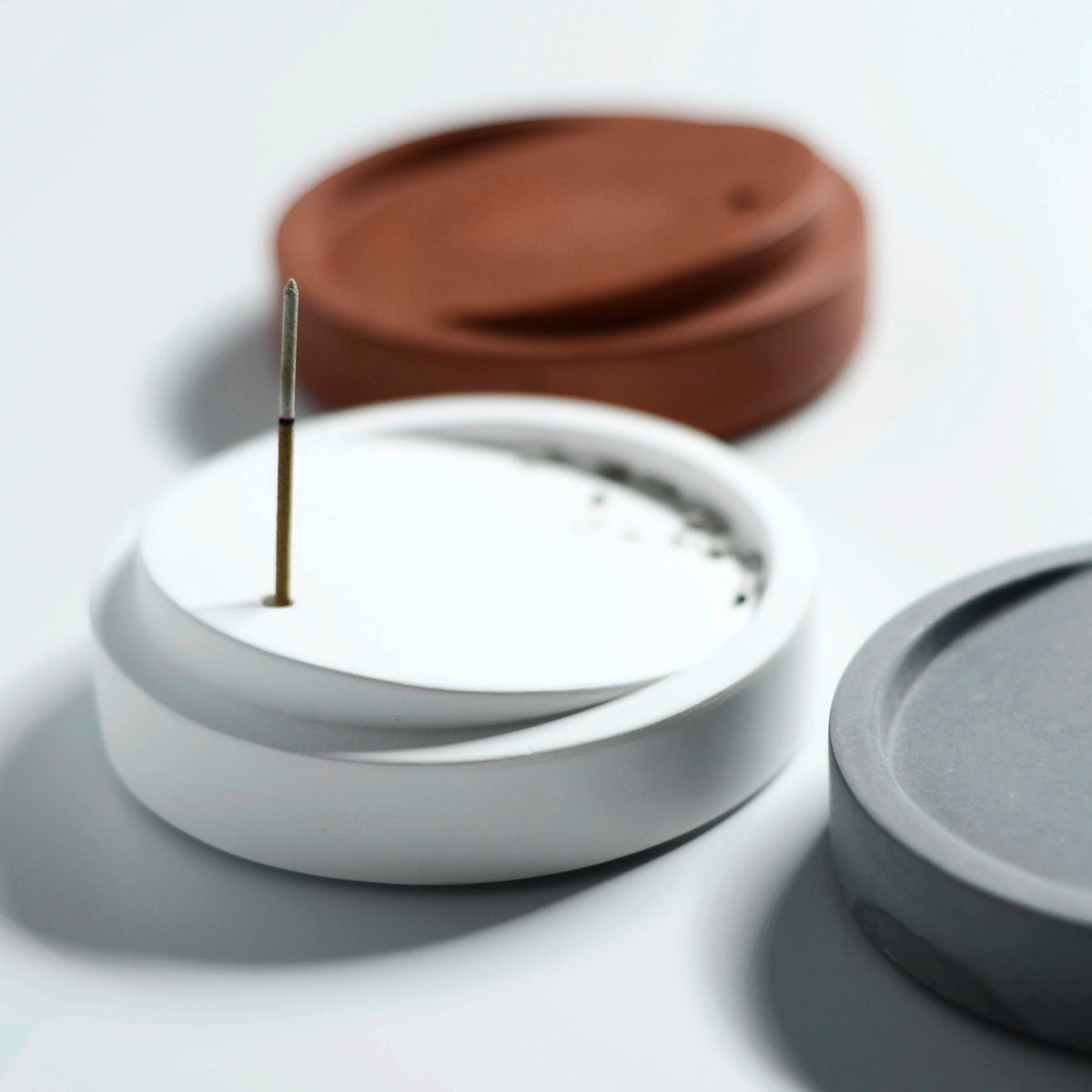
The ASPDIN ZenSpin Slide Incense Holder pushes further into sculptural territory. It's a kinetic object — the stick sits in a sliding channel that you adjust to position the ash fall. The mechanism is simple, but the visual effect is dynamic: the holder changes configuration based on where the burn is. In a historical sense, it's a modern kiki-kōro reimagined through an industrial-design lens — the same ritual function (controlled burn, directed ash, "listening" to the incense) executed through contemporary materials and fabrication.
Momo's Life: The Ceramic Tradition, Glazed and Alive
If ASPDIN represents the minimalist, near-industrial end of the contemporary spectrum, Momo's Life occupies the handcrafted, organic end — and is arguably closer to the mingei tradition. Each piece in their line is an individual ceramic object: thrown or hand-built, glazed in reactive finishes that pool and break unpredictably in the kiln.
The Momo's Life Artisan Ceramic Incense Holder — available in multiple glaze variants — wears its making on its surface. No two are identical. The glaze drips, the clay body shows through at the edges, the form is slightly asymmetrical. These aren't flaws; they're the visual signature of the handmade, the same quality that made Bizen and Shigaraki stoneware prized in the Edo period.
The Artisan Glaze variant pushes color further — reactive glazes that produce crystalline effects and color gradations across the surface. And the Ceramic Artistry Incense Holder — the most sculptural in the line — reads almost as a miniature abstract form: a ceramic object that happens to hold an incense stick. Browse the full range in our ceramic incense holders collection.
At the intersection of materials, the Aura Resin Elegance Incense Holder represents a newer chapter in the material story — resin, a material no Heian-era artisan could have imagined, formed into a clean-lined contemporary shape. It's practical (moisture-resistant, lightweight) and sits well in our resin incense holders collection. For a broader view of how to select a holder matched to your space and needs, our 2026 buyer's guide covers the practical considerations in depth.
Japanese Incense Holder Types: A Field Guide
For anyone navigating the contemporary market, knowing the traditional types helps. Here are the main categories you'll encounter, whether in antique shops or modern online catalogues:
- Kōro (香炉): The general term for an incense burner, traditionally lidded with a pierced top. Modern kōro take many forms — ceramic bowls, cast-metal vessels, minimalist stone shapes — but the principle of a contained burn chamber remains. The ASPDIN Zen Mountain Range, with its recessed ash catch, is a contemporary kōro in spirit.
- Kōgō (香合): Incense container, not a burner — used to store chips, kneaded incense, or sticks. Ceramic kōgō are collected as art objects independent of their function, and many contemporary ceramic holders blur the line between kōgō and kōro.
- Tate-kōro (立て香炉): A standing burner designed for upright incense sticks. The most common form in the modern market — everything from simple ceramic discs with a single hole to elaborate multi-stick stands.
- Kiki-kōro (聞香炉): The "listening burner" used in Kōdō. Small, handheld, designed for close, focused appreciation of a single chip of aromatic wood. In modern design, this translates to compact holders meant for an individual rather than a room.
- Nerikō-dai (練香台): A flat tray or plate for kneaded incense balls, used when the incense is smoldered on charcoal rather than burned as a stick. Less common in the modern market but visible in ceramic trays and flat-form holders.
Choosing a Holder: Material Matters
If the history teaches one lesson, it's that material choice is never neutral. A bronze kōro behaves differently from a ceramic one — different heat retention, different visual weight, different relationship to the smoke. Here's how the main contemporary materials break down:
- Ceramic: The most traditional material, and the one with the deepest aesthetic lineage. Ceramic absorbs and radiates heat gently, won't scorch, and develops character over time — glaze crazing, subtle discoloration from ash contact. The Momo's Life line is ceramic through and through. Browse our ceramic incense holder collection for the full range.
- Stone and composite: Heavy, stable, and visually grounded. The ASPDIN holders use a composite stone-look material that won't chip or crack under normal use and carries enough weight to resist being knocked over. In a historical sense, these echo the granite and basalt burners found in temple settings.
- Resin: A modern material with modern properties — lightweight, moisture-resistant, available in forms that would be difficult to achieve in ceramic. The Aura Resin Elegance is a good example. Resin holders are practical choices for bathrooms and other humid environments. See our resin incense holders collection.
- Metal (bronze, brass, iron): Traditional for kōro, less common in the contemporary market except at the high end. Metal heats up more than ceramic or stone — something to keep in mind if you plan to handle the holder during or immediately after a burn.
- Wood and bamboo: Common in Southeast Asian traditions, rarer in Japanese-derived designs because of the obvious fire-safety concern. Wooden holders typically include a metal or ceramic insert at the burn point.
No single material is "best" — the right choice depends on where you'll place the holder, how often you'll move it, and what aesthetic you want it to carry into the room. Our room-by-room placement guide covers material matching in more spatial detail.
What the History Means for a Shelf in 2026
The arc of this story — from Heian bronze to Muromachi ceramic to Edo porcelain to mingei stoneware to ASPDIN composite and Momo's Life reactive glaze — is an arc toward objects that are simultaneously functional and expressive. The incense holder has always been both. The Heian aristocrat who commissioned a bronze kōro wasn't just buying a burner; they were buying an object that would sit in their reception hall and speak to their taste. The contemporary buyer who chooses a sculptural holder over a pressed-tin dish is making the same calculation, whether they know the history or not.
What's new is access. A thousand years ago, a kōro of distinction required aristocratic patronage or temple resources. Today, a handcrafted sculptural holder costs roughly what a dinner out costs, and carries forward a design tradition that spans centuries of Japanese material culture. That's not wellness marketing — it's just what the object is.
If you want to explore how the wabi-sabi philosophy that shaped so much of this tradition applies to the rest of your space, our guide to wabi-sabi décor extends the thinking to the broader home.
This article is for informational purposes about incense products and craftsmanship. MUSO Collection makes no claims about the health effects of its products.