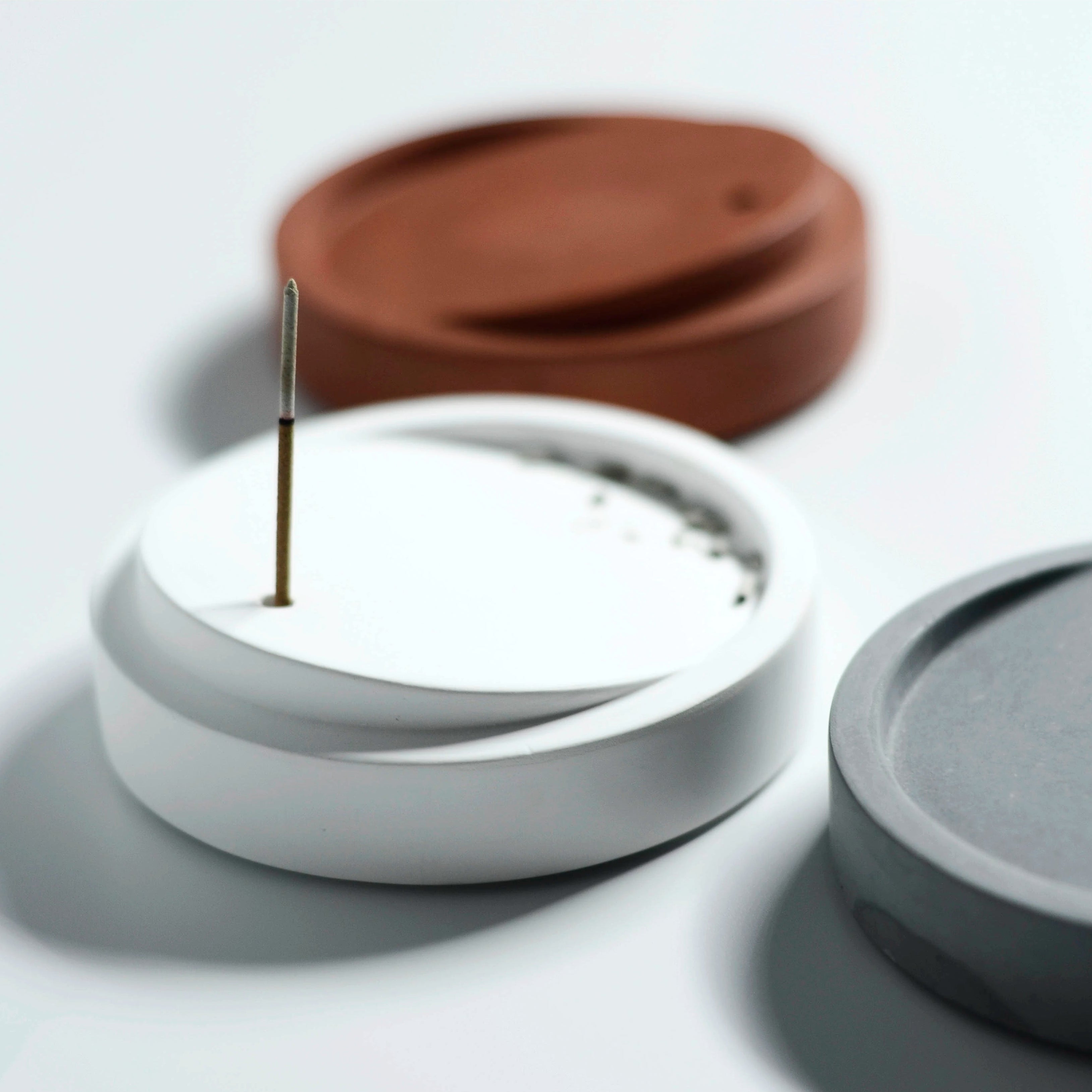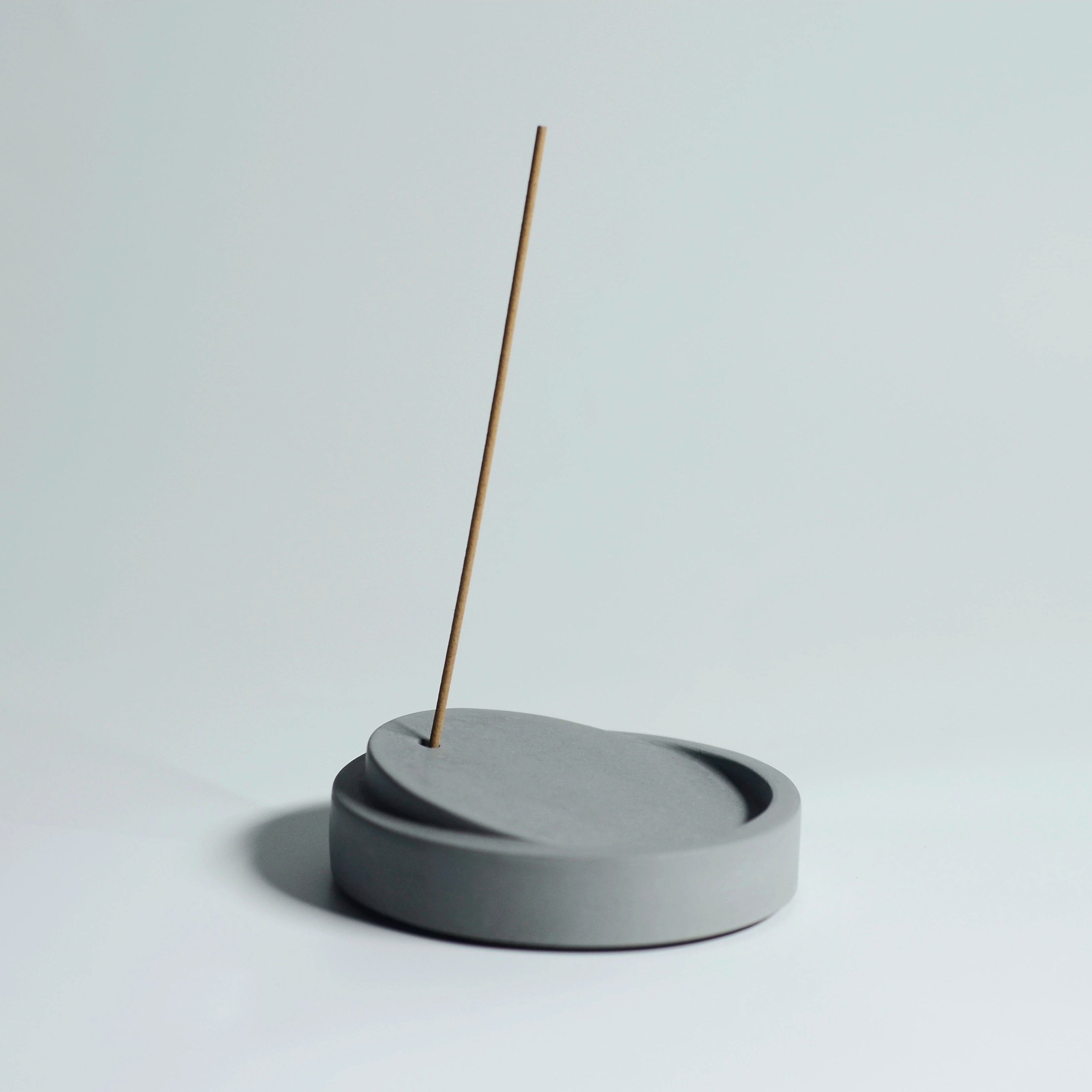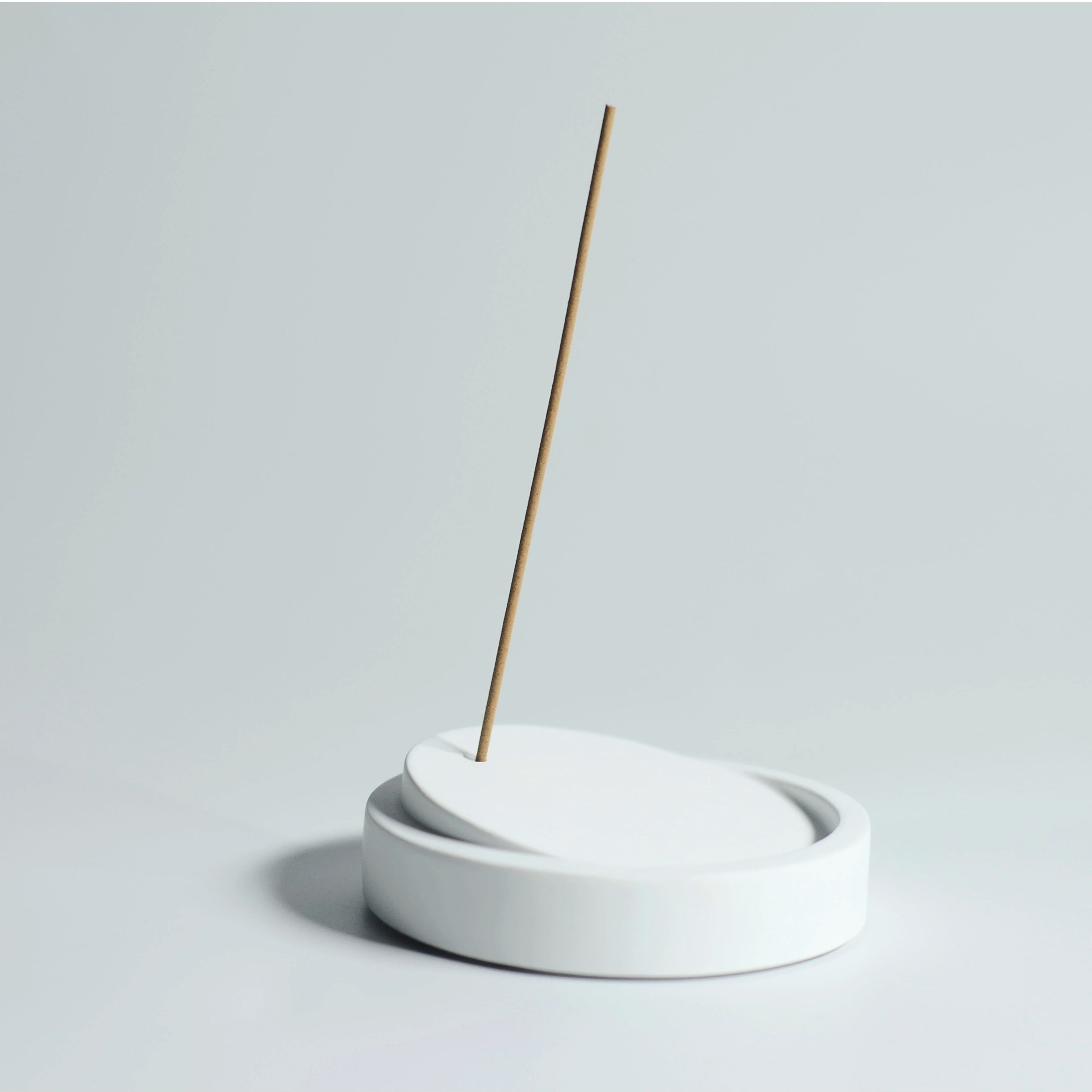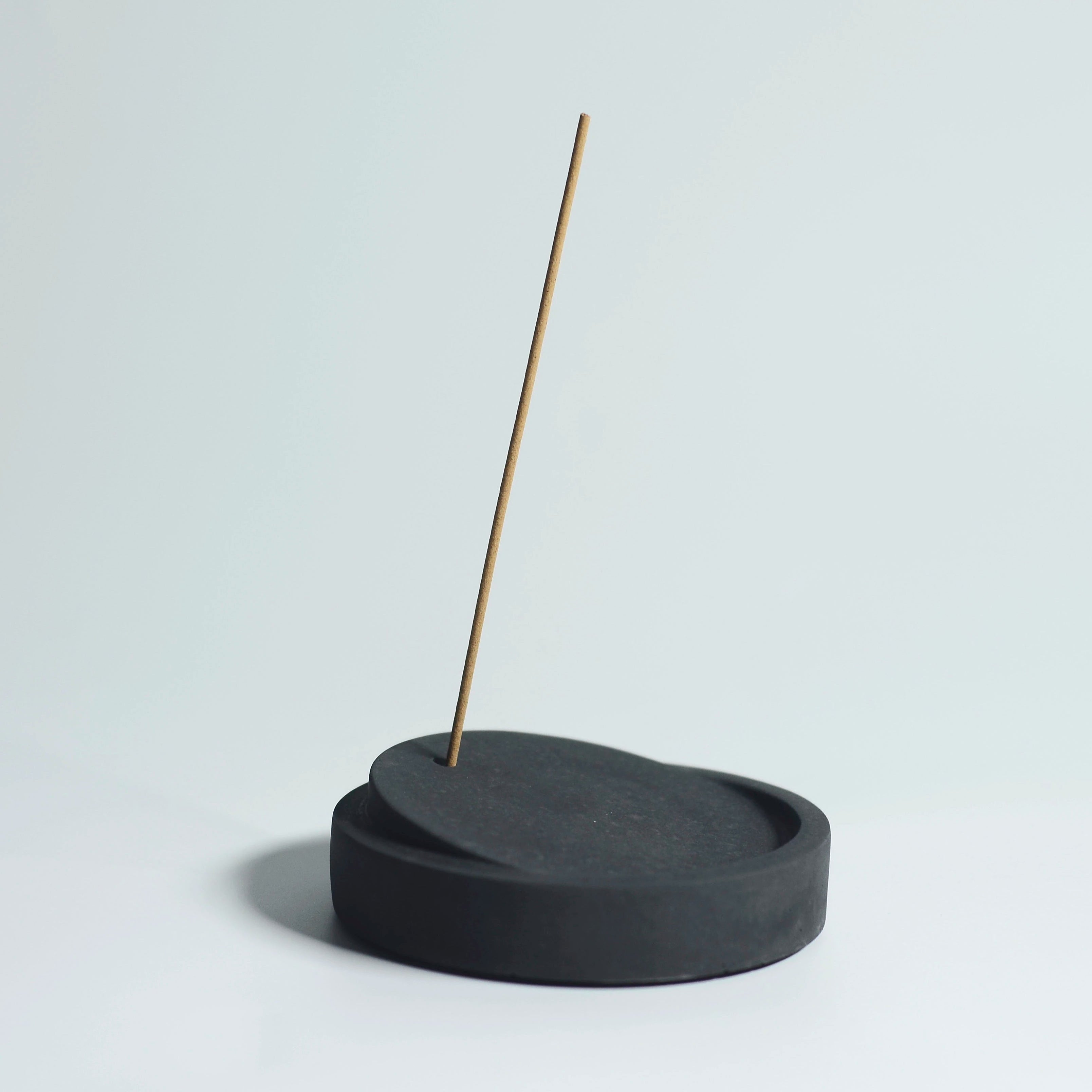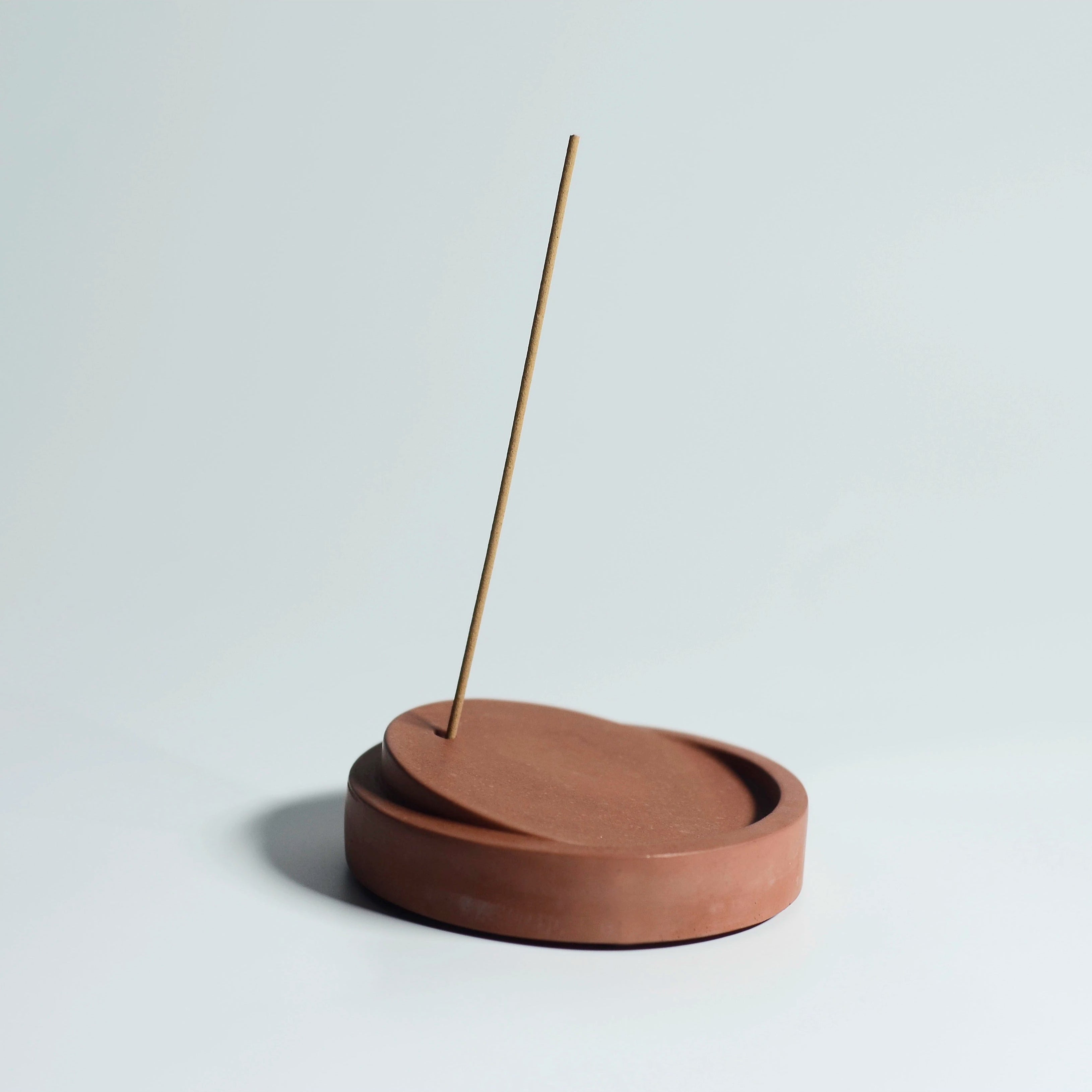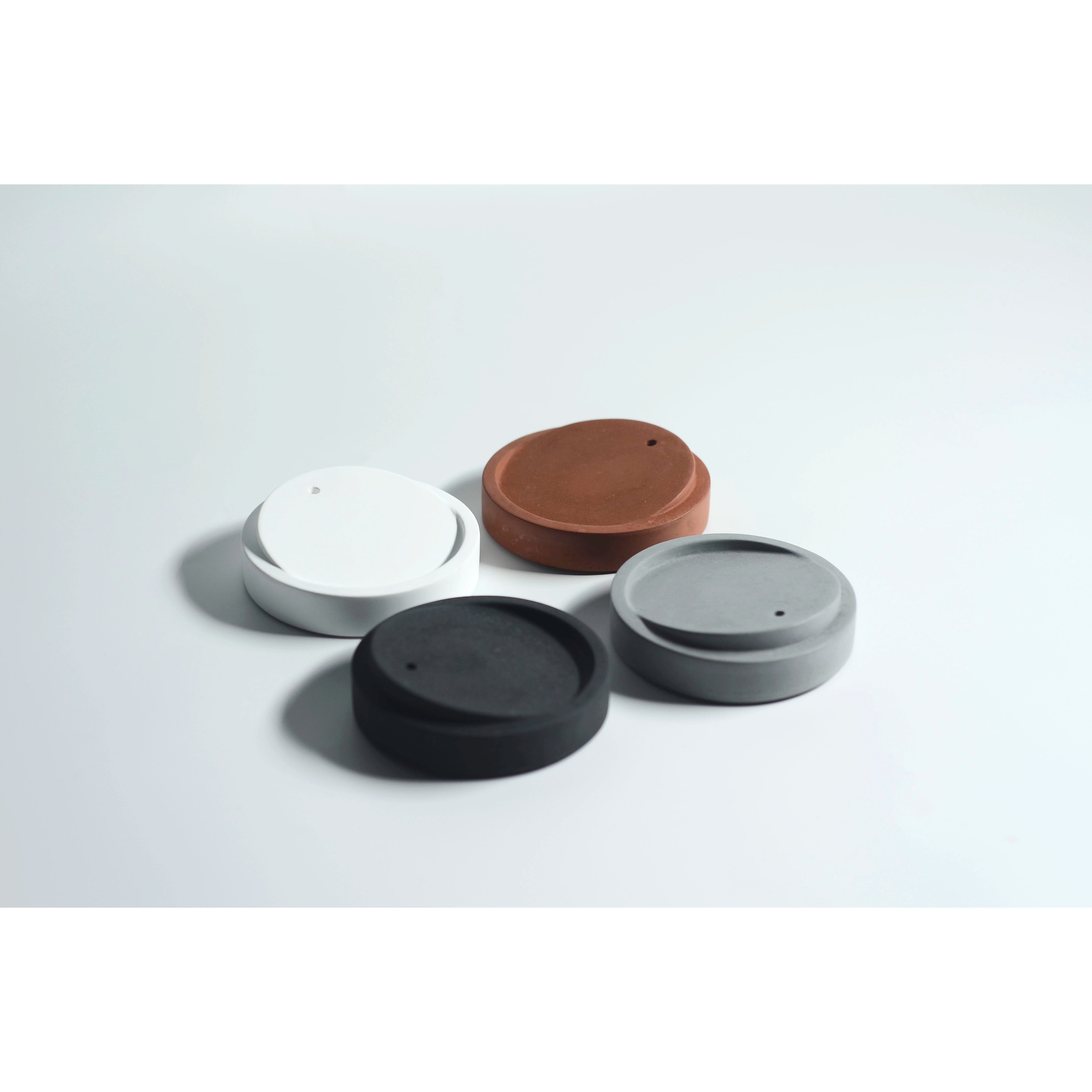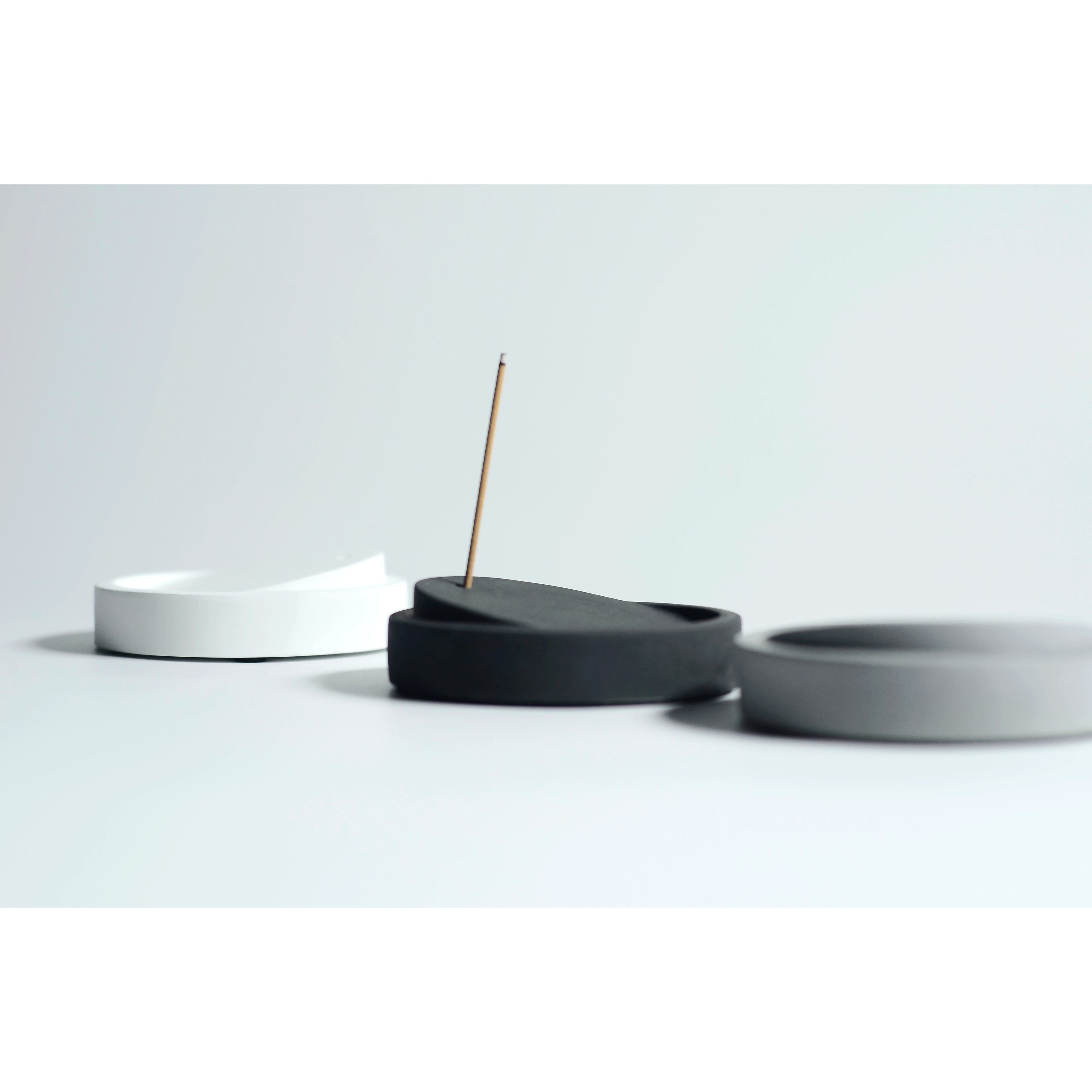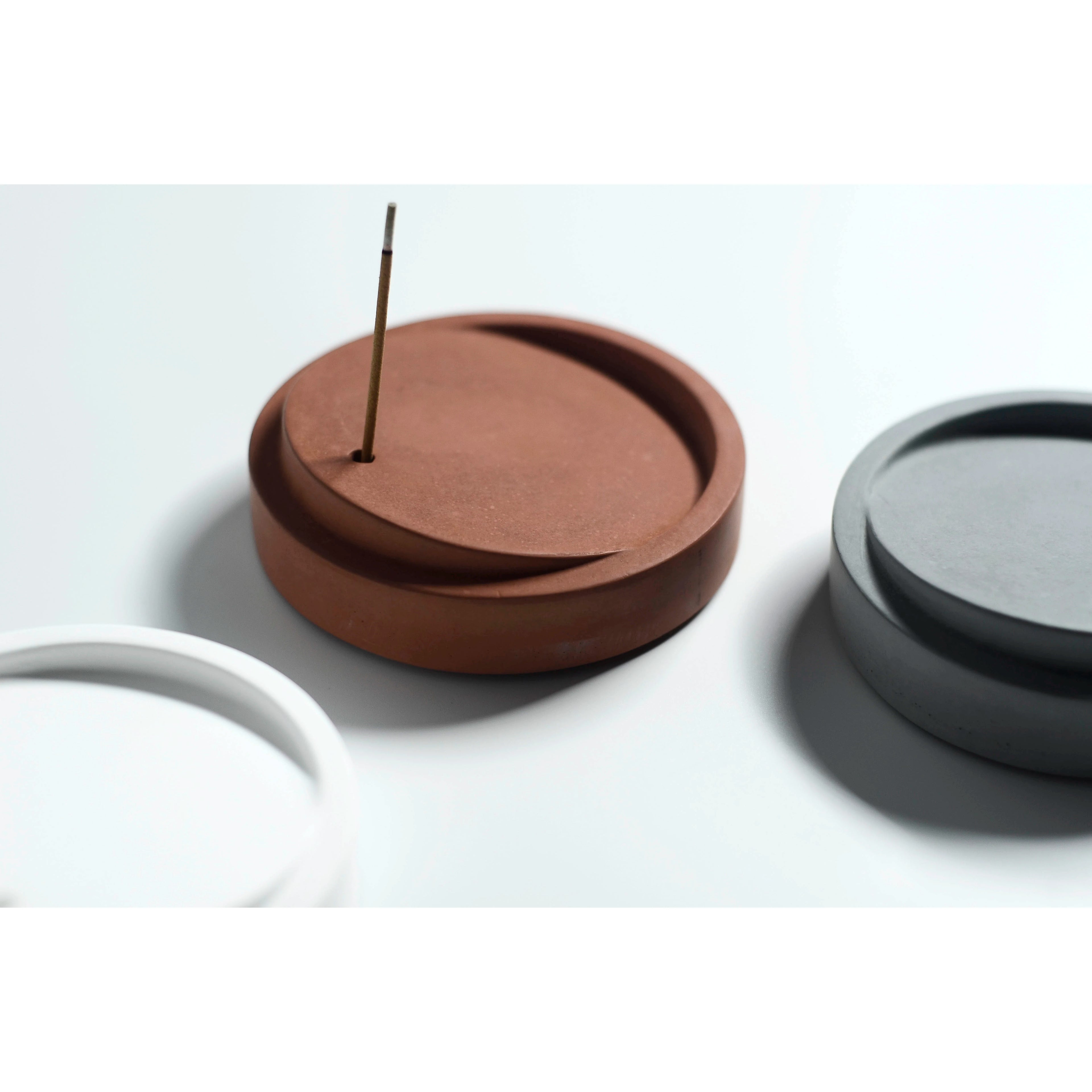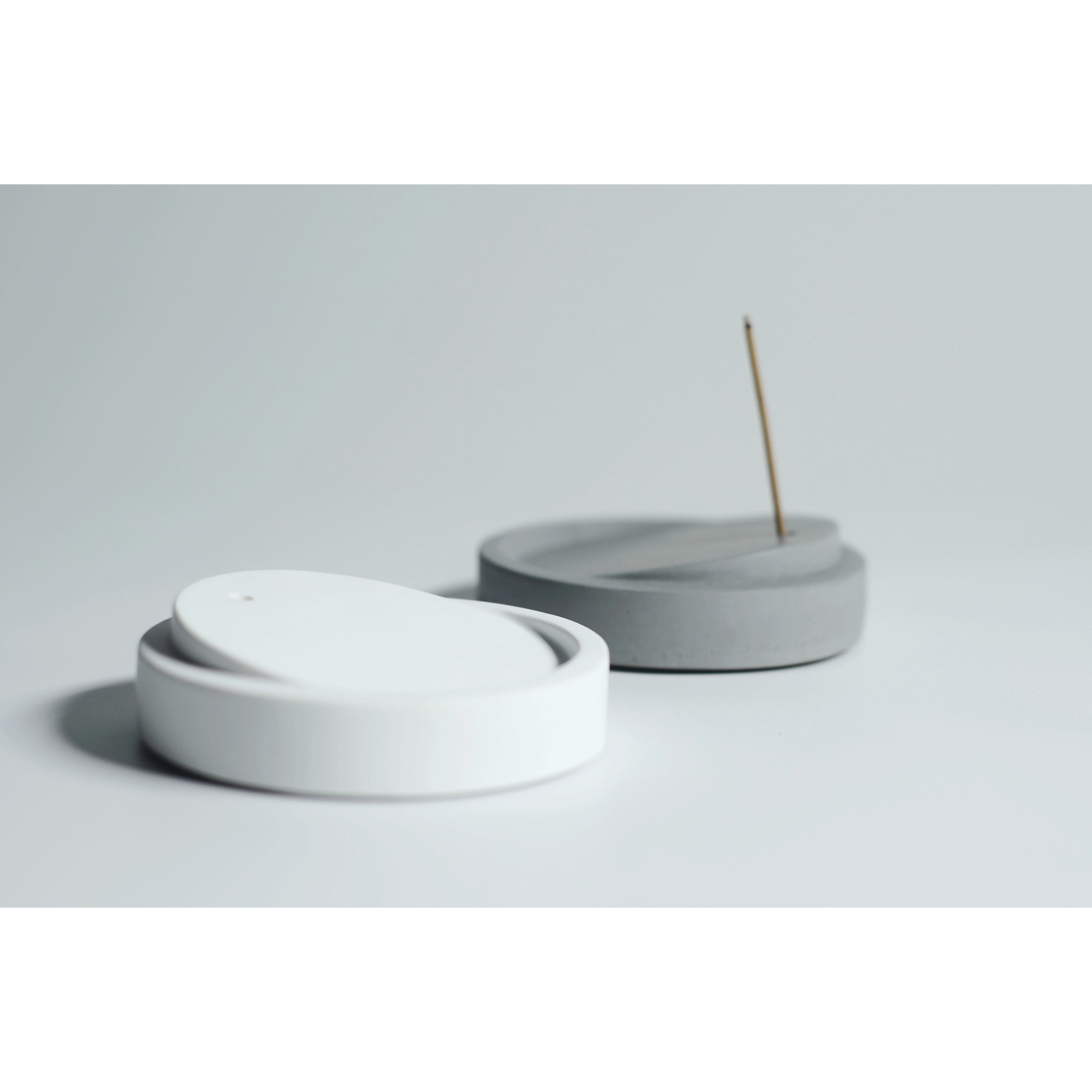
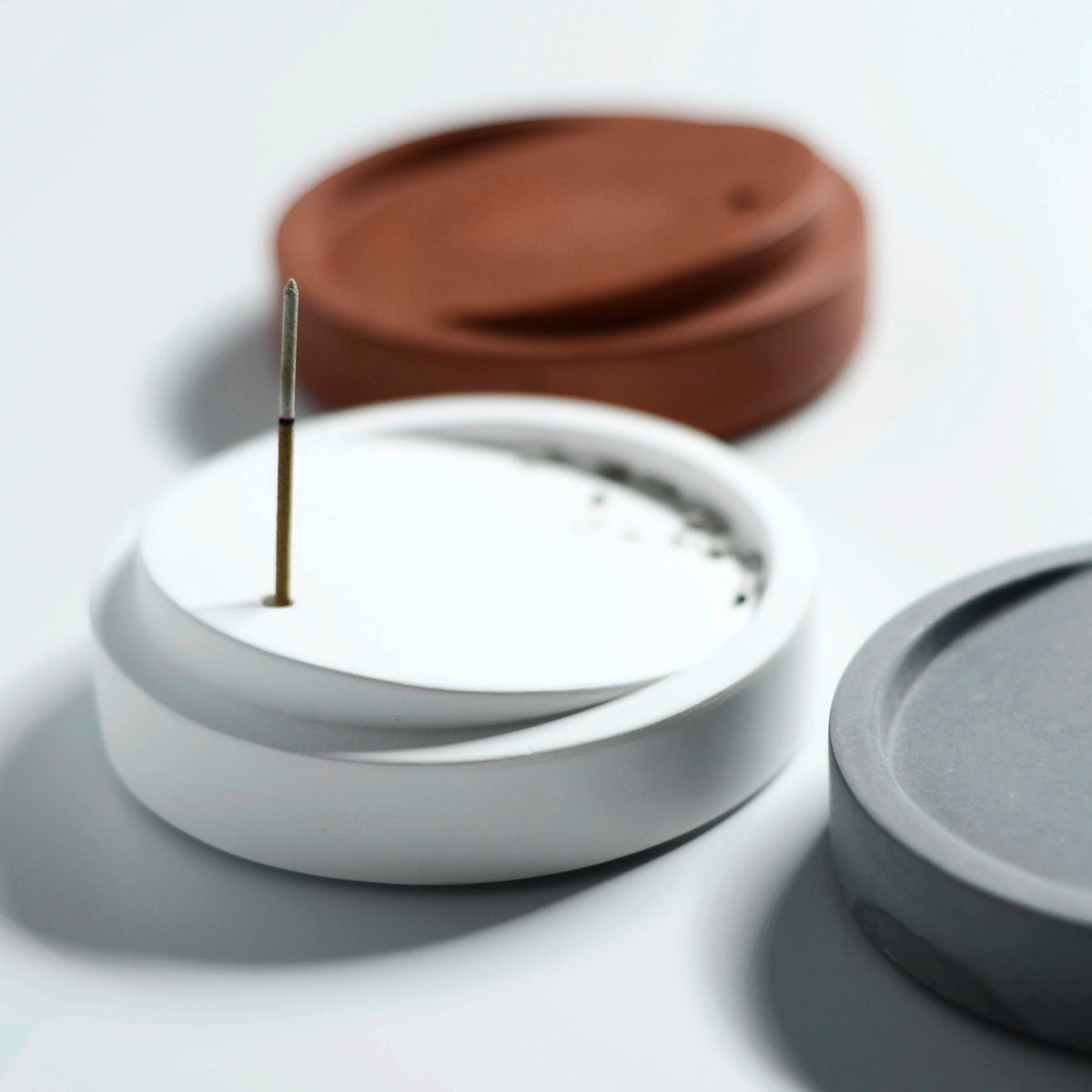
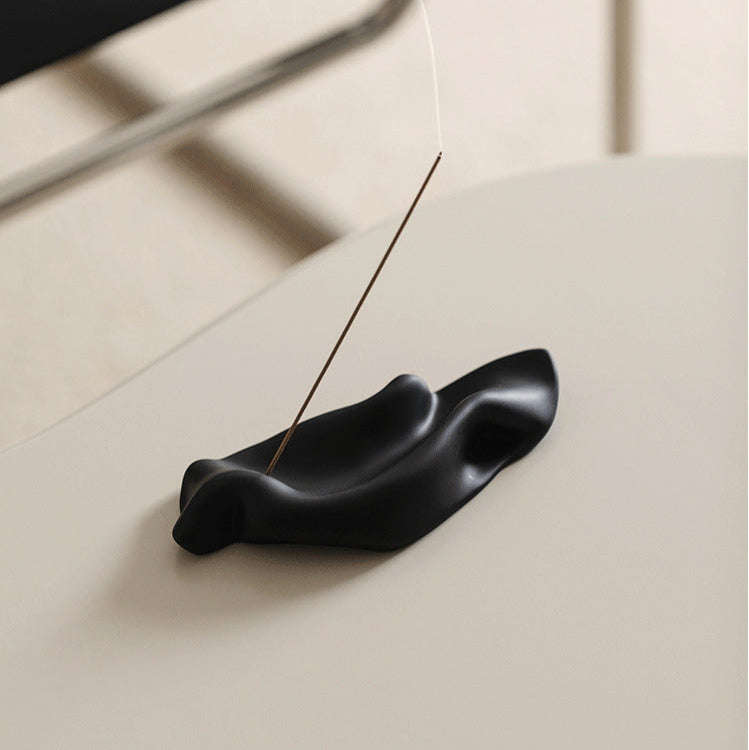

The first time I picked up a resin incense holder, I expected it to feel cheap. Plastic-y. Something to set down carefully and forget about. Instead I turned it over in my hands, smooth, cool, heavier than it looked, and noticed the way the light caught its surface. A translucent edge here, an opaque curve there. It was the shape that stopped me: asymmetrical, organic, the kind of form you'd expect from a gallery ceramicist, not something that had come out of a mold.
That's the thing about resin as an incense holder material. It gets dismissed before anyone actually handles a well-made one. But resin, specifically poly-resin, the cast polymer used in sculptural decorative objects, has design capabilities that ceramic and glass simply cannot match. It can hold shapes those materials cannot. It can produce finishes those materials cannot. And it does all of this at a weight and a price point that make it accessible in a way that hand-thrown stoneware, for all its virtues, often is not.
This article is about what resin brings to the incense holder, and what it doesn't. No health claims. No meditation benefits. Just the material itself: how it's made, how it performs, how it compares, and whether it deserves a place on your shelf. For a broader view across all holder materials, our Best Incense Holders 2026 buyer's guide goes deep into ceramic, brass, soapstone, wood, and resin side by side.
What Is Poly-Resin? How Resin Holders Are Made
Resin, in the context of an incense holder, is not tree sap. Tree resins, frankincense, myrrh, copal, are natural botanical exudates that harden on exposure to air and are burned as incense. That's a different material entirely. The resin in a resin incense holder is poly-resin: a synthetic polymer, typically polyurethane-based or epoxy-based, that starts as a liquid and cures into a rigid solid through a chemical reaction.
The manufacturing process for a poly-resin holder works like this:
A master form, the original sculptural design, is created first, usually by a designer working in clay, wax, or digital 3D modeling. From that master, a flexible silicone mold is cast. The silicone captures every surface detail: gentle undulations, sharp edges, organic irregularities, matte and gloss textures.
Liquid poly-resin is then mixed with a hardener. Pigments are added at this stage, mineral powders for opaque stone-like finishes, translucent dyes for glass-like effects, metallic suspensions for lustre finishes. The mixture is poured into the silicone mold and left to cure. Unlike ceramic, which requires a kiln firing at 1,200-1,400 °C, poly-resin hardens at room temperature through an exothermic chemical reaction. The cure time varies by formulation but is typically measured in hours, not days.
Once cured, the piece is demolded. Any seam lines from the mold are sanded smooth. A clear topcoat, usually a UV-resistant lacquer, may be applied to protect the surface and deepen the color. The result is a solid, non-porous object that weighs roughly half what the equivalent volume of ceramic would weigh.
This process, liquid cast in a flexible mold, is what gives resin its design advantage. It explains why resin holders can produce shapes that ceramic, for all its expressive range, structurally cannot.
Design Advantages: Why Resin Enables Shapes Ceramic Cannot
Ceramic is pulled from a wheel, slab-built, or slip-cast. Each method constrains the geometry of the finished piece in a specific way. Wheel-thrown forms are inherently radial, they want to be bowls, cylinders, or vessels with rotational symmetry. Slab-built pieces produce angular, planar volumes. Slip-casting, the most flexible ceramic method, can capture complex contours but requires the mold to be porous plaster, which limits undercut depths and overhang angles; the piece must release cleanly from the mold without breaking the still-fragile greenware.
Resin casting uses flexible silicone molds. Because the mold stretches and peels away from the cured piece, the designer can incorporate deep undercuts, sharp overhangs, thin edges, and irregular organic contours that would lock a rigid plaster mold to the ceramic inside it. You can cast a form that looks like a folded fabric drape, a gnarled branch, a flowing liquid frozen mid-motion. These are not hypotheticals, they exist in production resin holders.
I own the Aura Resin Elegance, and the thing that keeps drawing my eye to it is the irregularity. The edges are not symmetrical. The thickness varies across the piece. There's a slight translucence at the thinner sections that fades into opaque cream at the thicker core. You can achieve translucence in porcelain if you throw it paper-thin, but you cannot produce a variable-thickness asymmetrical form like that on a wheel. The mold made it possible.
Textures, too, work differently in resin. A silicone mold picks up surface texture from the master with near-photographic fidelity, if the original model had a matte stone texture, the resin cast will reproduce it exactly. Manufacturers can also embed materials during the pour: metallic flakes, stone powder, pearlescent pigments. The resulting surface can mimic polished marble, brushed concrete, or oxidized metal. These are surface effects, not structural properties, the piece still behaves like resin underneath, but they expand the design vocabulary of what an incense holder can look like.
The tradeoff is that resin lacks the material depth of fired ceramic. A celadon glaze has layers. Light penetrates the glassy surface, reflects off the clay body beneath, and comes back shifted, there's a visual thickness to it. Resin's color is homogeneous. A marbled resin piece has pattern, but not depth. This isn't a failing, it's a different aesthetic category. Resin holders are graphic, sculptural, crisp in outline, objects meant to be read as silhouettes against a surface rather than as vessels containing visual volume.
Resin vs. Ceramic vs. Glass: A Material Comparison
If you're choosing between a resin, ceramic, or glass incense holder, the decision comes down to a handful of measurable properties. Here's how they compare on the attributes that matter for daily use.
Weight
Resin is light. At 1.2-1.6 g/cm³, it weighs roughly half what an equivalent volume of ceramic weighs (2.2-2.6 g/cm³ for stoneware) and slightly less than soda-lime glass (2.4-2.5 g/cm³). This has a practical consequence: a resin holder is the easiest to move between rooms. I keep mine on my desk during the day and carry it to the living room shelf in the evening, the gesture is casual in a way it wouldn't be with a 250-gram ceramic piece.
The downside of low weight is stability. A lightweight holder with a narrow base can tip if a stick is inserted at a steep angle or if the surface it sits on gets bumped. Good resin holders compensate with a wide footprint. The Aura Resin Elegance, for example, has a base diameter of roughly 6-8 cm, broad enough to stay planted even though the piece itself weighs only about 120-150 g.
Heat Resistance
This is where resin's limitations become real, and they're worth understanding clearly. Poly-resin begins to soften at approximately 200 °C. An incense stick ember reaches 400-600 °C at its glowing tip. Direct, sustained contact between the ember and a resin surface will cause deformation, softening, discoloration, and potentially permanent damage to the holder.
This is why every well-designed resin holder includes an integrated metal or ceramic ember insert. The incense stick sits in the insert; the ember burns above it; the ash falls onto the resin surface around it (which stays cool enough). The insert acts as a thermal break. As long as you're using a resin holder as designed, stick incense only, ember in the insert, not burning the stick down to the holder bed, the heat exposure is indirect and well within the material's tolerance.
Resin holders are not suitable for:
- Cones: Cones burn at their base, which sits directly on the holder surface. The full heat of combustion transfers into the holder material beneath the cone.
- Backflow incense: Same base-contact issue, plus the oily residue from backflow cones (2-3× more than regular cones) can interact with resin finishes over time.
- Charcoal burning: Charcoal reaches 650-815 °C, far beyond any polymer's tolerance.
Ceramic, by comparison, is kiln-fired at 1,200-1,400 °C. It will never deform from incense heat regardless of format. Glass (soda-lime) softens at roughly 550-600 °C but is vulnerable to thermal shock, a hot ember on cold glass can cause cracking. For pure heat tolerance across all incense types, ceramic is the safest material. For stick-incense-only use with a properly designed holder, resin is thermally adequate.
Durability and Drop Resistance
If you knock a ceramic holder off a shelf, it lands in pieces. If you drop a glass holder, the result is the same. Resin, by contrast, is impact-resistant. It deforms slightly under stress rather than fracturing, and in a typical waist-height drop onto a hard floor, a resin holder will bounce rather than shatter. The surface may scuff, but the piece stays intact.
This matters more than it might seem. Incense holders migrate, from shelf to desk, from room to room, into a bag for travel. The trip from the living room to the bedroom ends in a stumble and a sweep of ceramic shards more often than anyone likes to admit. With a resin holder, that stumble ends in an eye-roll and a scuffed corner. For anyone who burns incense in multiple spaces, or shares a home with a cat, this is a genuinely practical advantage.
Resin is also non-porous. Unlike unglazed ceramic, which absorbs some fragrance oils and ash residue over time, resin's surface is sealed. Ash wipes off cleanly. Liquids bead on the surface. There's no cross-contamination between different incense scents, and no staining from ash left sitting in the tray overnight.
Finish and Surface
Resin can take finishes that ceramic and glass cannot. Metallic lustre? Yes, metallic pigments suspended in the resin body produce a through-color shine that doesn't wear off because it's not a coating; it's the material itself. Marble-effect stone finishes? Yes, two or more pigmented resin streams swirled during pouring produce a veined appearance that runs through the full thickness. Translucent and opalescent effects? Yes, translucent dyes in the resin mix create the appearance of frosted glass or polished quartz, and the effect deepens as the piece thickens.
Ceramic finishes, glazes, are glass fused to clay during firing. They're beautiful (crystal glazes, celadons, tenmokus) but they're limited to what can survive a kiln. Glass holders achieve transparency and color saturation that resin cannot, but they're limited to blown or cast shapes and have no opaque-to-translucent gradient capability. Resin sits in a middle ground, not as permanent or thermally stable as a fired glaze, but capable of visual effects neither of the other two materials can produce.
Price
In MUSO's own catalog, the numbers tell a clear story:
- The Aura Resin Elegance (resin) sits at $49.
- The Muso Modern Artistry (ceramic, own-brand) is $38.
- The Momo's Life Artisan Ceramic (hand-thrown, glazed) is $39.
- The Momo's Life Elegant Glass is $39.
Resin is slightly more expensive than entry-level ceramic or glass in this catalog, but the gap is small. The premium reflects the complexity of the mold and the sculptural ambition of the form, you're paying for the shape, not the raw material cost. In the wider market, resin holders range from $15 (basic mass-produced troughs) to $55+ (artisan-designed sculptural pieces), placing them in the same bracket as quality ceramic and glass.
Comparison Summary
| Property | Resin (Poly-Resin) | Ceramic (Stoneware) | Glass (Soda-Lime) |
|---|---|---|---|
| Density | 1.2-1.6 g/cm³ | 2.2-2.6 g/cm³ | 2.4-2.5 g/cm³ |
| Max Temp Tolerance | ~200 °C (softening point) | 1,200-1,400 °C (firing temp) | ~550 °C (softening point) |
| Safe for Sticks | Yes, with metal/ceramic insert only | Yes, all designs | Yes, with caution (thermal shock risk) |
| Safe for Cones | No | Yes | Caution, direct base heat |
| Safe for Charcoal | No | Yes | No, thermal shock risk |
| Drop Resistance | ★★★★★, bounces, doesn't shatter | ★★☆☆☆, chips or shatters | ★☆☆☆☆, shatters |
| Porosity | Non-porous (sealed surface) | Glazed: sealed; Unglazed: absorbent | Non-porous |
| Design Flexibility | ★★★★★, deep undercuts, thin edges, variable thickness | ★★★★☆, limited by wheel/casting geometry | ★★★☆☆, blown or cast shapes only |
| Finish Range | ★★★★★, metallic, marble, translucent, opaque | ★★★★☆, glaze-driven (celadon, tenmoku, crystal) | ★★★☆☆, transparency + color only |
| Price Range (Market) | $15-$55 | $15-$60+ | $15-$50 |
Resin Holders in the MUSO Collection
MUSO carries two holders that represent what resin can do. They're different enough from each other that comparing them says something useful about the material's range.
Aura Resin Elegance, $49
This is the purest expression of resin's sculptural capabilities in the collection. The form is an irregular organic disc, not round, not oval, but flowing asymmetrically like a puddle that was frozen mid-spread. The surface has a subtle marbled texture that runs through the body, not across it; if the piece were cut in cross-section, the veining would continue, because the pigments were swirled into the liquid resin rather than painted onto the surface.
At 120-150 g, it's light but planted. The base is broad enough that it stays stable with a standard 11-inch stick inserted at the angle the groove dictates. The ember insert is integrated into the design, a small metal cradle that sits flush with the resin surface. This is the design detail that makes resin holders work safely: the ember doesn't touch the resin. Ever. The insert carries the heat, and the resin handles the ash.
The finish is what I'd call contemporary luxe, it reads as a stone object from across the room and reveals its polymer nature only on close inspection. That's intentional. This holder is designed for spaces where the incense accessory is part of the visual composition: a minimalist shelf, a mid-century console, a desk where every object has been chosen.
Muso Modern Artistry, $38
Technically a ceramic piece, but worth including here because it represents the design language that resin competes with, and, in some ways, surpasses. The conch-shell-inspired form is sculptural and asymmetric, with a nine-hole burner that accepts sticks, cones, or multiple sticks simultaneously. The fired ceramic body is glazed in a muted, earthy finish.
At 150 g, it's slightly heavier than the Aura Resin Elegance. The ceramic construction means it handles any incense format without restriction. But the shape, while ambitious for ceramic, can't achieve the flowing irregularity of the resin piece, the glaze wants to pool in concave areas, and the mold geometry had to account for shrinkage during firing (ceramic shrinks 10-15% from wet clay to finished piece; resin shrinks less than 1%). A fascinating comparison: two holders at similar prices, both aiming for sculptural presence, using different materials to get there.
For ceramic comparisons, the Momo's Life Artisan Ceramic ($39) is hand-thrown with flowing glaze patterns, the contrast between that wheel-driven symmetry and the mold-driven asymmetry of the Aura piece demonstrates the material difference better than any description could. For glass, the Momo's Life Elegant Glass ($39) brings transparency and light-play to the category, effects resin can approximate but not fully replicate.
Browse the full range across materials in our Incense Holder collection, or go straight to the Resin Incense Holders collection for everything in this material.
How to Care for a Resin Incense Holder
Resin is low-maintenance compared to ceramic, wood, or brass, but it does have specific care requirements that differ from those materials.
Cleaning
Empty the ash after every use. Resin is non-porous, so ash doesn't bond to the surface the way it can with unglazed ceramic, a quick tip into the bin and the holder is clean. For deeper cleaning, wipe the surface with a soft, damp cloth. A drop of mild dish soap is fine for occasional use. The metal ember insert can be wiped separately.
Avoid: abrasive cleaners, scouring pads, bleach, acetone, or any solvent-based cleaner. These will dull or pit the resin surface. The finish is durable against incidental contact, water, ash, the occasional bump, but not against chemical attack. If the holder develops a stubborn stain (unlikely, given the non-porous surface), a paste of baking soda and water applied gently with a soft cloth is the strongest cleaning method I'd recommend.
Storage
Keep resin holders away from direct sunlight for extended periods. UV exposure causes poly-resin to yellow or become brittle over years, not weeks or months, but over the long term, a holder left on a sun-blasted windowsill will show the effects before one kept in indirect light. Store away from radiators, heating vents, and other direct heat sources. Temperatures above 60 °C (140 °F) can cause softening, and while a household radiator rarely gets that hot, prolonged proximity is best avoided.
What Not to Do
- Do not soak in water. The surface is sealed, but any microscopic cracks or seam lines can wick moisture into the body.
- Do not use as a coaster for hot mugs. It's not a trivet, and repeated heat cycling at the softening point will eventually deform the surface.
- Do not burn cones, backflow incense, or charcoal on it. The heat tolerance just isn't there.
- Do not use solvent-based cleaners (nail polish remover, acetone, alcohol). They chemically attack poly-resin.
A well-cared-for resin holder should last for years without visible degradation. The surface will accumulate micro-scratches over time, the same way any decorative object does, but these read as patina rather than damage unless the piece is regularly abraded.
Styling Resin Holders in Your Space
I've used resin holders in three different rooms over the past year, and each placement brought out a different quality in the material. This isn't prescriptive, your space, your taste, but some observations from living with the object.
On a desk or workspace: The light weight and non-porous surface make resin ideal here. It won't scratch a wooden desk surface (the polymer is softer than wood finish), and it's easy to move when you need the space back. The sculptural form earns its place visually, it doesn't read as clutter the way a utilitarian metal tray might. I keep the Aura piece to the left of my monitor, and guests ask about it more often than they ask about anything else on the desk.
On a bookshelf or console: This is where the silhouette matters most. Resin holders, especially irregular organic forms, hold their own against books, framed photos, and other shelf objects. The matte stone finishes pair naturally with wood and paper textures; the metallic finishes read as deliberately modern. If you're styling a shelf where every object was chosen rather than accumulated, a sculptural resin holder fills visual space without demanding attention.
In a living room or shared space: The drop resistance becomes relevant here. A ceramic holder on a low coffee table is one enthusiastic dog's tail away from becoming pottery shards. A resin holder survives the same encounter. If you burn incense in a space where things get knocked over, by pets, by children, by friends reaching for snacks, resin is simply the more practical material.
The resin aesthetic leans contemporary. It pairs well with clean-lined furniture, neutral palettes, terrazzo, concrete, light wood, matte black, and brushed metals. It's less at home in heavily rustic or antique-filled rooms, where the visual contrast can read as discordant rather than intentional. But the material range, from faux-stone matte to iridescent pearl, means there's likely a finish that works. If you want to see how different holders read in a real space, our Resin Incense Holders collection shows each piece in a styled setting.
Who Should Choose a Resin Holder
Resin incense holders aren't for everyone and they're not for every use case. Here's where they shine:
- You burn stick incense only. If cones, backflow, or charcoal are part of your practice, you need ceramic, brass, or soapstone. Resin is sticks-only.
- You value design as much as function. If the holder is going to live on display, not in a drawer between uses, resin's sculptural range is unmatched at this price point.
- You move your holder between rooms. The light weight and drop resistance make resin the easiest material to relocate.
- You share your space with pets or children. A knocked-over resin holder is an annoyance; a knocked-over glass holder is a safety hazard.
- You want easy maintenance. Non-porous surface, wipe-and-done cleaning, no oiling or conditioning required.
And where you might look elsewhere:
- You burn cones or backflow incense. Go ceramic. Our Ceramic Incense Holders guide walks through the options, and the Momo's Life Artisan Ceramic ($39) is a natural starting point.
- You want the heft and permanence of fired clay. Ceramic has a weight and a visual depth that resin doesn't replicate. That's not a flaw in either material, they're different things for different sensibilities.
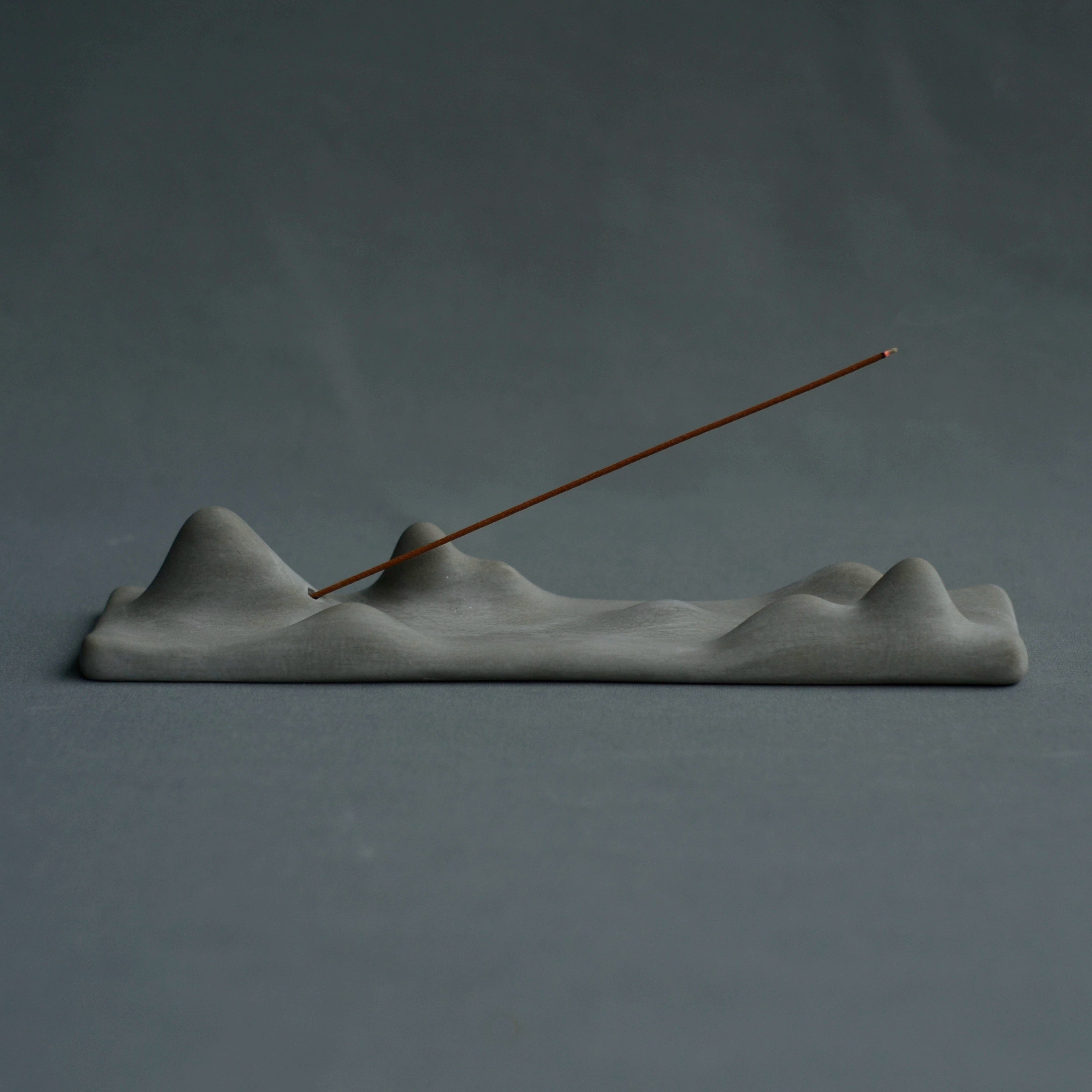
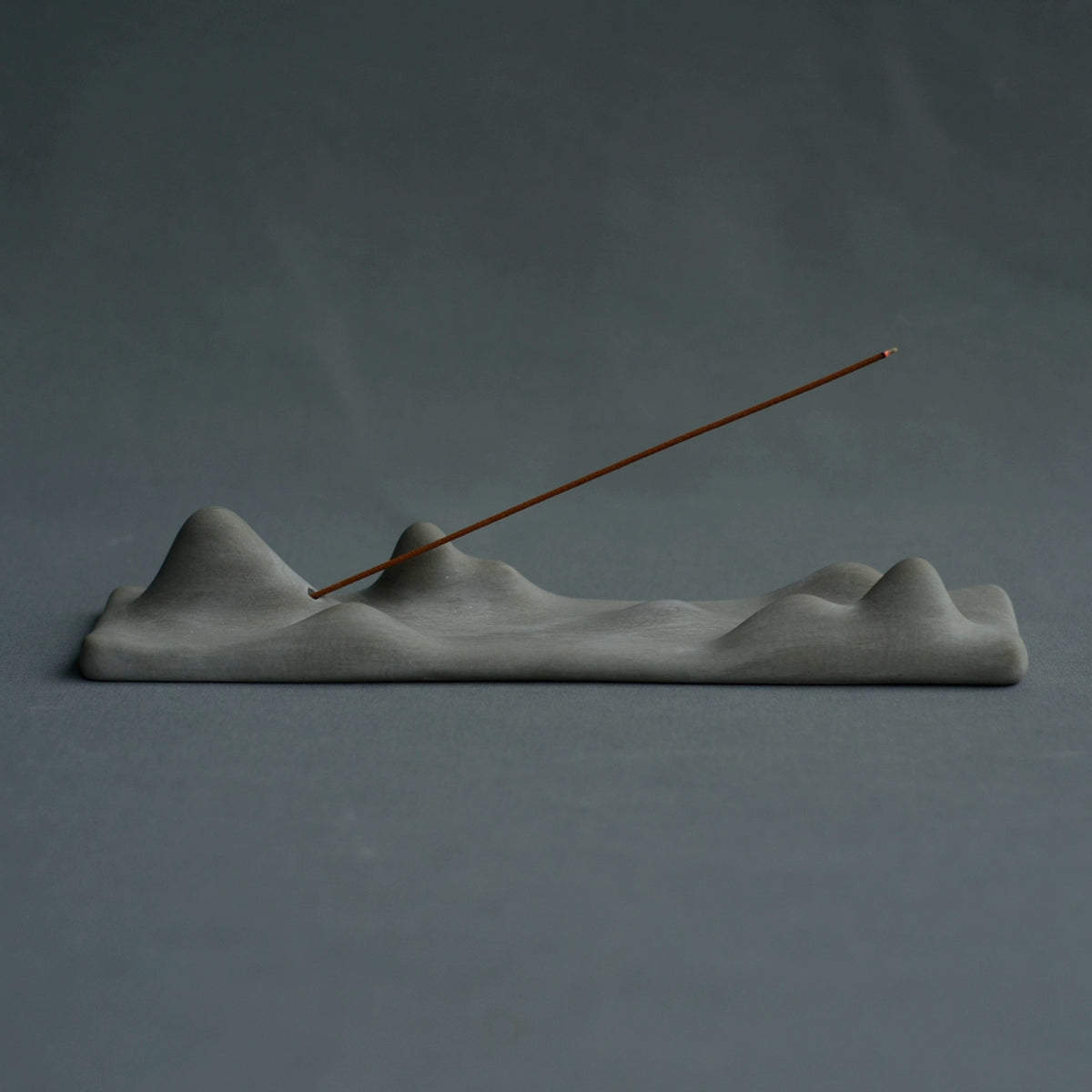
- You want a holder that can handle any incense format indefinitely. The ASPDIN Zen Mountain Range ($49) is a composite sculptural piece that works across all formats, it's the most versatile single holder in the catalog.
The Bottom Line
Resin earned its place in the incense holder conversation by doing what other materials could not: delivering genuinely sculptural design at an accessible weight and price, without the fragility that makes ceramic and glass a risk in active households. It's not the traditional choice. It's not the safest choice across all incense formats. But for stick incense users who want a holder that looks like it belongs in a contemporary space, and who might knock it off a shelf once or twice, it's the right choice, and it's a better one than most people assume before they've handled a well-made piece.
If you're curious, start with the Aura Resin Elegance, it's the clearest statement of what resin can do. If you're comparing materials, our Best Incense Holders 2026 buyer's guide puts ceramic, glass, brass, soapstone, wood, and resin side by side with the data to back up every claim. And if you want to understand where the incense itself comes from, our article on how artisan incense is made traces the manufacturing process from raw heartwood to the stick you're about to light.
This article is for informational purposes about incense products and craftsmanship. MUSO Collection makes no claims about the health effects of its products.