
Incense Holders: Materials, Styles & Use
By the MUSO Collection team · Updated July 2026
An incense holder does two things at once: it keeps a burning stick or cone stable, and it catches the ash. The difference between a flat dish with a single hole and a sculptural piece with a curved catch basin comes down to how much cleanup you want afterward, and how the holder fits into the quiet space around a burn.
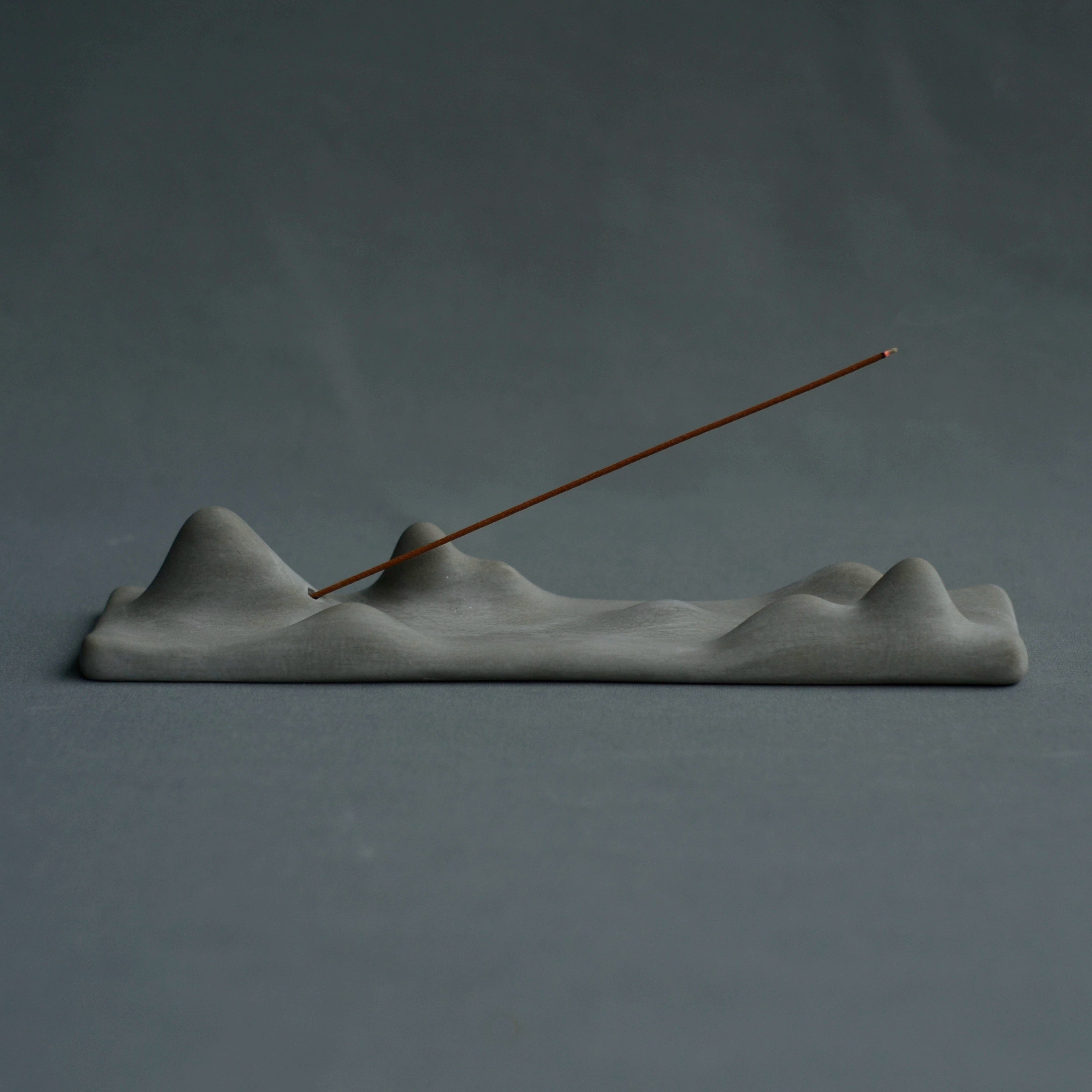
In our experience curating holders from makers like ASPDIN, Aura, and Dongzhi, the holder often outlasts the incense itself. It sits on a shelf or altar long after the smoke has gone, carrying faint traces of sandalwood or agarwood in its surface. A well-chosen ceramic or resin piece embodies the wabi-sabi idea of finding beauty in imperfection: the slight ash mark, the irregular glaze, the way smoke traces against a textured wall.
Material is where most of the decision lives. It changes how heat disperses, how ash collects, and how the object ages over months of use. The vessel used to hold incense has always reflected local materials and craft, as Britannica's overview of incense notes, tracing the practice across thousands of years of Eastern and Western tradition. What follows is a practical breakdown of the materials, formats, and care routines that matter today.
Materials: Ceramic, Resin, Wood, and Metal
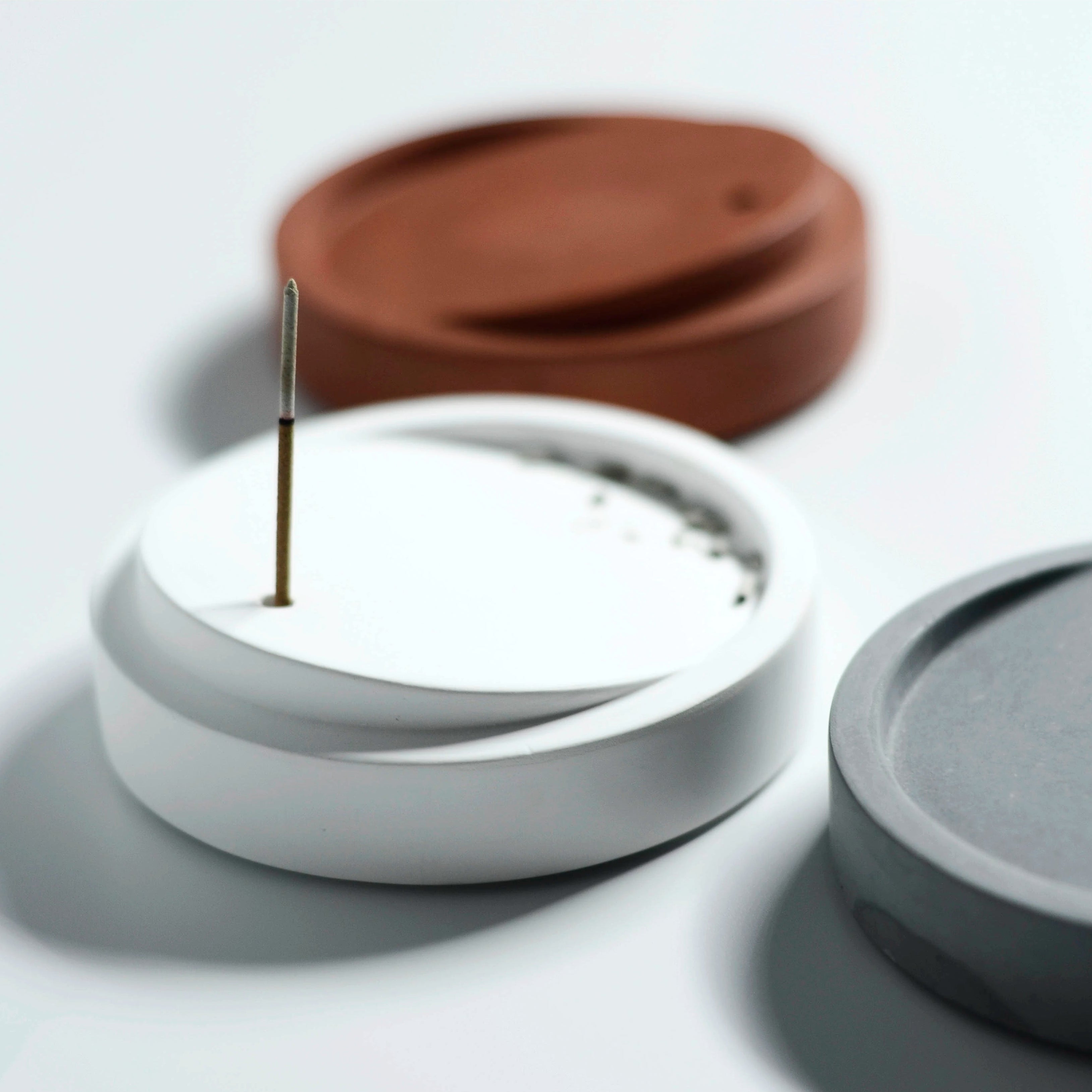
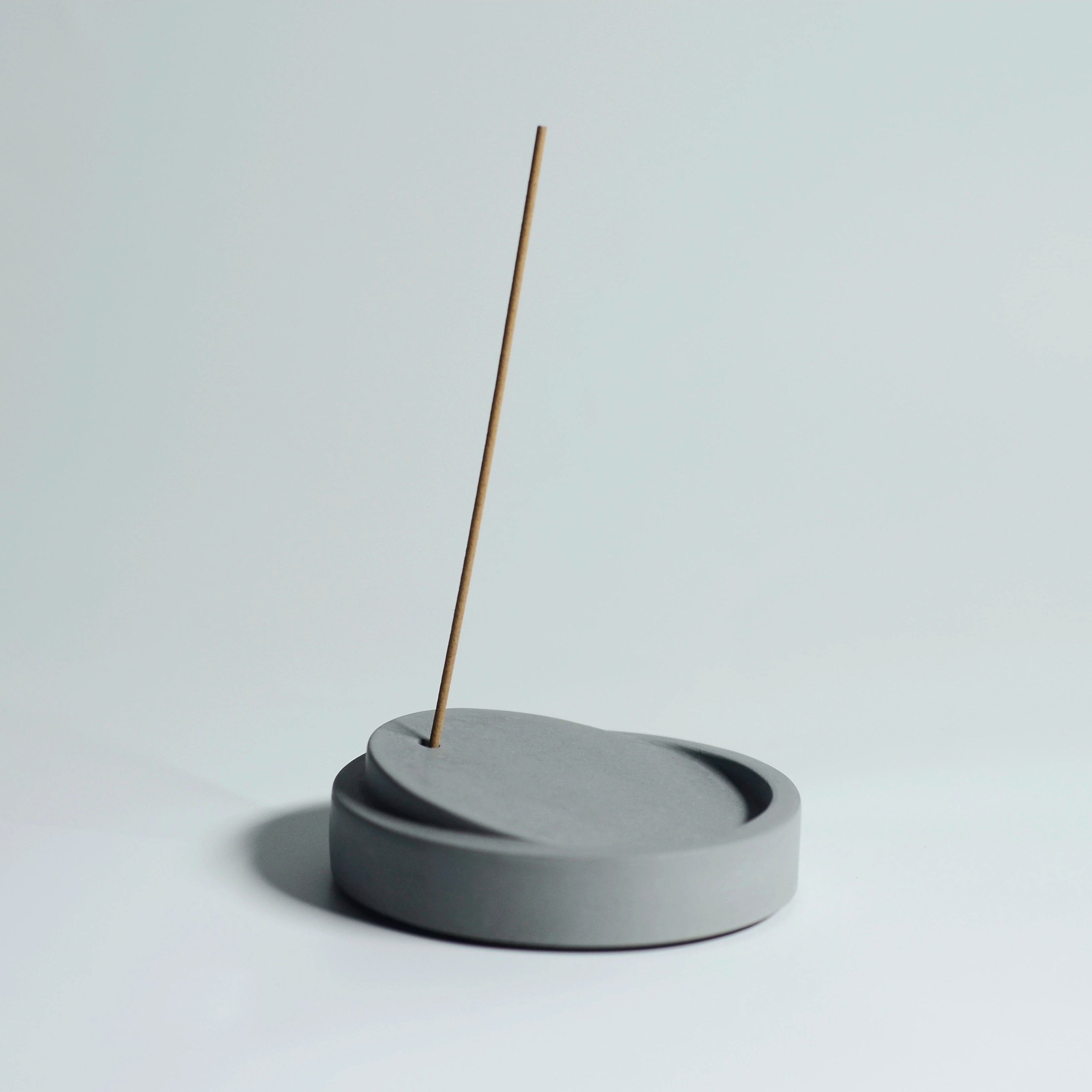
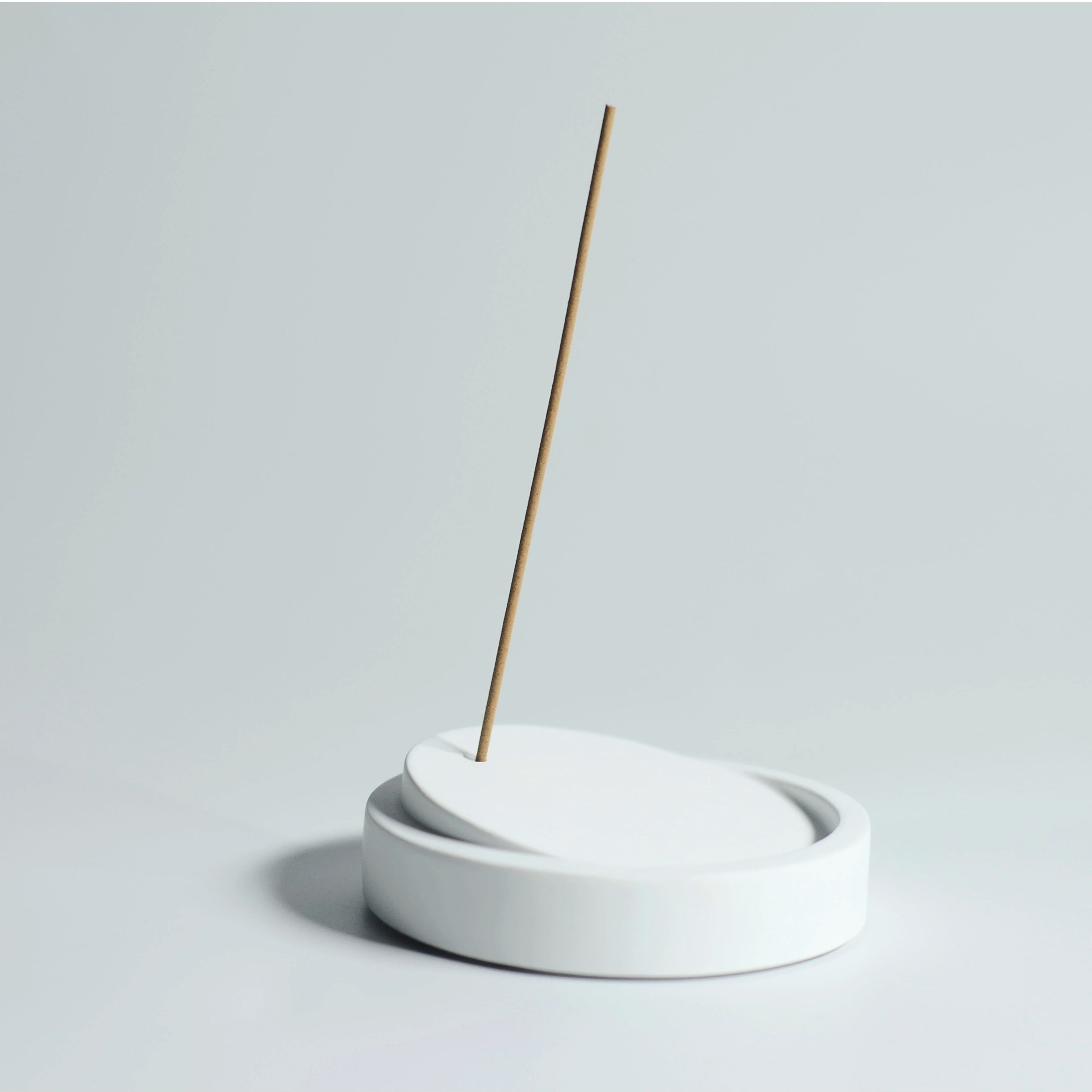
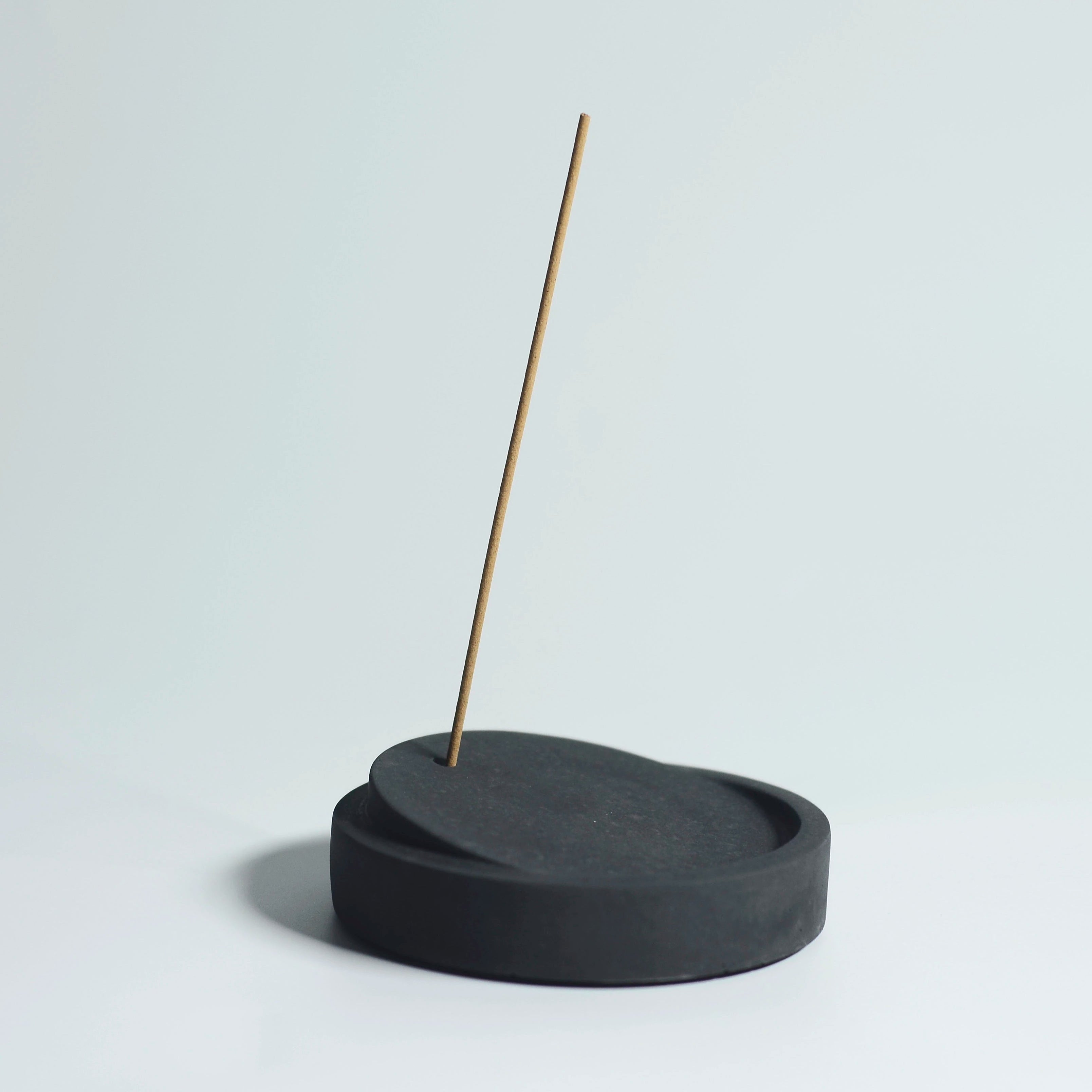
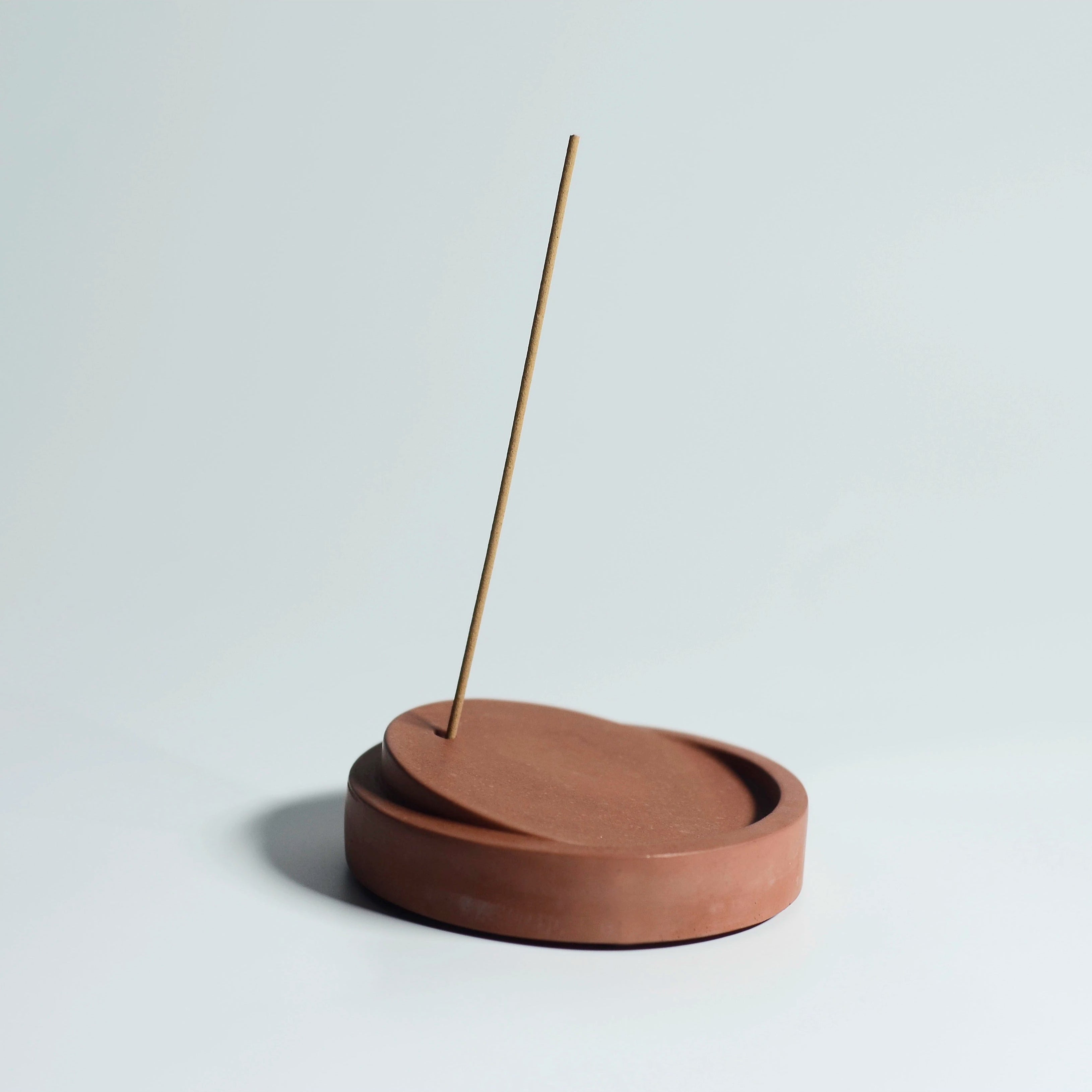
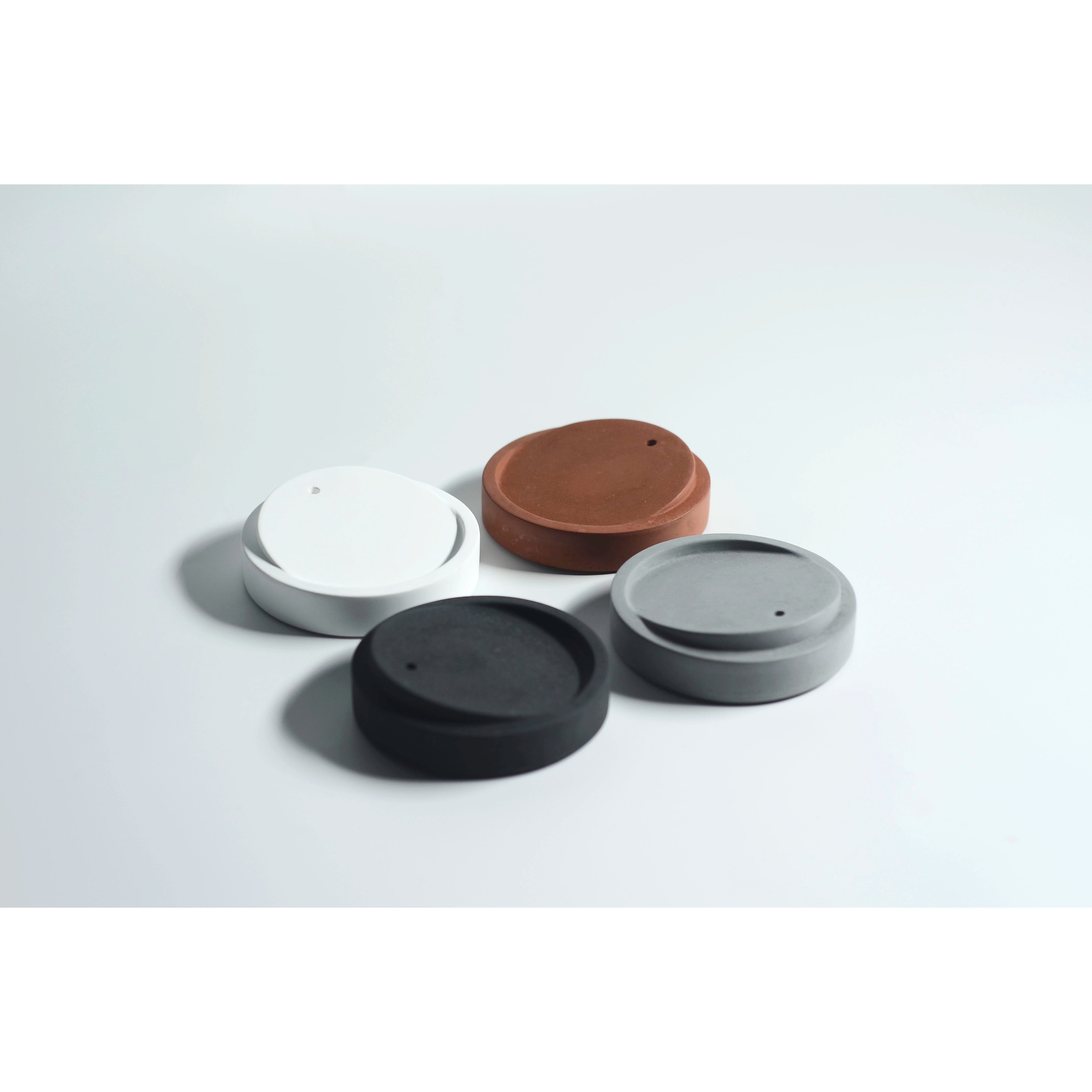
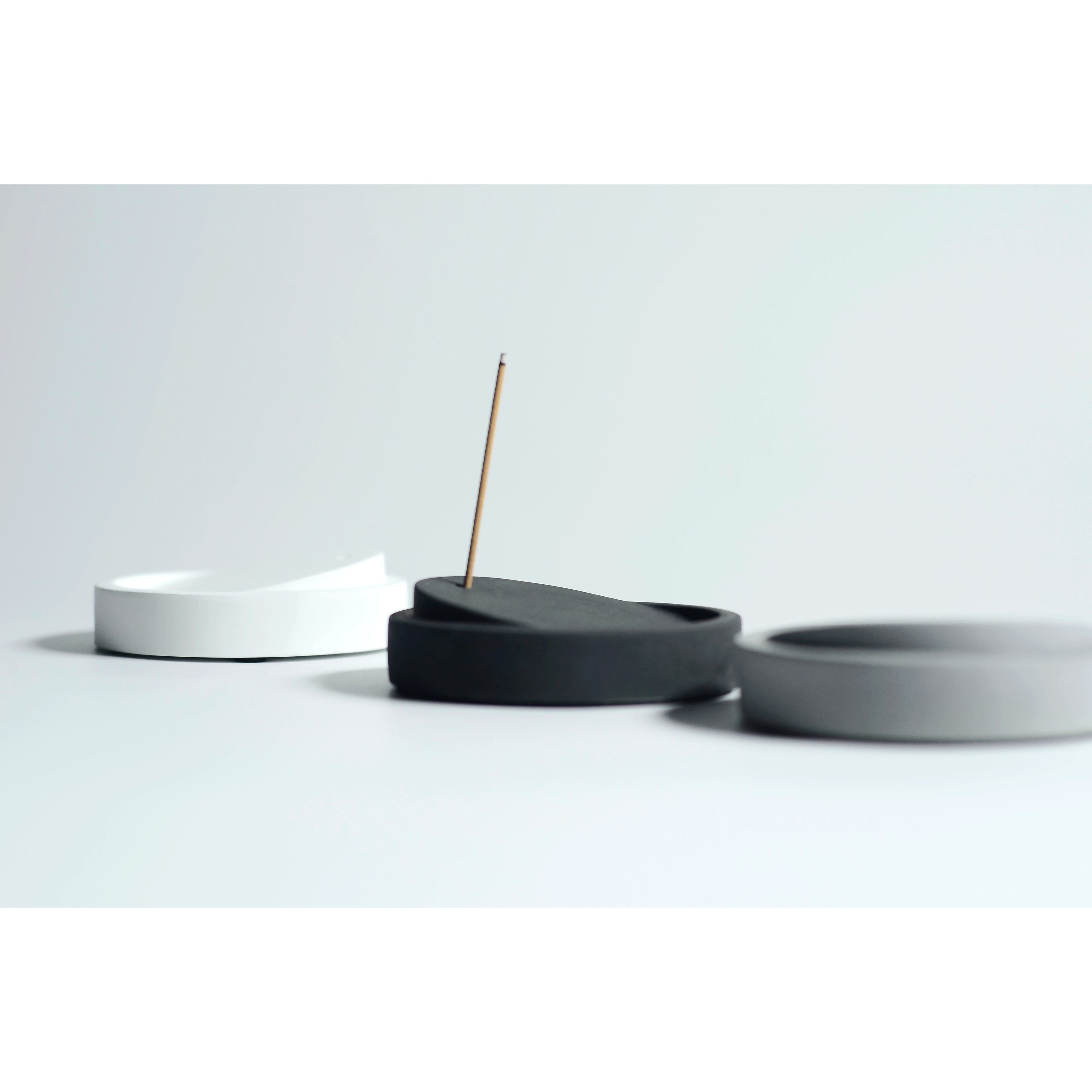
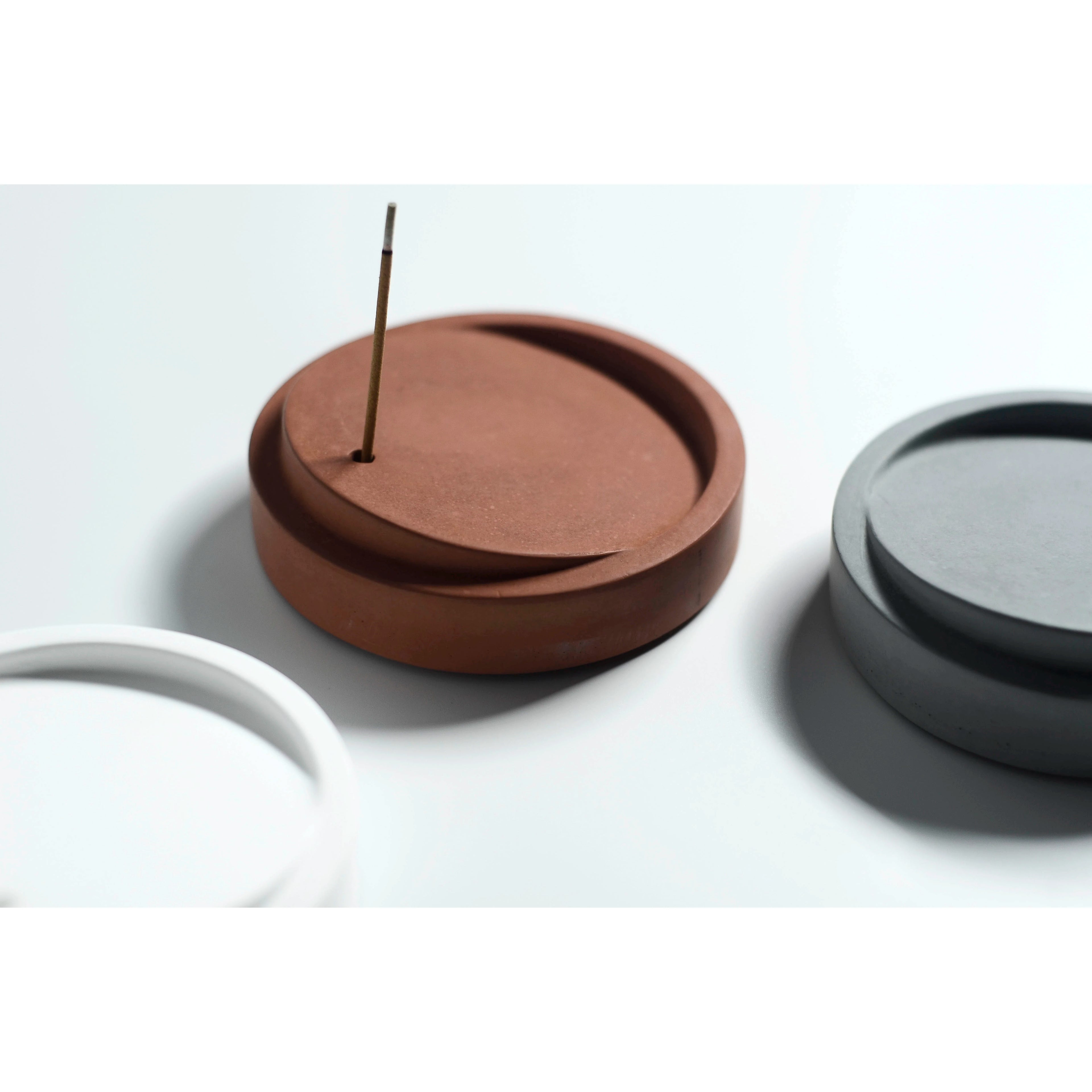
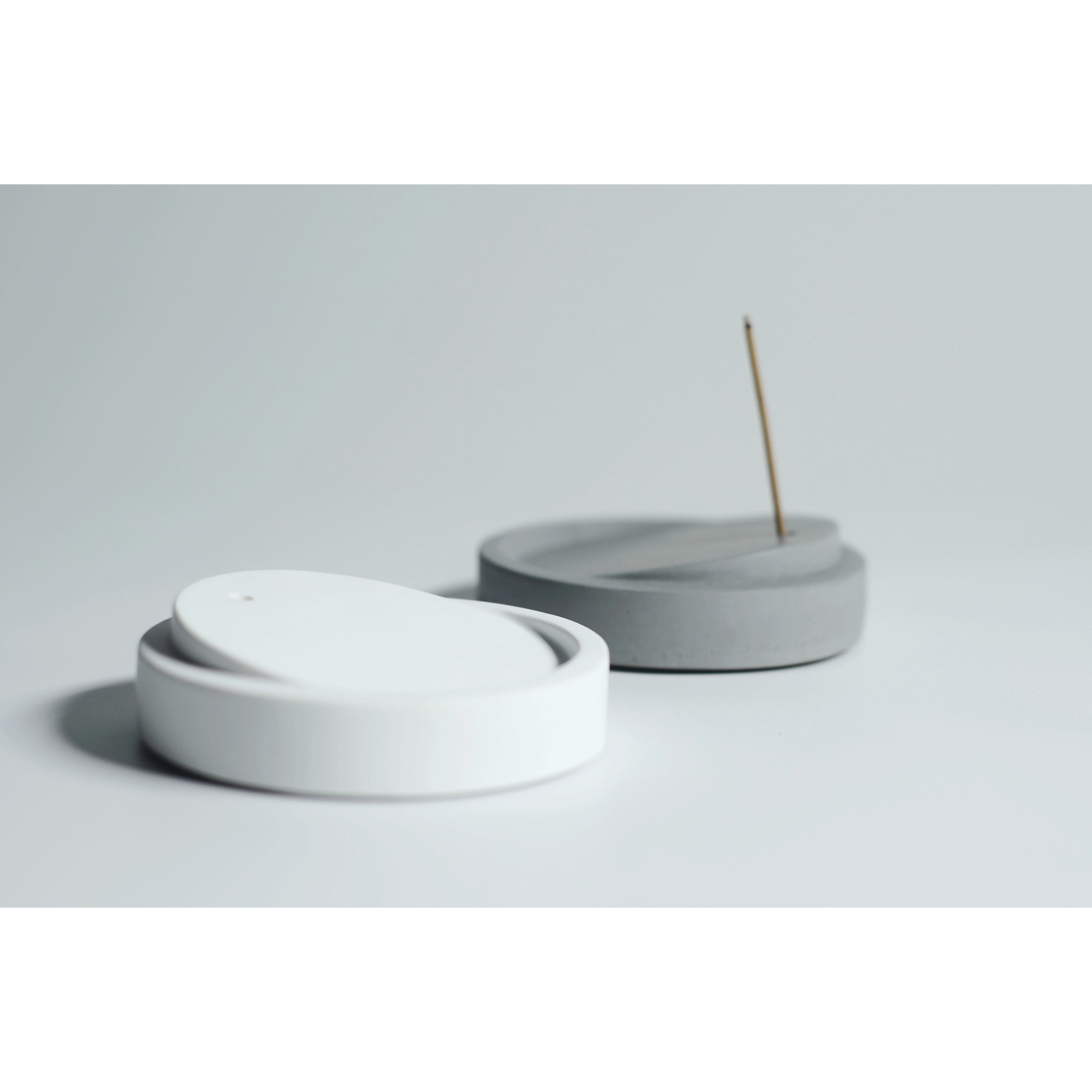
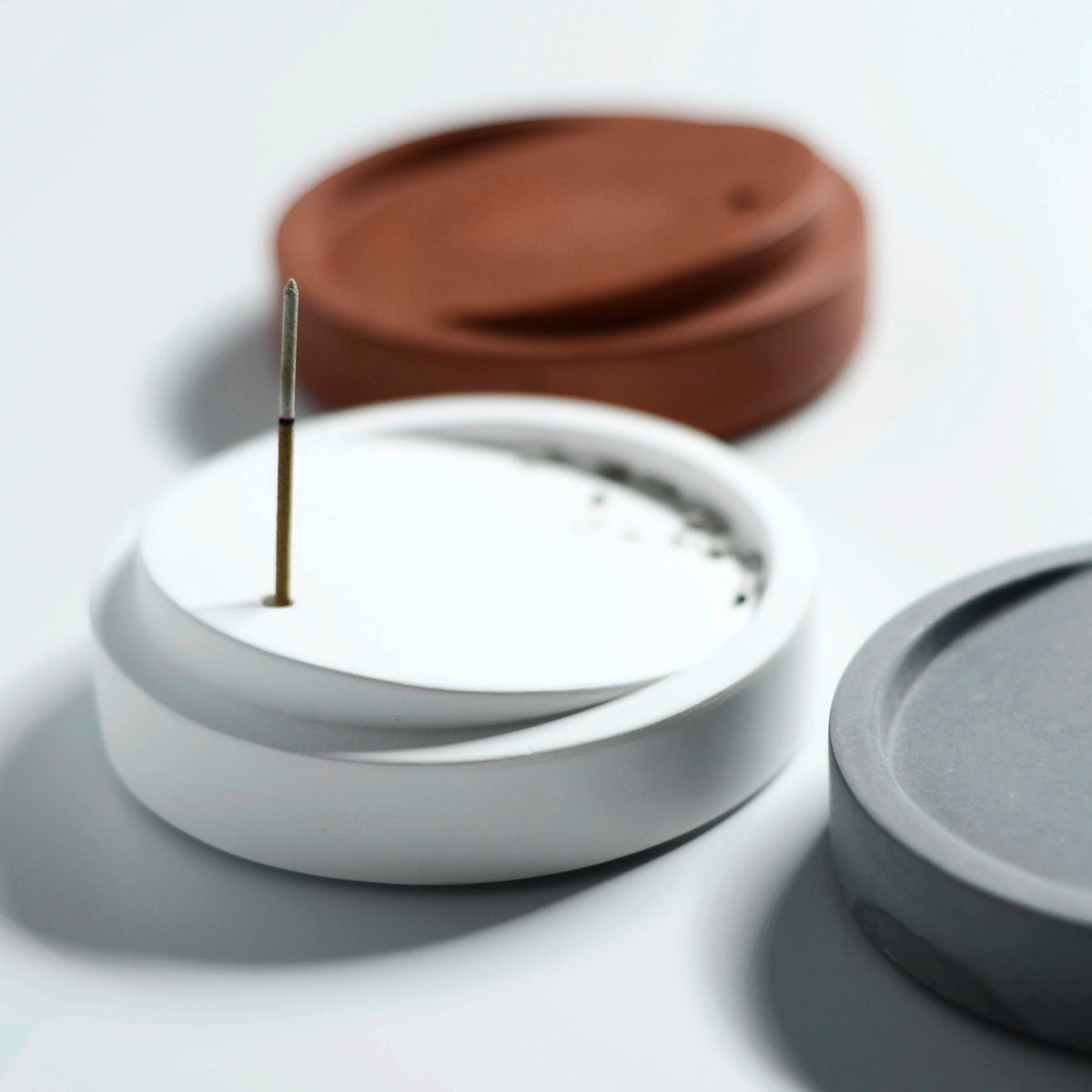
Ceramic is the most common material for good reason. It is non-flammable, easy to clean, and takes glaze in ways that make each piece feel handmade. Our ceramic incense holders range from minimal pin designs to pieces with catch basins that hold ash in a single, contained curve. Ceramic's weight keeps a holder planted, which matters when a stick burns down and the balance shifts.
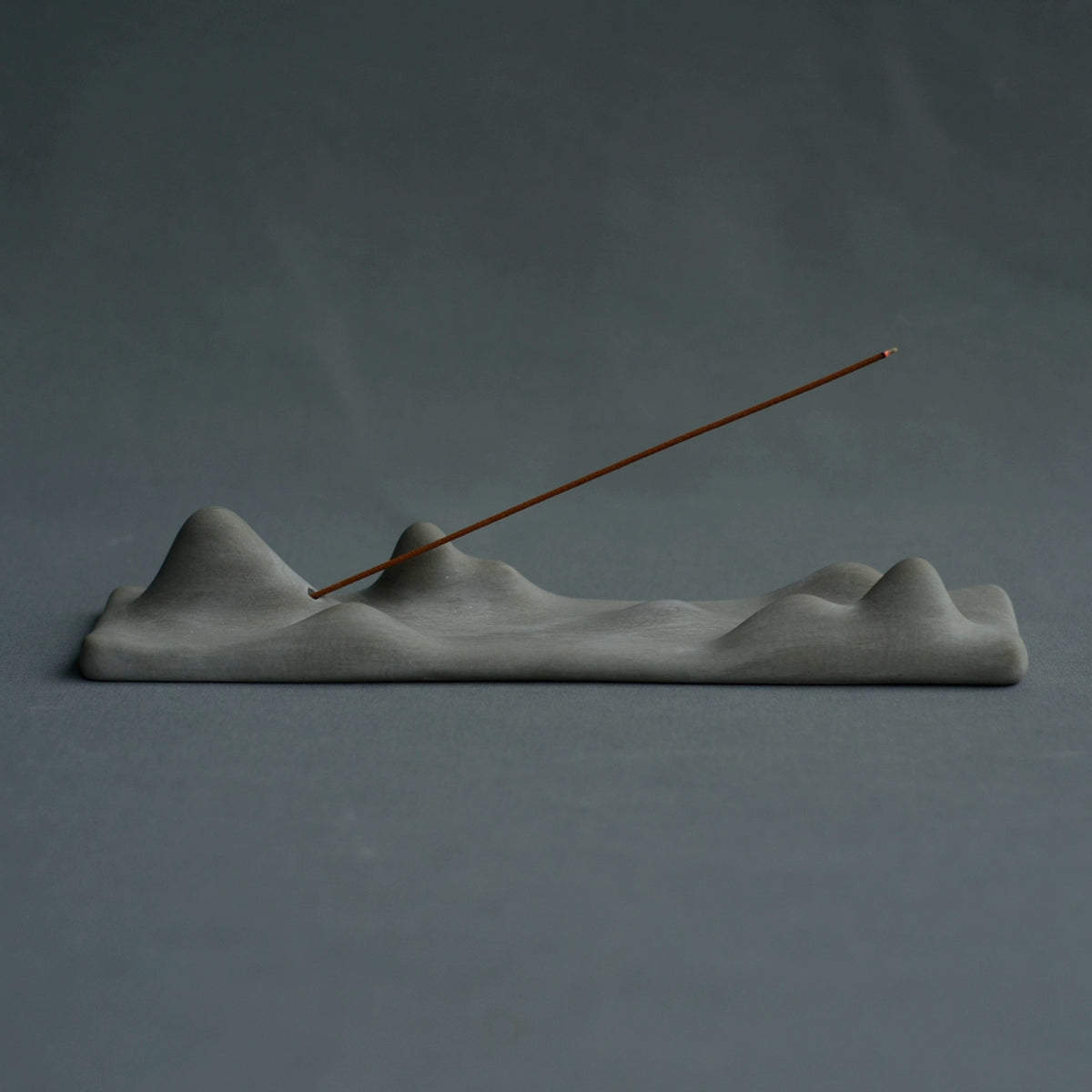
Resin holders are denser and often darker in tone. Resin can be shaped into organic, irregular forms. The Aura resin collection leans into this with holders that look like eroded stone or river-worn wood. Resin conducts less heat than metal, which makes it forgiving for cone incense that burns hotter at the base. Resin also takes pigment well, so holders in deep charcoal, muted ochre, or soft green are common.
Wood and copper appear in designs drawing on traditional Japanese forms. Wood brings warmth and a natural grain that deepens with handling, though it requires care around heat. A metal insert or ceramic base plate is common in wooden holders to protect the surface. Copper and brass add a patinated finish that develops over time, aligning with the wabi-sabi appreciation for materials that change with use.
To choose between ceramic and resin, consider the rest of the room. Ceramic pairs naturally with stone, glass, and minimal surfaces. Resin sits comfortably alongside wood, leather, and warmer tones. Neither material is inherently better; the question is which texture complements the objects around it.
Matching a Holder to Your Incense Type
Not every holder works with every incense format. The three most common formats each burn differently and place different demands on the holder.
- Stick incense needs a holder with a small hole or clip that holds the stick upright. Ash falls in a line, so a trough or dish beneath the stick's path catches it. Most holders in our collection are designed for sticks.
- Cone incense burns from the base upward, producing concentrated ash and heat. A holder with a flat, heat-resistant surface or a shallow dish works best. Some holders have a raised platform that keeps the cone centered.
- Coil incense is less common but worth noting. It needs a flat, wide surface or a suspended mesh. Most standard holders are not built for coils, so look for a holder made specifically for that format.
For sticks specifically, Dongzhi incense pairs well with ceramic holders that have a catch basin. Dongzhi's hand-rolled sticks produce a steady, even ash line that settles cleanly into a glazed trough. The combination of a handmade holder and hand-rolled incense is where the ritual quality of burning incense becomes tangible.
How to Use an Incense Holder
How to use an incense holder depends on the format, but the fundamentals are the same. Place the holder on a flat, non-flammable surface, light the incense, let it catch, then gently blow out the flame so only the ember remains.
For stick incense, insert the bare wooden end (not the paste-coated end) into the holder's hole or pin. If the hole is too wide, a small piece of folded foil can tighten the fit. A well-made holder should hold a standard stick securely without wobbling.
For cone incense, place the cone flat-side down on the holder's surface. Light the tip, let it glow, then extinguish the flame. The cone should sit stable. If it wobbles, the holder's surface may be uneven or the cone may be chipped at the base.
Keep the holder away from drafts. A draft makes incense burn unevenly and scatters ash across the surface. After burning, let the holder cool before handling. Ceramic and resin retain heat for a few minutes after the ember is out.
The act of lighting incense is where the functional becomes ritual. The match, the first curl of smoke, the moment of watching the ember settle into a steady glow. A holder that feels good in the hand, with a weight that plants it firmly, makes this transition from task to pause feel deliberate rather than incidental.
Choosing a Holder for Your Space
The holder you choose should fit the space where you burn incense. A small ceramic pin holder works on a desk or bedside table, where surface area is limited. A larger piece with a catch basin suits a coffee table or altar, where ash spread is less of a concern and the holder can serve as a visual anchor.
Consider the color of the surface beneath the holder. Light ash on a dark resin holder disappears; on a pale wood surface, it shows. If you burn incense daily, a darker holder or one with a deep basin reduces visible residue between cleanings.
The height of the holder matters for stick incense. A low holder keeps the stick close to the surface, where ash falls in a short, controlled line. A taller holder lifts the stick higher, which can look more sculptural but scatters ash over a wider arc.
Care and Longevity
Incense holders are low-maintenance, but a few habits extend their life. Tap ash into a compost bin or trash after each session. Letting it accumulate can stain porous ceramic over time, particularly lighter glazes. For resin holders, a dry cloth is usually enough. Avoid water on pieces with painted or treated surfaces.
For ceramic holders with glaze, a damp cloth removes residue easily. Unglazed ceramic can absorb oils from certain incense types, particularly resin or oud varieties, so a gentle wipe after each use prevents buildup. The wabi-sabi aesthetic, as Britannica describes, values exactly this kind of natural aging. The patina of repeated use becomes part of the object's character rather than a flaw to remove.
Copper and brass holders develop patina naturally. Some prefer to let it deepen; others polish with a soft cloth. There is no wrong answer. The choice is about what the object looks like on your shelf over time.
A holder priced at $19 and one at $49 differ mainly in material and craftsmanship, not in function. Both hold a stick steady. The premium is in the object itself: how it looks, how it feels in the hand, and how it ages with use.
FAQ
What is an incense holder?
An incense holder is a small stand or dish designed to hold burning incense upright and catch the falling ash. Holders come in ceramic, resin, wood, and metal, and are made for stick, cone, or coil incense formats.
How to use an incense holder?
Place the holder on a flat, non-flammable surface. For sticks, insert the wooden end into the holder's hole or clip. For cones, set the cone flat-side down on the holder's surface. Light the incense, let it catch, then blow out the flame so only the ember glows.
What material is best for an incense holder?
Ceramic is the most versatile: heat-resistant, easy to clean, and stable. Resin offers organic, sculptural forms and stays cooler to the touch. Wood and metal suit traditional designs and often include a ceramic or metal insert for heat protection.
Finding the Right Holder
If you are starting with incense, a simple ceramic holder and a sampling set of sticks is enough to begin. For those who already burn incense regularly, a resin or sculptural holder can shift the ritual from function to focal point, an object that holds its own when the incense is gone.
Browse the full incense holder collection to find a piece that suits your space.