
Why Scent and Meditation Go Together
Of all the senses, smell holds a unique and underappreciated power over the meditative mind. When you inhale a scent, the signal travels directly to the brain regions responsible for emotion and memory — without passing through the slower, more deliberate processing centers that other senses use. This is why a single whiff of sandalwood can transport you to a childhood temple, and why the right incense can tip a restless mind toward stillness within moments of lighting it.
For thousands of years, practitioners across Zen Buddhism, Hindu yoga, and Taoist meditation have understood this connection intuitively. Now, some early research is beginning to explore what these traditions have long practiced.
The Power of Consistent Pairing
Researchers have documented a phenomenon called olfactory conditioning — the brain's ability to pair a specific scent with a specific mental state through repetition. When you consistently burn the same incense during meditation, your mind begins to associate the scent with the state of stillness. After two to four weeks of consistent pairing, many practitioners find that the scent alone begins to signal: it's time to sit. Your mind learns: sandalwood = stillness. Cedar = clarity. Agarwood = deep presence.
The implication is meaningful: if you choose one scent and commit to it as your meditation anchor, you are not merely creating a pleasant atmosphere. You are building a ritual association that makes entering meditation easier and more natural each time you light that stick.
The Ritual Effect
Research on the psychology of rituals has found that performing a structured, intentional sequence of actions before a focused task — even a simple ritual — can help people feel calmer and more engaged. The lighting of incense before meditation is precisely this kind of ritual: a deliberate, repeatable act that signals to the mind, "We are now transitioning into a different state."
When you combine these two elements — the power of scent association and the grounding effect of ritual — you are working with one of the most accessible state-change practices available. The question is not whether to use incense in meditation, but which scents best serve your particular practice.
The Best Scents for Meditation: Deep Profiles
Sandalwood — The Master Scent
Scent profile: Warm, creamy, woody, subtly sweet with balsamic undertones. Smooth and full-bodied without being heavy.
Traditional use: Sandalwood is perhaps the most widely used meditation scent across contemplative traditions. A small 2016 study (32 participants) found that people reported feeling calmer after inhaling sandalwood, though results are preliminary. What sandalwood has going for it is 4,000 years of consistent use by practitioners who describe it as creating "alert calmness" — a state of relaxed wakefulness rather than drowsiness.
The effect: Many practitioners describe sandalwood as quietening mental chatter without dulling awareness. This makes it uniquely suited to virtually any meditation tradition.
Cultural roots: In Buddhism, sandalwood paste is used in ritual anointing. In Hinduism, sandalwood is associated with the divine and used in puja ceremonies. Taoist meditation texts reference sandalwood as part of contemplative practice. In Japan, the Kodo (Way of Fragrance) tradition elevates sandalwood appreciation to a formal art practised for over 500 years.
Best for: Daily practice, any meditation style, beginners and advanced practitioners alike. The single most versatile meditation incense.
Explore our collection: Sandalwood Incense
Cedar — Clarity and Purification
Scent profile: Crisp, clean, forest-like, with dry woody notes and subtle resinous undertones. Evokes standing in an old-growth forest at dawn.
The effect: Cedar is grounding and clarifying. Its sharp, clean profile cuts through mental fog and creates a sense of expanded space. It is energising without being agitating — ideal for morning practice when you want to enter meditation with alertness and intention.
Cultural roots: Native American traditions use cedar in smudging ceremonies for purification and blessing. In Tibetan Buddhism, juniper and cedar are burned to clear the space before meditation and ritual.
Best for: Morning meditation, intention-setting sessions, practices focused on clarity and insight (Vipassana), and times when you feel mentally sluggish or unclear.
Agarwood (Eaglewood / Oud) — The Deepest Depths
Scent profile: Deep, complex, exotic, woody-balsamic with animalic and medicinal undertones. The most complex scent in the incense repertoire, with hundreds of aromatic compounds contributing to its profile.
Rarity and value: Agarwood is the most expensive raw incense material in the world — premium grades can exceed the price of gold. When the tropical Aquilaria tree is infected with a specific mould, it produces a dark, fragrant resin as a defence mechanism. Only 2–7% of wild Aquilaria trees ever produce this resin, making natural agarwood extraordinarily rare.
The effect: Agarwood produces one of the most profound meditative experiences available through scent. Its complexity demands attention — the mind cannot wander when confronted with a scent that unfolds in layers over the course of a burn. Practitioners report deep stillness, expanded awareness, and a sense of connection to something ancient.
Cultural roots: Agarwood has been used in spiritual practice for over 2,000 years. It is the pinnacle scent in the Japanese Kodo tradition. In Zen Buddhism, agarwood is the preferred incense for intensive retreats (sesshin) and deep sitting practice.
Best for: Deep, extended sitting practice (60+ minutes), experienced meditators, special occasions and retreats, Zazen.
Ambergris — Oceanic Stillness
Scent profile: Subtle, oceanic, salty-sweet with a gentle musk undertone. Ethereal and difficult to describe.
The effect: Ambergris is profoundly relaxing without being heavy. It creates a sense of buoyant stillness — ideal for evening practice when you want to transition into rest without dullness.
Best for: Evening practice, restorative yoga and meditation, wind-down sessions.
Comparison: Frankincense, Lavender, Jasmine, Patchouli, Nag Champa
| Scent | Profile | Best For | Notes |
|---|---|---|---|
| Frankincense | Piney, citrusy, resinous | Contemplative prayer, breathwork, Christian/Islamic meditation | Used for millennia to create spaces of stillness; excellent for breathing-based practices |
| Lavender | Floral, herbaceous, sweet | Beginners, sleep meditation, gentle evening practice | Widely associated with relaxation; some find it too calming for alert practice |
| Jasmine | Rich, sweet, floral, exotic | Heart-opening practices, Metta (loving-kindness) meditation, devotional work | Beautiful, uplifting scent; best used occasionally rather than daily |
| Patchouli | Earthy, musky, sweet-spicy | Grounding practice, earthy/root work, outdoor meditation | Strong and distinctive — polarising; deep grounding effect |
| Nag Champa | Sweet, floral, sandalwood base with fruity notes | Yoga studios, general practice, those new to meditation incense | The most widely available meditation incense; seek natural formulations over synthetic alternatives |
Match Scent to Practice
Different meditation traditions create different internal conditions. The right scent amplifies the tradition's intention. Here is a practical guide:
| Practice | Recommended Scents | Why |
|---|---|---|
| Vipassana (Insight Meditation) | Sandalwood, Cedar | Alert calm without drowsiness; clarity supports precise observation |
| Metta (Loving-Kindness) | Jasmine, Frankincense | Heart-opening qualities; floral notes support warmth and connection |
| Zazen (Zen Sitting) | Agarwood, Sandalwood | Deep stillness; complexity of agarwood supports sustained attention |
| Relaxation / Wind-Down | Lavender, Ambergris, Sandalwood | Traditionally calming; gentle relaxation |
| Morning Practice | Cedar | Clarity and wakefulness; intention-setting energy |
| Evening / Restorative | Sandalwood, Ambergris | Wind-down without dullness; warm, enveloping comfort |
| Extended Retreat | Agarwood, Sandalwood | Sustained depth; consistent scent deepens with repeated sessions |
The Complete Five-Step Incense Meditation Ritual
Drawing on centuries of contemplative tradition and the growing understanding of ritual psychology, here is a structured practice that integrates incense into your meditation session:
Step 1: Prepare Your Space
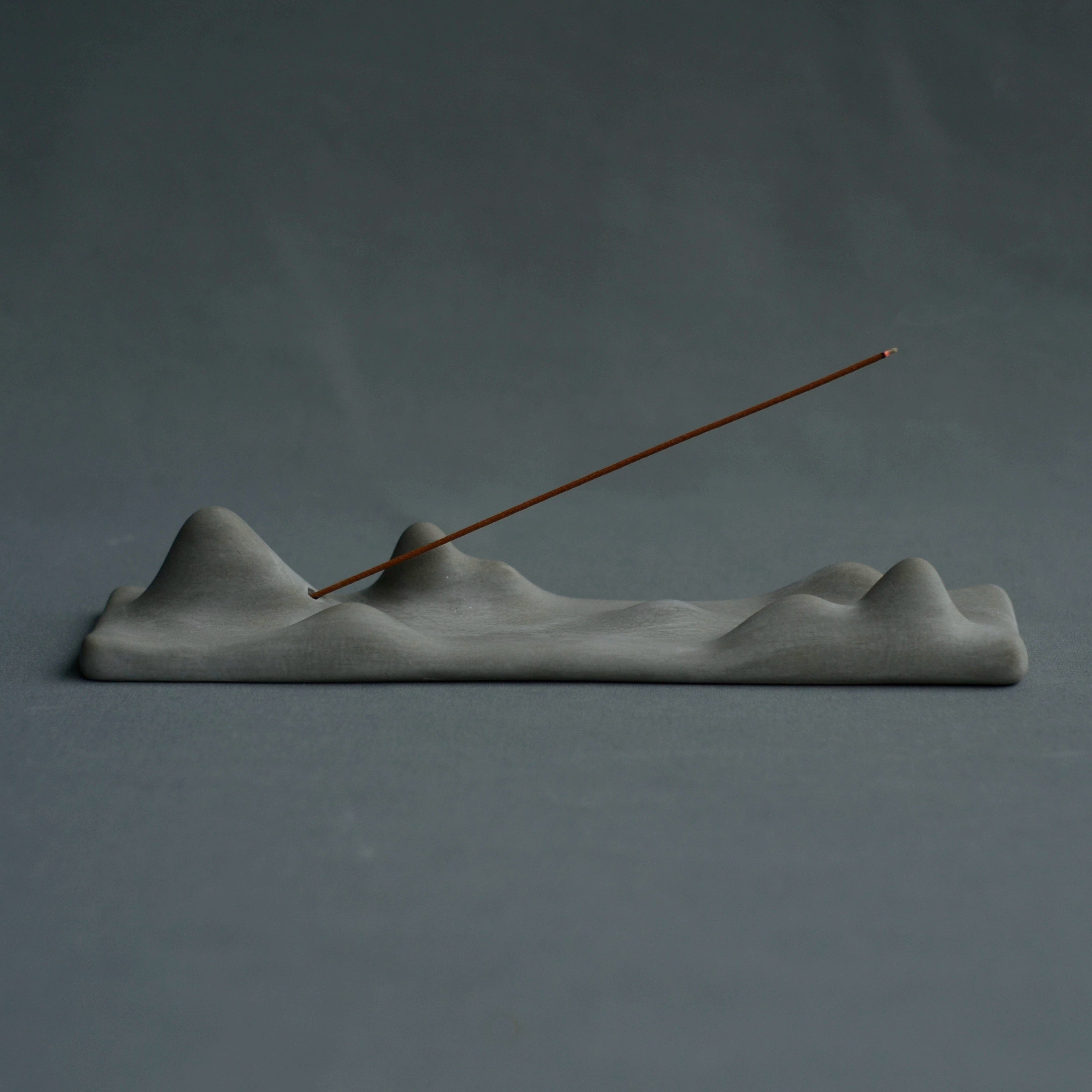
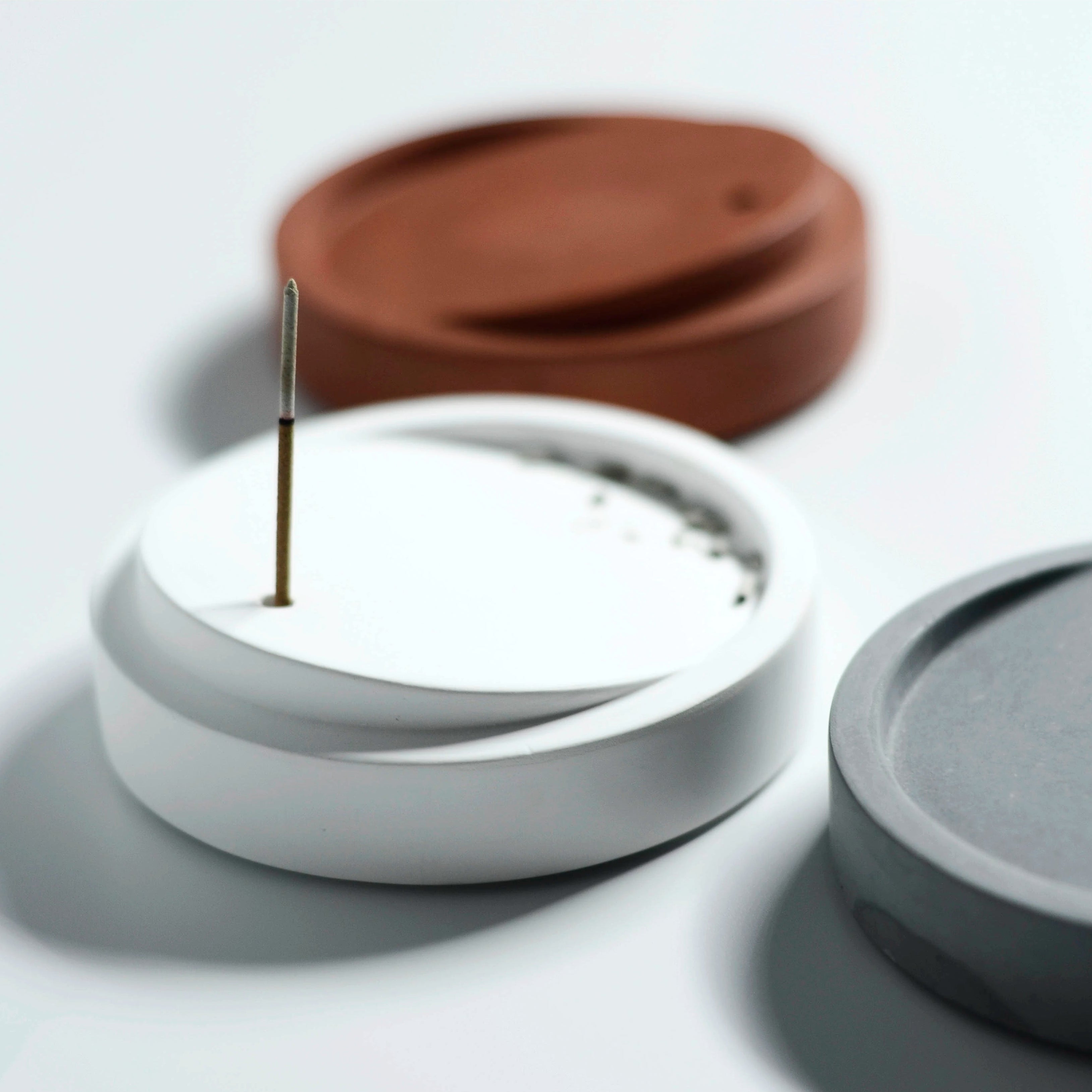
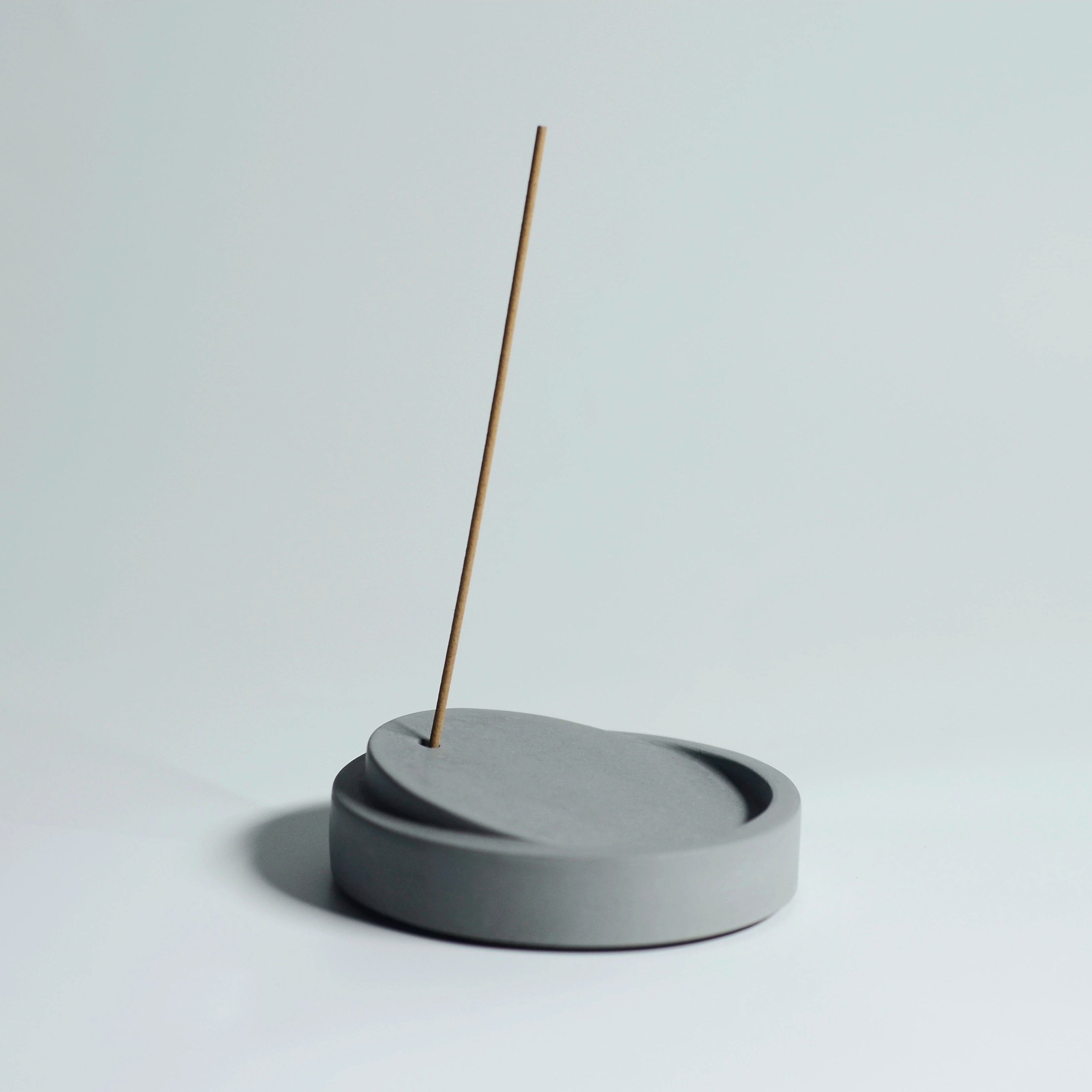
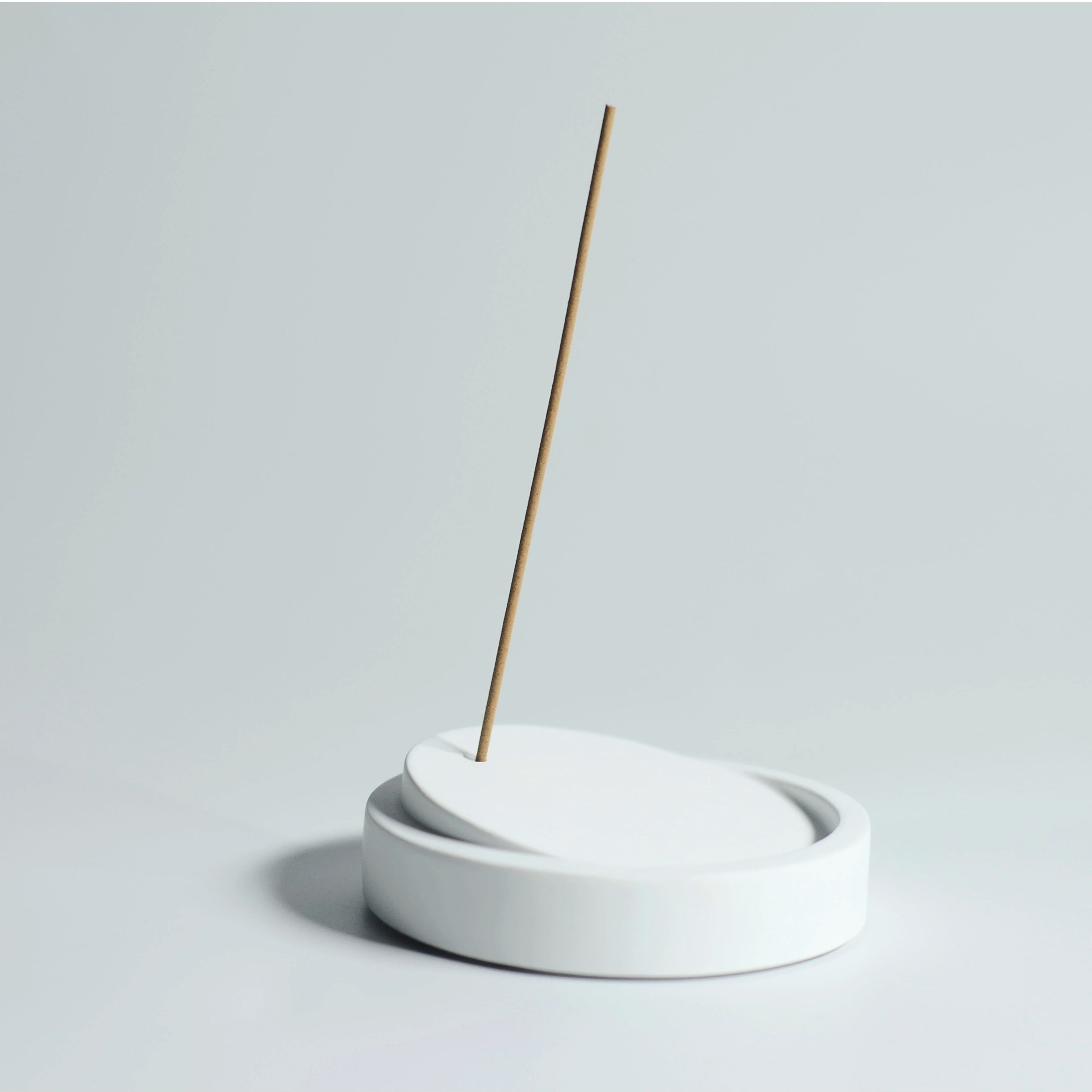
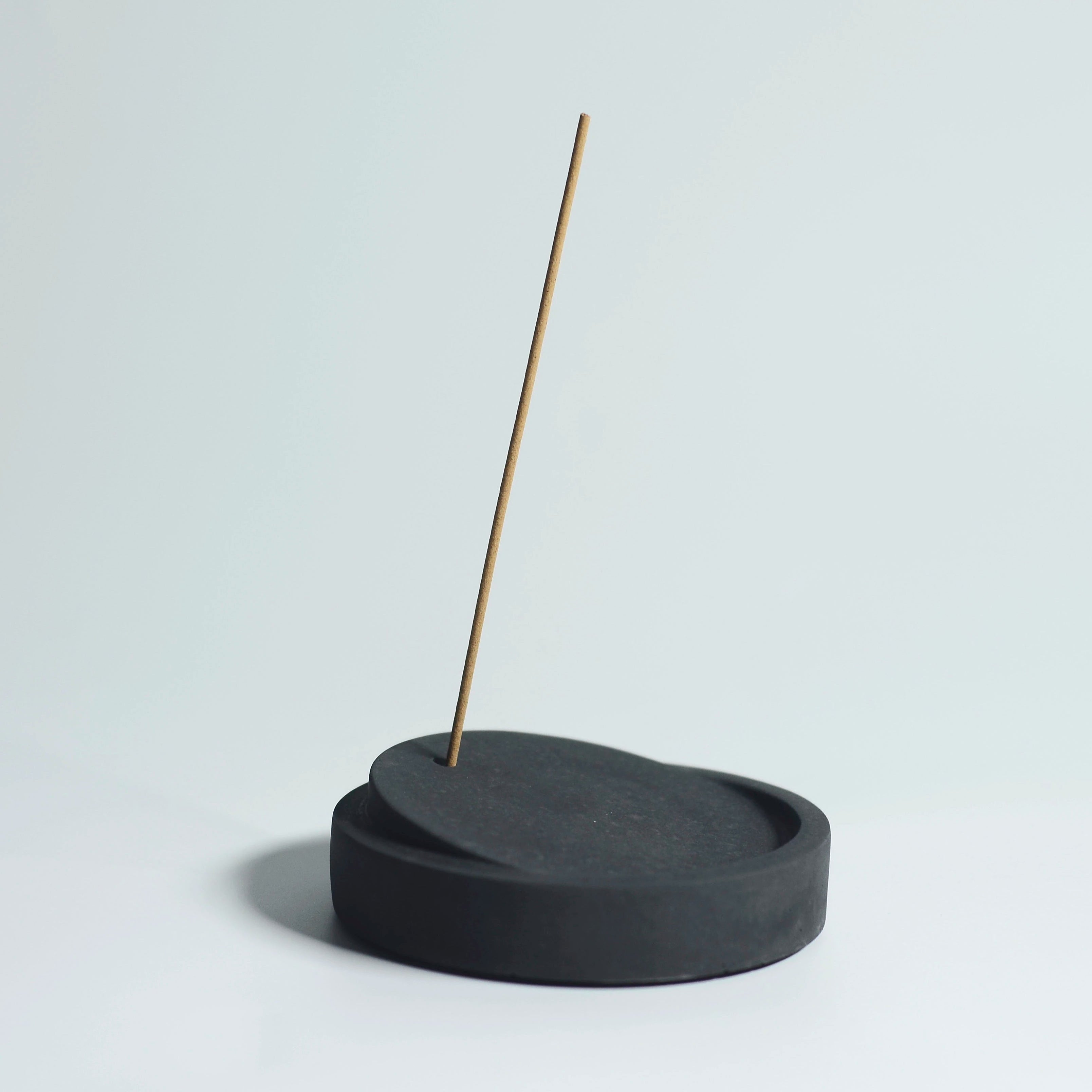
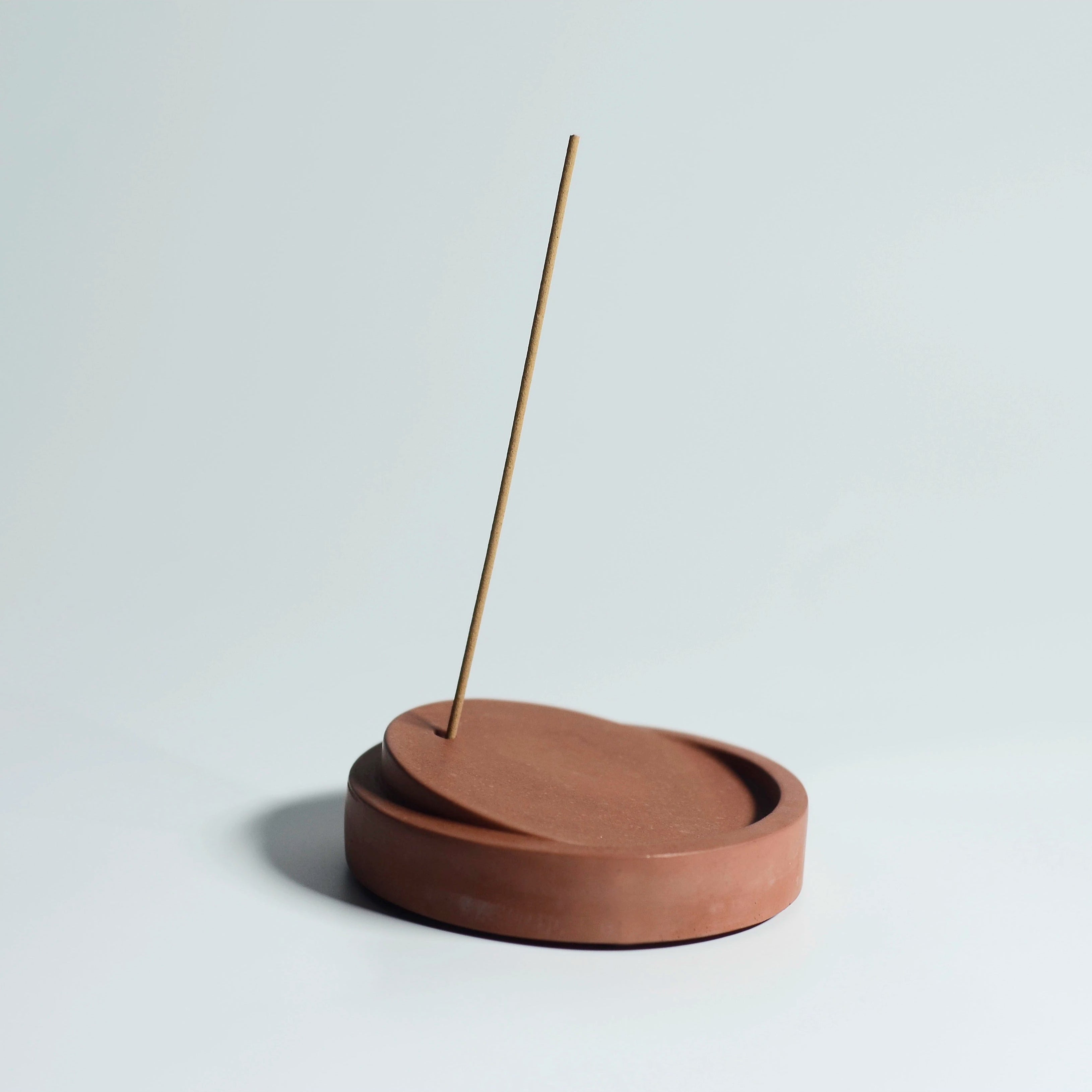
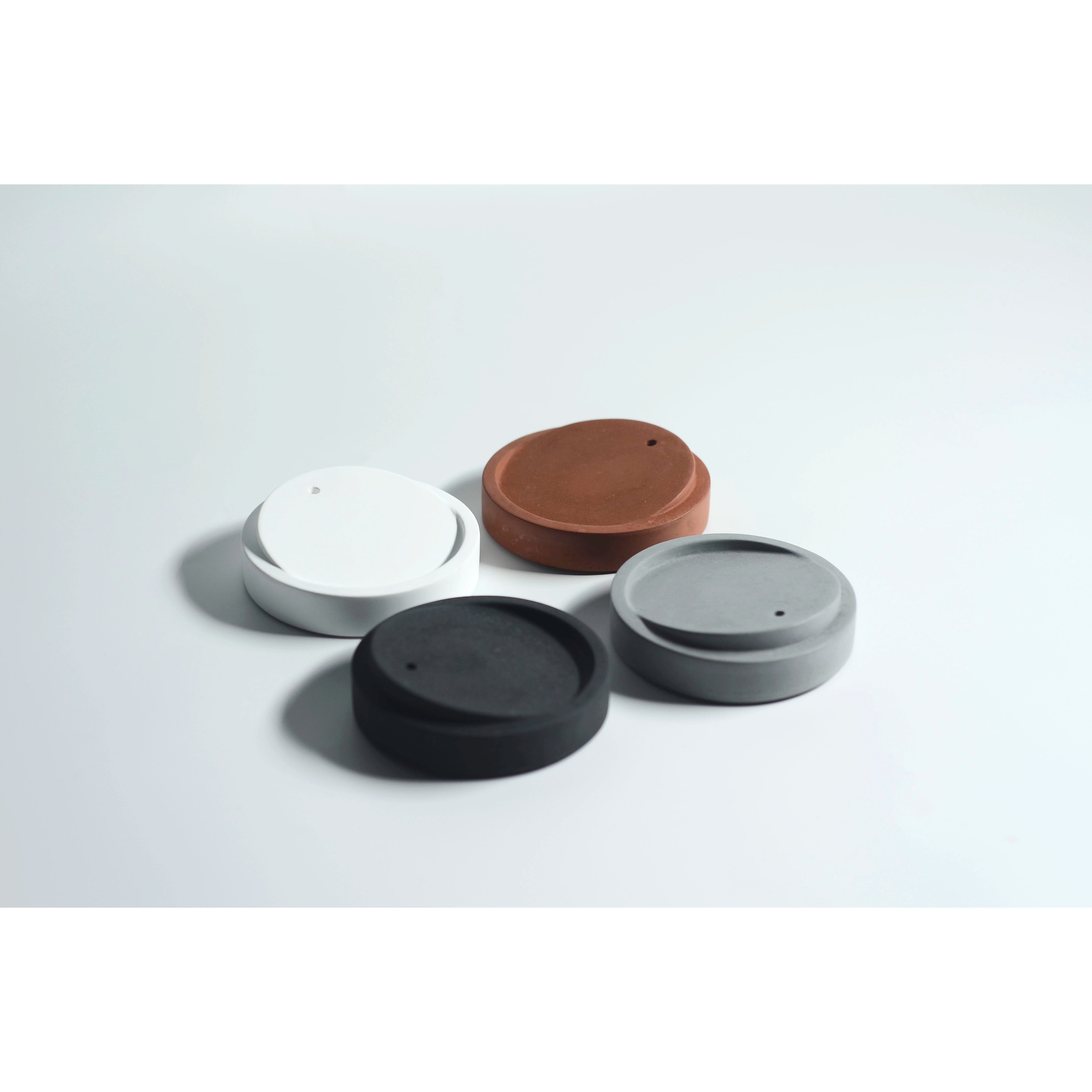
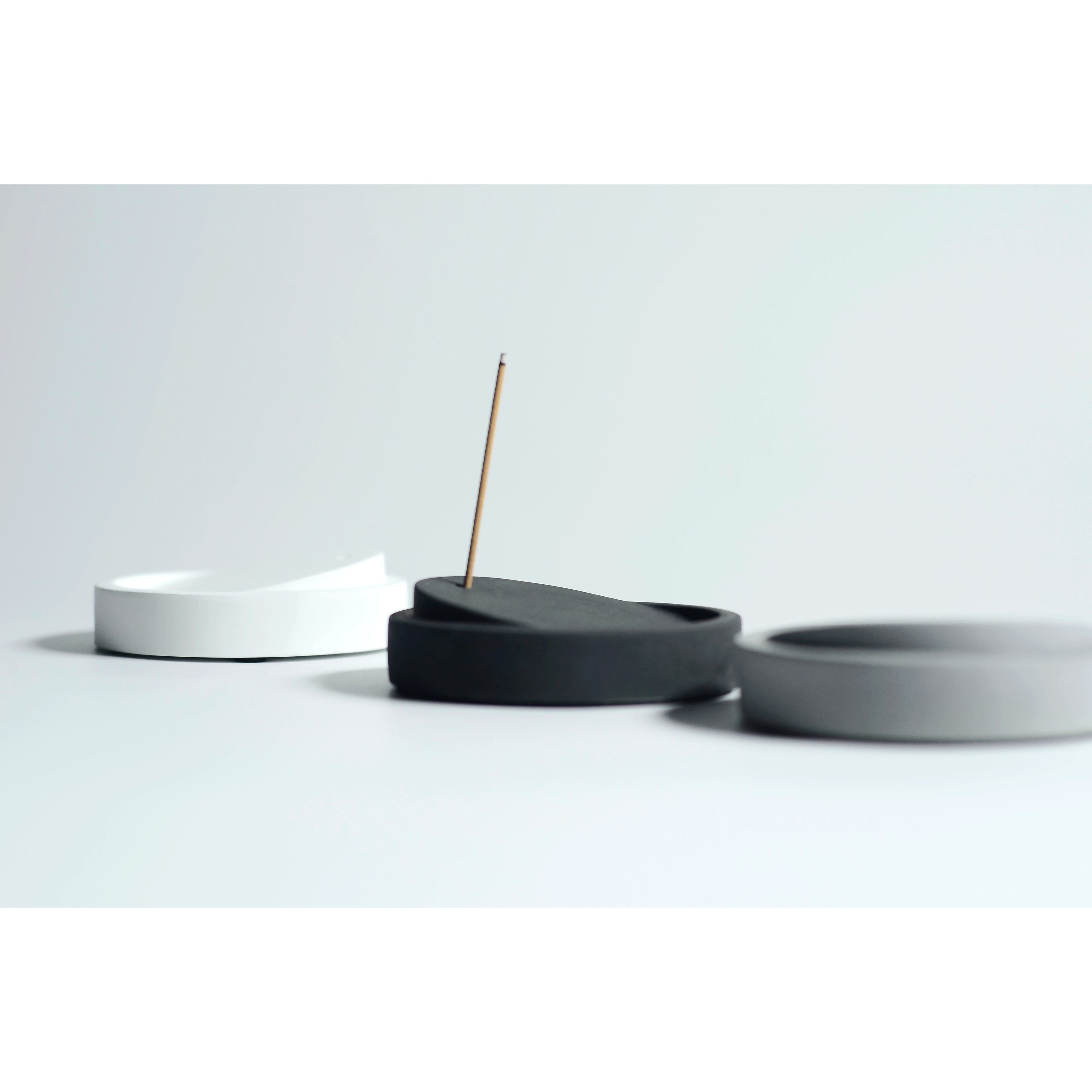
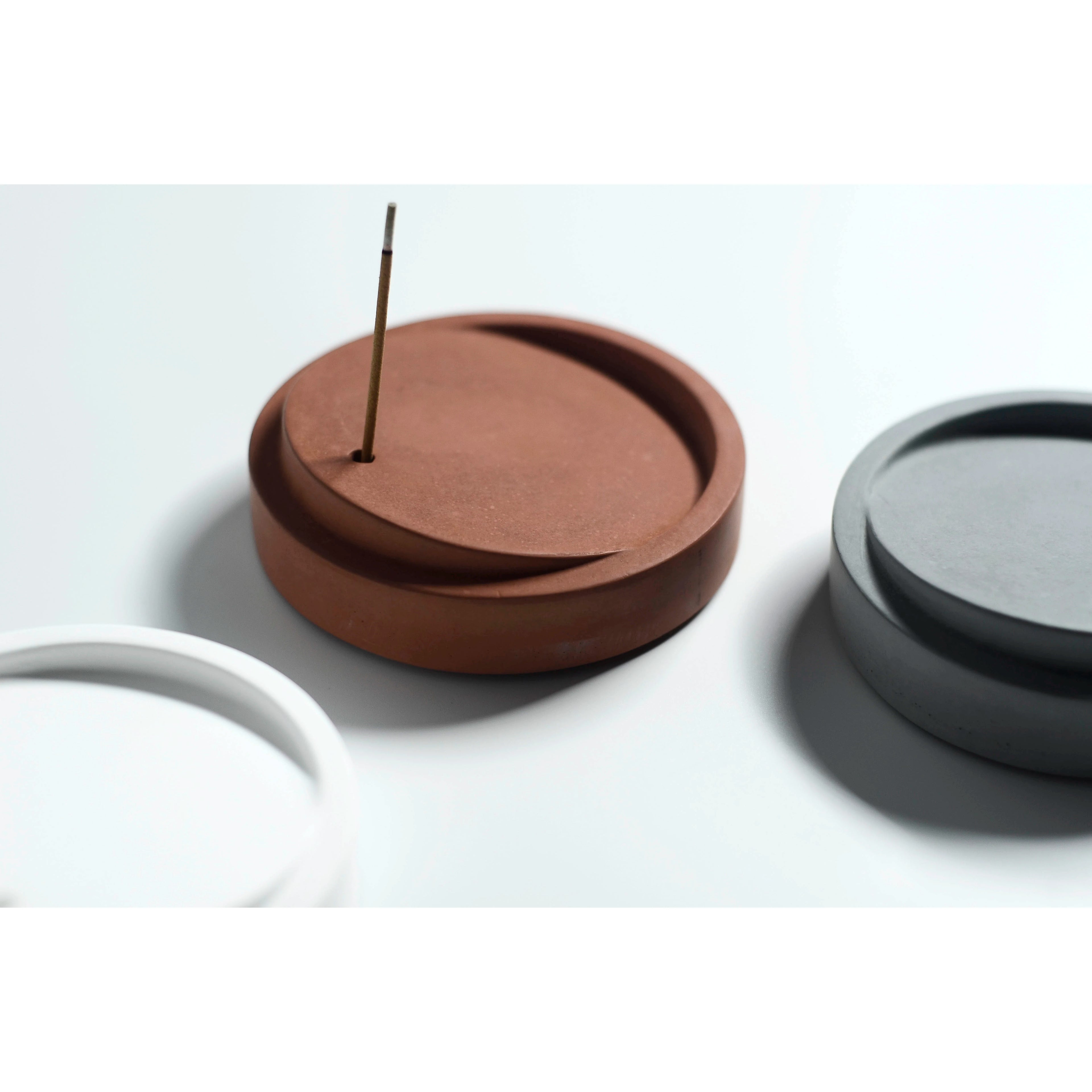
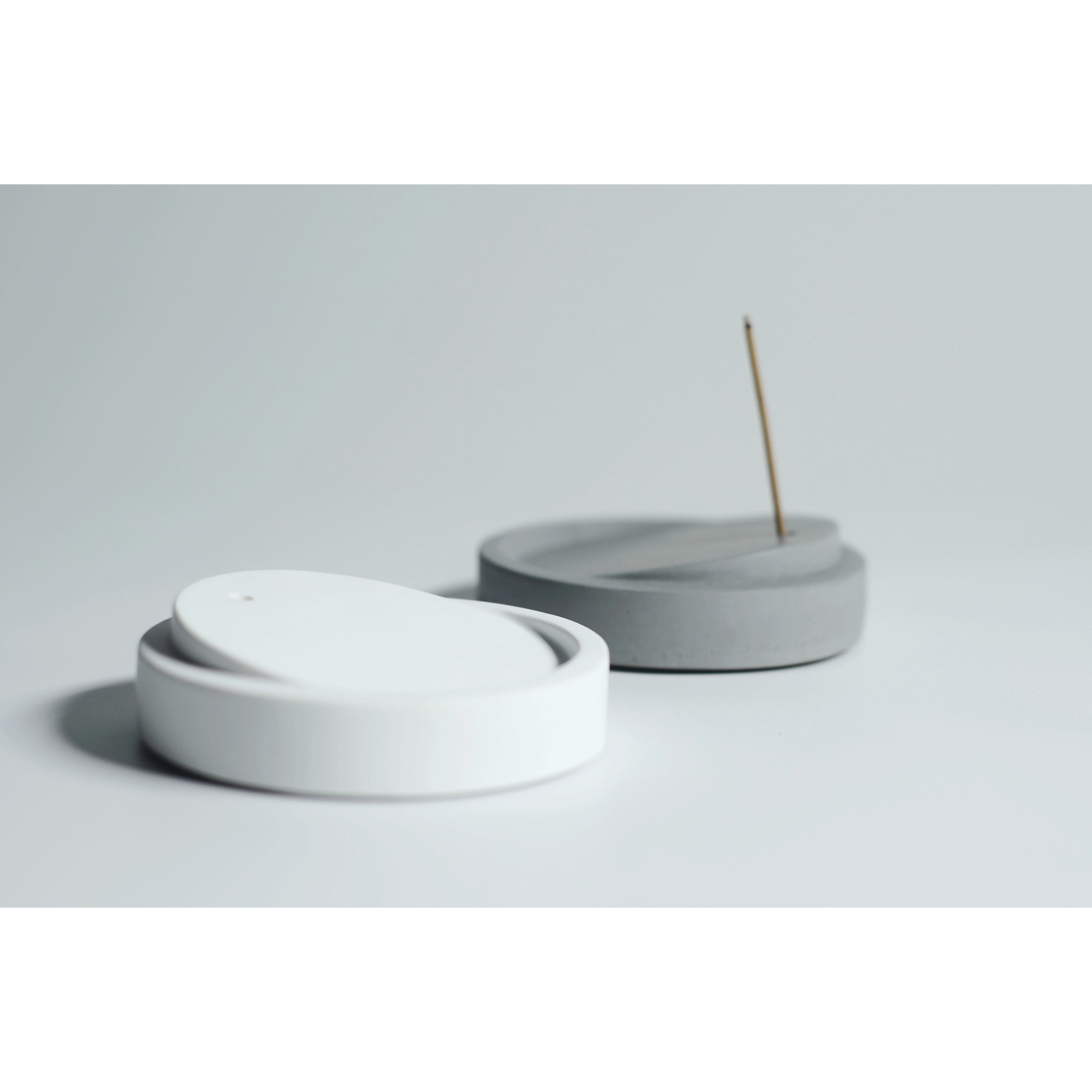
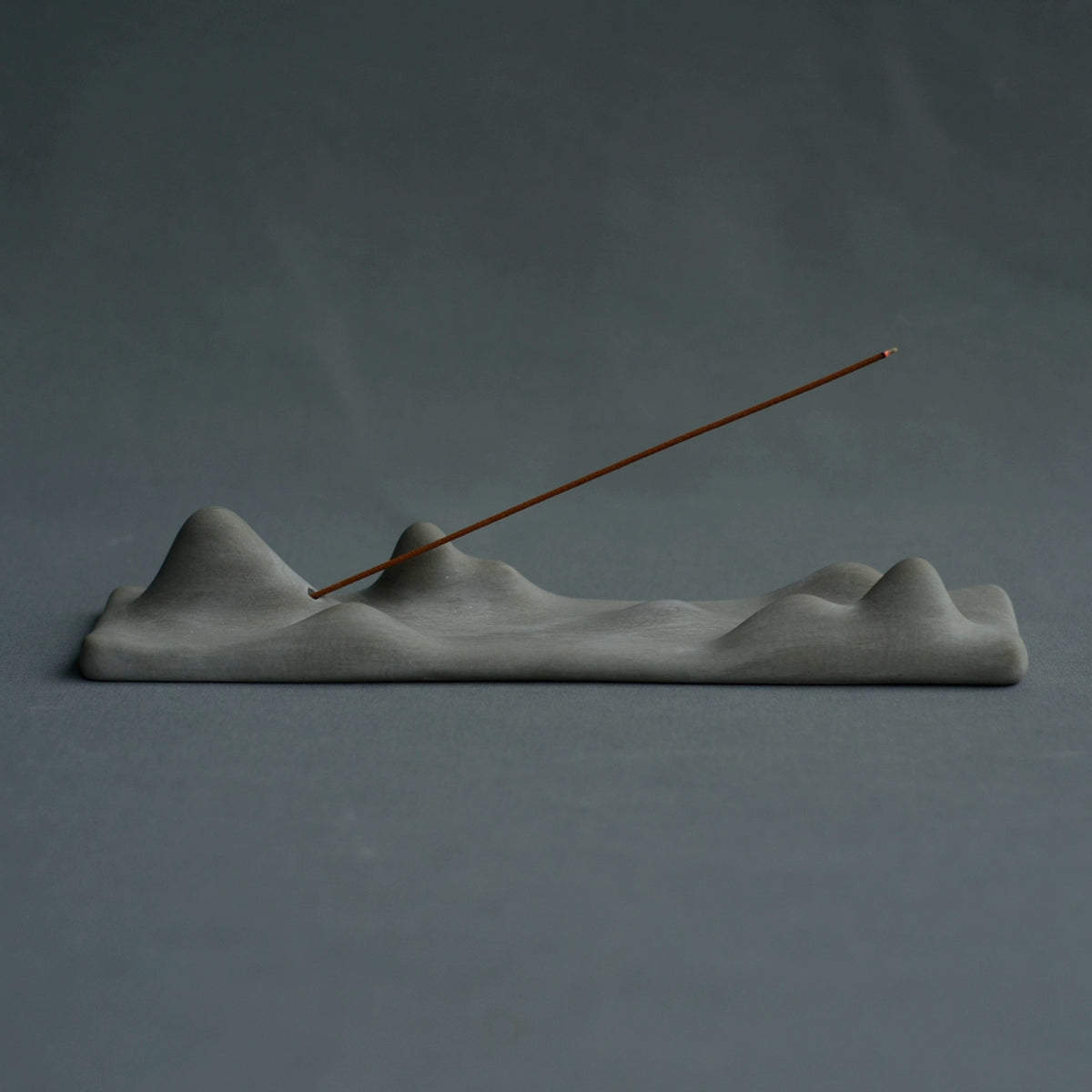
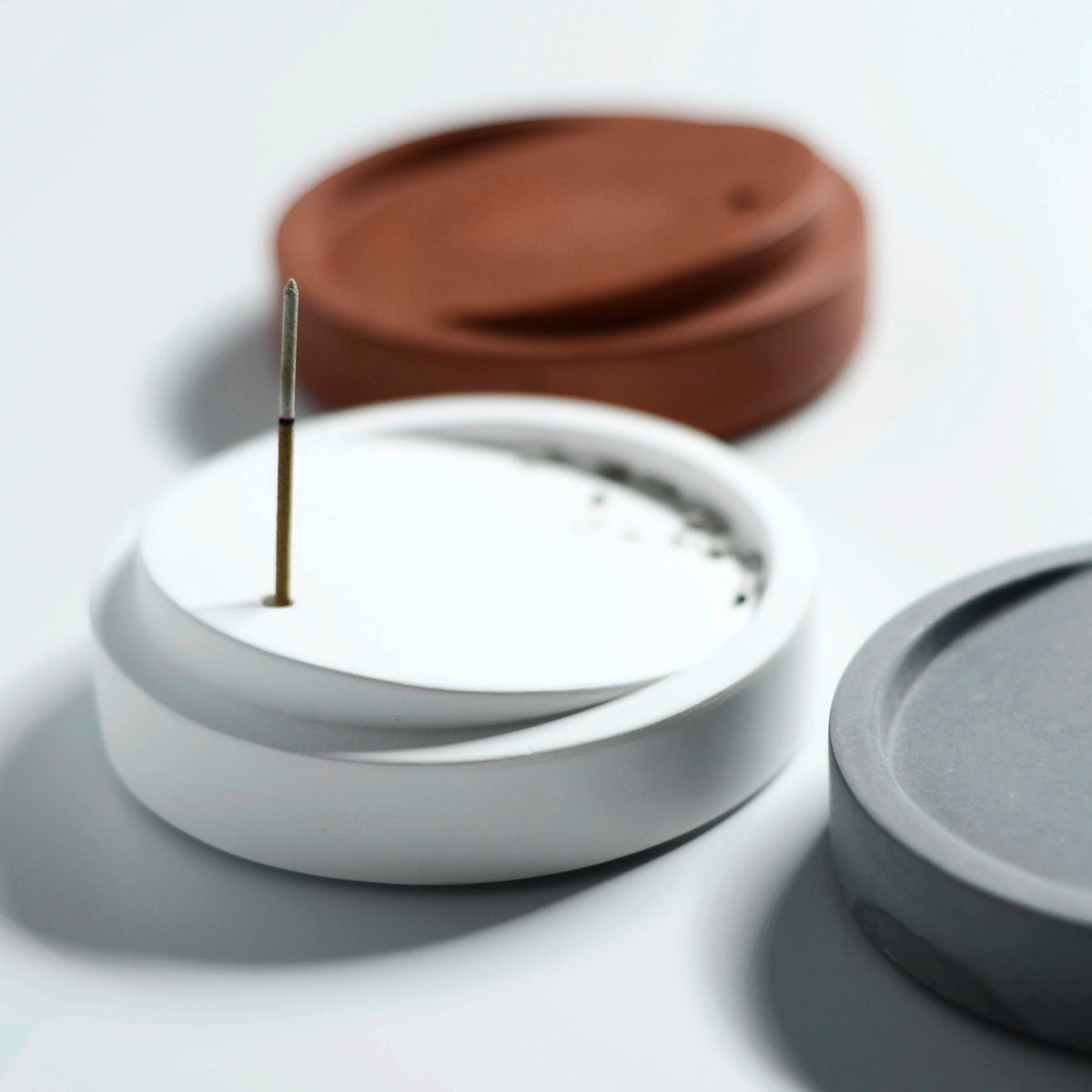
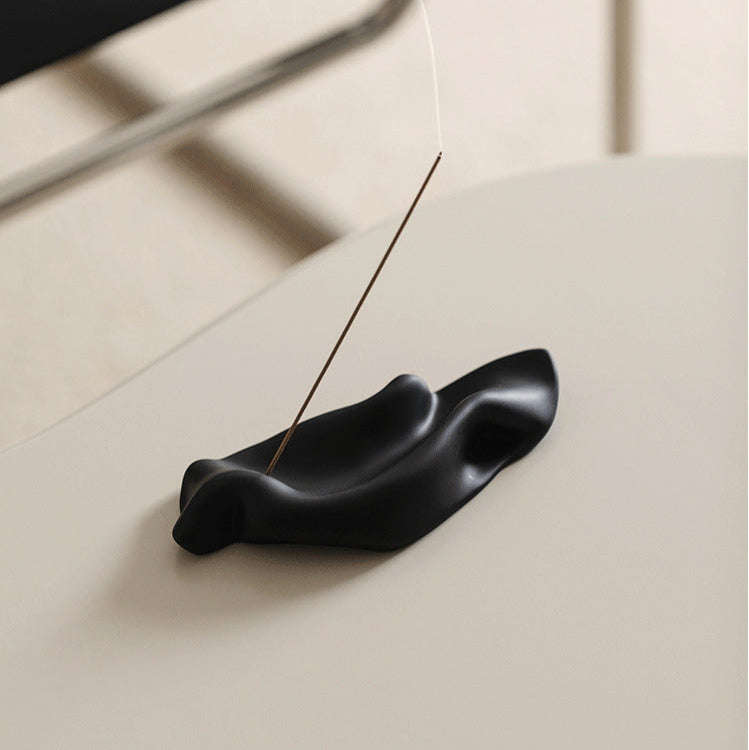
Choose a dedicated meditation spot. Clear the surface and place a quality ceramic incense holder at eye level or slightly below. We recommend our handcrafted ceramic incense holder collection, designed specifically for meditation use.
Before lighting, open a window briefly to let fresh air circulate.
Step 2: Light with Intention
Hold the incense stick at a 45-degree angle. Light the tip with a flame until it glows and a small flame appears. Gently blow out the flame, leaving the ember glowing and the first ribbon of smoke rising.
The mindfulness micro-practice: As you blow out the flame, set a single intention for your session. It can be one word: stillness, clarity, presence, compassion, rest. This act — lighting, blowing, intending — is the ritual that signals to your mind that transition is happening.
Step 3: The Transition Breath (3–5 Conscious Breaths)
Place the incense holder in position. Bring your attention to the rising smoke. Take three to five conscious breaths, inhaling the scent fully:
- Inhale: Draw the scent in through your nose. Notice its qualities — warmth, woodiness, sweetness, complexity.
- Exhale: Release slowly through the mouth. Feel the settling effect in your body.
These transition breaths serve as the bridge between the activity of your day and the stillness of your practice.
Step 4: Your Practice (30–45 Minutes Natural Framework)
Move into your chosen meditation technique. A typical incense stick burns for 30–45 minutes — this is not a coincidence. Traditional incense makers have calibrated their sticks to match the ideal meditation session length. Let the stick be your natural timer.
During the session, the scent acts as an anchor. When your mind wanders, gently return your attention to the scent.
Step 5: Close Mindfully
When the stick has burned down, take three more conscious breaths. Notice the lingering scent in the room. Touch your fingers to your heart or bow slightly, acknowledging the time you've given to yourself.
Thank the incense, the space, and your own commitment. Rise slowly, carrying the stillness with you.
Creating Your Meditation Space
Your environment shapes your practice more than you think. Here is how to build a space that supports deep, consistent meditation with incense:
- Clean surface: A dedicated altar, shelf, or small table. Keep it uncluttered.
- Quality ceramic holder: Ceramic is non-flammable, heat-resistant, and weighted for stability. Browse our ceramic incense holders.
- Warm, dimmable lighting: A candle or soft lamp. Harsh overhead light works against the settling effect of incense.
- Comfortable cushion or bench: Physical comfort allows you to sit longer without distraction.
- One consistent scent: This is the most important element. Choose one scent and commit to it for at least 2–4 weeks. The ritual association requires consistency.
Common Mistakes to Avoid
1. Cheap Synthetic Incense
Most mass-market incense contains synthetic fragrances, chemical binders, and artificial dyes. When burned, these produce heavy smoke and can cause headaches and eye irritation — the opposite of what meditation incense should do. A single high-quality natural incense stick costs slightly more but delivers a clean burn. Explore our natural incense collection for hand-rolled, chemical-free options.
2. Changing Scents Too Often
This is the most common mistake. The ritual association between scent and meditative state requires consistent pairing. If you burn sandalwood on Monday, jasmine on Tuesday, and nag champa on Wednesday, your mind never forms a strong association with any of them. Choose one. Use it daily for at least a month. Then experiment if you wish.
3. Burning Too Much
One stick is sufficient for a single session — sometimes even half a stick. Burning multiple sticks overwhelms the senses, creating sensory overload rather than sensory grounding.
4. Using the Wrong Holder
An unstable holder that tips over mid-session is both a safety hazard and a meditation disruption. A proper ceramic holder is an investment in your practice. See our ceramic holder range.
Frequently Asked Questions
- What is the best incense for meditation?
- Sandalwood is the most universally recommended meditation incense due to its deep roots in Buddhist, Hindu, Taoist, and Japanese contemplative traditions and its long association with "alert calmness" — a state of relaxed wakefulness. Cedar and frankincense are also widely used across traditions.
- Should I light incense before or during meditation?
- Light it before you begin your sit — ideally 30–60 seconds before. The lighting act itself is part of the mindfulness ritual. The scent will have begun to fill the space by the time you settle onto your cushion.
- Can I use the scent itself as a meditation anchor?
- Absolutely. Focus on the rising smoke, the aromatic notes as they unfold, the sensation in your nostrils. When your mind wanders, return to the scent.
- Is incense safe for people with asthma?
- Quality natural incense from pure plant materials produces far less irritant smoke than synthetic alternatives. That said, any smoke can aggravate sensitive airways. If you have asthma or respiratory sensitivity, consider using a low-temperature incense heater instead of burning sticks. Our natural incense is free from synthetic additives.
- How long should I use the same scent?
- A minimum of 2–4 weeks of daily practice. Once the association is established, you can rotate to other scents for variety and return to your primary scent knowing the anchor is still there.
- How long does an incense stick burn?
- Most of our meditation incense sticks burn for 30–45 minutes, which aligns naturally with a standard sitting practice. Our incense sampling sets let you explore different profiles before committing to a full box.
Ready to deepen your practice? Explore our full range of meditation incense, hand-rolled using traditional methods and pure plant materials:
- All Meditation Incense
- Sandalwood Incense
- Natural Incense Collection
- Incense Sampling Sets
- Ceramic Incense Holders
Sources: Journal of Natural Medicines (2016) — sandalwood inhalation pilot study (32 participants); Chemical Senses — olfactory conditioning literature.
This article is for informational and lifestyle purposes only. It is not medical advice. Consult a healthcare professional for health concerns.